

John Skene provides some views and perspectives on the ever changing ‘concept’ of inclusion in the school context…
“…every child has a fundamental right to education, and must be given the opportunity to achieve and maintain an acceptable level of learning,”
(vii, The Salamanca Statement, UNESCO, 1994)
The education system has a responsibility to create conditions that enable teachers to lift-up and support the development of all students regardless of ability or disability.
We will unpack the differing definitions of inclusion and the impacts on your school setting as well as highlight some strategies and systems that can start the discussion in your workplace around ideas of best practice to support the learning and development of ALL students in your class.
The Inclusive divide
“If your ‘inclusion’ doesn’t allow us to be our authentic selves in the places we’re being included, then it’s not ‘inclusion’ at all. It’s assimilation.”
~Chris Bonnello (2025)
Inclusion is a term fraught with conflicting ideals and meanings from every level of education, government and within the community. From those that believe “full inclusion” (Ford, 2013, p.10) is the only way students can learn alongside peers, to those that believe in systemic structures and inclusive classrooms that embrace a holistic model of learning.
The NSW Department of Education (2021) defines inclusive education as when “all students, including students with disability, are welcomed by their school and supported to reach their full potential.”
Whichever one you believe, the research indicates both positives and negatives, without definitive conclusions either way.
To add to the debate, we must look at the difference between integration and inclusion. What most don’t realise is there is a stark difference. Integration is the action of bringing different groups or peoples together in the same space versus inclusion which values the differences of people and using these to support all learners.
Think about your current classroom.
Are all the students the same? What kinds of difference are present? Do you value these differences or see them as a burden? Do you value individuality and celebrate different ways of learning? What strategies or supports do you implement to ensure all learners are engaged? Does everyone in your class have a voice?
How you reflect upon, and answer the above questions, will determine your true view and definition of inclusion.
The following discussions and ideas will allow you to broaden, reaffirm or change your understanding of “inclusion” to build capacity in your workplace and support those around you.
One Size Does NOT Fit All
Due to the complexity of school communities, support allocation and funding, a universal approach to inclusive education is a complex phenomenon (Nilholm, 2021). We need to work collaboratively to embed inclusive practices into our system that allow individuals the opportunity to engage at all levels of learning.
The debate of inclusion and its generic ‘Band-Aid’ approach does not support or embed practices that allow individuals to thrive.
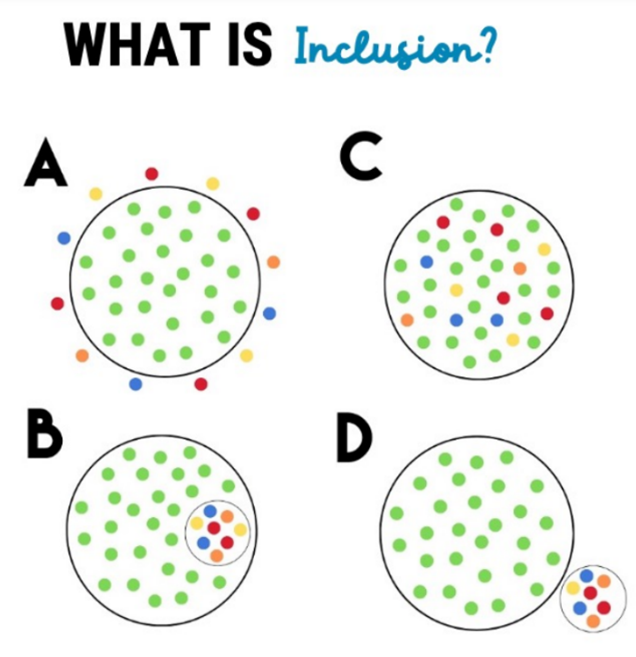
Figure 1 What is inclusion? (Moore, 2024a)
Look at Figure 1 (Moore, 2024a) – which do you pick as ‘inclusion’? Is your answer A? B? C? or D?
Take a moment to reflect on your views, beliefs and convictions. Which one did you choose? Which one reflects your current school structures and operations.
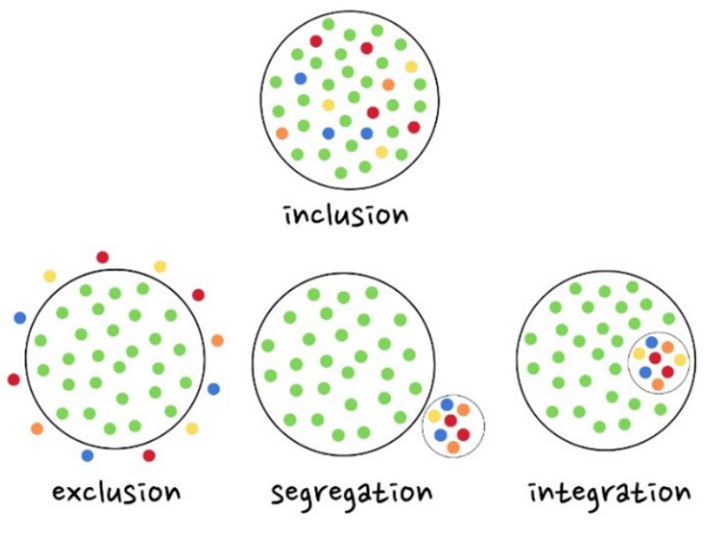
Figure 2 Inclusion, Exclusion, Segregation and Integration (Moore, 2024a)
Figure 2 (Moore, 2024a) provides you the answers to the types of thinking and belief structures when referring to difference. Did you pick “C” as inclusion? If so, this is a good place to begin.
It shows the goal of “all” being together and acknowledged in the space they are. This is where the terms integration and inclusion need to be particularly reflected on in your current context in order to assess the correct construct in your school and the philosophy that you hold. But what if there was a different view again? A way to view inclusion that will require shifts in language and thought to allow greater engagement.
Dr Shelley Moore (2016) uncovers a variation to the meaning of inclusion. Defining inclusion as: “there is no other” (p. 4). Inclusion is no longer about just the students with disability, it’s about shifting paradigms to embrace, celebrate and consider all types of diversity in our learners and world (Figure 2a).

Figure 2a Inclusion is everyone as “other” (Moore, 2024a)
Everyone is seen as the diverse individual that they are; learning ability, language, cultural background and more. And this is used to support planning and programming within the school context not seen as a hindrance.
A “one size fits all”, is not an effective model to implement, as it removes the individuality and diverse needs of the students within our settings.
This idea of inclusion works across mainstream, support classes and schools for specific purposes. It supports all teachers to widen their thinking on learning needs and difference in all its facets.
If teachers took on this view of inclusion, they would be relying on a strengths-based approach to planning and learning rather than a deficit model (Moore, 2016). It’s about bringing students together to allow them to build on their strengths and the strengths of others in a safe and supported environment. It is about allowing opportunities where available, with strongly funded support, for students to engage in learning that builds capacity and development.
Collaborative Classroom
Nilholm (2021) in defining “inclusion” moves between theory and practice to support understanding for the classroom context. It states that inclusion involves all pupils, regardless of needs, participating both socially and academically in a supported space.
In 2024, in Australia, 1,062,638 school students (government and non-government) received an educational adjustment due to disability comparative to 2015 with 674,323; a 58% growth in enrolment (ACARA, 2025).
It is more apparent than ever that teachers need to work collaboratively (mainstream and specialist), to support the diverse learning needs of students within our classrooms. Reaffirmed more with the news that a record 221,000 NSW public school students were diagnosed with a disability in 2024 (Townsville Bulletin, 2025). Highlighting that one in four students in public schools, have a disability, making the need for collaboration and more effective supports and structures a government necessity.
The Centre for Education Statistics and Evaluation (CESE) data (Figure 3) highlights the upward trend of 1,523% enrolment increase of students with autism in our support classes and schools for specific purposes (SSPs) across the last 20 years. This information demonstrates an important need for the profession to look at ways to support this group of students (and the teachers) across school settings to better meet the individual needs of all students.
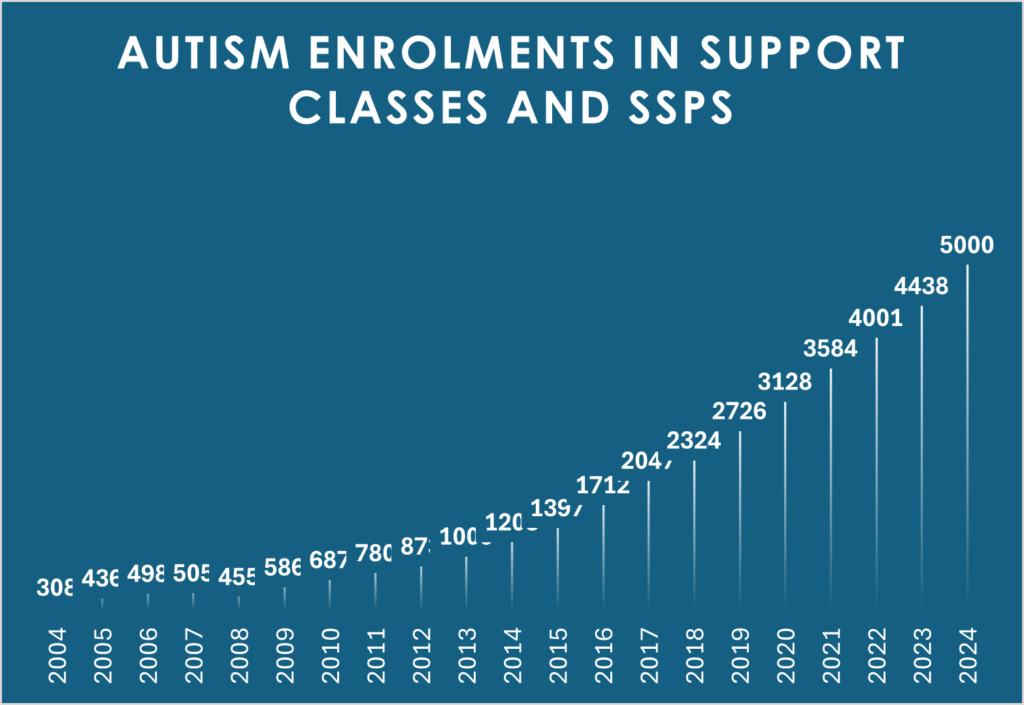
Figure 3 Number of autism enrolments across Support Units and SSPs 2004-2024
Source: NSW CESE Statistical Bulletins (2025)
One such model that can be implemented is the Collaborative Classroom model. Collaborative Classrooms is a school-wide strategy developed to maximise inclusion and achievement by ensuring that the expertise of all staff is utilised to its full potential to support students of all abilities, across all classrooms and settings.
It gives every student access to the collective expertise of staff while ensuring individual support needs are explicitly addressed regardless of the class or program in which they are enrolled. It allows specialist teachers and SLSOs to work with parents, students and staff to allow each student a balanced experience of ‘special education’ in their “Home Class” (support unit) and benefiting from a sense of belonging in their “Peer Class” (mainstream).
Classes are formed more based on stage, than classification, to allow students (and teachers) to be linked to their peers. This organisation allows individuals and small groups from mainstream to work in the Support Unit, allowing them greater opportunities to work toward their learning goals. Conversely this structure allows students to work with their peers across the curriculum. This enhances classroom practice, experience, perspective and collegial training.
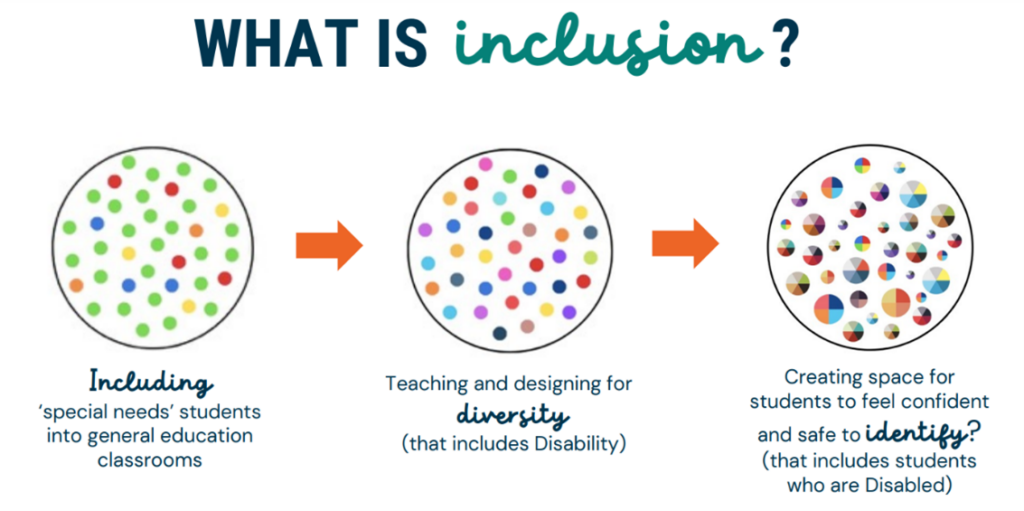
Figure 4 What is Inclusion, diversity and identity? (Moore, 2024a)
It’s a shifting of thinking, planning and collaborating that changes the language and perspectives across classes and the community.
It’s about creating an environment where every child is seen and planned for, regardless of their enrolment place.
In the school context at which I taught in 2023, an outcome of this model, six out of eight Stage Three students enrolled in the support unit had developed the skills and confidence needed to actively and successfully participate in learning with their mainstream classmates for more than 80% of the school day. How amazing is this? For the students and the school.
Reflect on collaborative practices in your workplace.
What is working well? What could you do better?
What could you change?
Programming Adjustments
“When a flower doesn’t bloom, you fix the environment in which it grows, not the flower.”
~Alexander den Heijer (Moore, 2024b)
Students with disabilities require content and material adjustments of varying degrees that support their individual need. But what is an adjustment?
Adjustments are the “actions taken to enable a student with disability to access and participate in education on the same basis as other students.” (AITSL, 2020, p.13).
This process is a success when teachers (mainstream and specialist) work together to support all students across the school. Building capacity of one another for the benefit of the individual.
As an example, in a support class in a mainstream school, a student is working at stage level for mathematics. Amongst his peers, there are students that are not. Teachers in this team decide that levelled maths groups across the stage is a suitable structure to build capacity of both students and teachers. Therefore, they map learning out together as a continuum to allow all students an opportunity to access the learning, to the best of their ability; with necessary adjustments along the way.
The NSW Department of Education (2025) provides online resources through the Universal Resources Hub, that allow teachers opportunities to participate in mini learning modules on different concepts in inclusive education and disability. They have collated learning strategies and resources to support teachers to meet the diverse needs of students within their classroom. While not exhaustive, it provides teachers a starting point with ideas to map out learning experiences that meet the individual needs.
If you are looking for reasonable and evidence-based suggestions to support students with disability in your classroom, get yourself a copy of “Blueprint for Inclusion” (Poe, 2025) which provides practical guidelines for teachers to effectively engage and build capacity of all students.
Ford (2013) concludes that the “priority would be ensuring the student is acquiring the academic skills necessary to be successful” (p. 15) within their scope and need.
The Goal IS Inclusion
Not one teacher, would be able to say that they do not want to achieve inclusion in their classroom as it allows the opportunity for each student to feel empowered in their learning and development. The Disability Standards for Education 2005 state that “teachers and school communities [are] to ensure accessibility of education for student with disability” (AITSL, 2020, p. 24).
We value the inclusive system the Department of Education offers, from early intervention, mainstream, support units and schools for specific purposes, creating avenues for all learners to successfully engage in their individual learning journeys.
“Schools should be inclusive spaces where all students are afforded opportunities to thrive.”
(AITSL, 2020, p. 24)
Take the time to reflect and audit the practices in your school.
Approaches to meeting student need (with disability) need to be based on empirical validation – not “ideology, persuasive slogan, or the volume of stridency of voices advocating a particular [treatment or] position” (MacMillan D, Gresham, F and Forness S., 1996, p. 3).
I have valued my professional development and experiences across various settings. It has taught me to adjust, support and adapt my thinking and practice to best meet the needs of the individuals in my classroom. It has also given me the opportunity to support my colleagues around me. Building teaching capacity in this space for greater impact, awareness and ability.
Inclusion is a journey not a destination (Moore, 2016). It’s the way we view learning as a multilayered process that allows students to work in more ways to be more successful.
“Inclusion is a mindset – not a specific location.”
(Poe, 2025)
References
Australian Curriculum, Assessment and Reporting Authority (ACARA). (2025). School students with disability. https://www.acara.edu.au/reporting/national-report-on-schooling-in-australia/school-students-with-disability
Australia Institute for Teaching and School Leadership (AITSL). (2020). Inclusive education: Teaching students with disability. https://www.aitsl.edu.au/research/spotlights/inclusive-education-teaching-students-with-disability
Bonnello, C. (2025). Autisticnotweird.com. Instagram: @autisticnotweird
Centre for Education Statistics and Evaluation, NSW (CESE). (2025). Annual statistical bulletin, Department of Education. https://education.nsw.gov.au/about-us/education-data-and-research/cese/publications/statistics/annual-statistical-bulletin
Ford, J. (2013). Educating Students with Learning Disabilities in Inclusive Classrooms, Electronic Journal for Inclusive Education, 3 (1)
MacMillan D, Gresham, F and Forness S. (1996). NSW Teachers Federation Full Inclusion: An empirical Perspective. Behavioural Disorders, a publication by the Council for Exceptional Children
Moore, S. (2016). One without the other: Stories of Unity through Diversity and Inclusion. Winnipeg, Manitoba: Portage & Main Press
Moore, S. (2024a). What is inclusion today and how has it changed over time? Illume Learning, Learning Sessions Handouts. https://da79a828-889c-4314-bd39-2fb742f2ad41.usrfiles.com/ugd/da79a8_e27aa0c4bcdb48bf8f8d68bfcd8d568c.pdf
Moore, S. (2024b). How can designing for one support all? Illume Learning, Learning Sessions Handouts. https://da79a828-889c-4314-bd39-2fb742f2ad41.usrfiles.com/ugd/da79a8_208d0d17818d4257a5ebe1a812ea141c.pdf
Nilholm, C. (2021). Research about inclusive education in 2020 – How can we improve our theories in order to change practice? European Journal of Special Needs Education, 36 (3), pp. 358-370
NSW Department of Education (2021). What is Inclusive education? https://education.nsw.gov.au/campaigns/inclusive-practice-hub/all-resources/primary-resources/other-pdf-resources/what-is-inclusive-education-
NSW Department of Education (DoE). (2025). Universal Resources Hub. https://resources.education.nsw.gov.au/home
Poe, R., M. Ed. (2025). Blueprint for Inclusion: a practical guide to supporting students with IEPs in the general education classroom. LLC Beech Grove, IN: TeacherGoals Publishing
Townsville Bulletin (2025). Record 221,000 NSW public school students diagnosed with disabilities. https://www.townsvillebulletin.com.au/news/nsw/record-221000-nsw-public-school-students-diagnosed-with-disabilities/news-story/8ac81c5671ec37526c2a7ccb0e38539c?btr=2b3952f16fefd2a8aa25024cb3c0e137, April 3
United Nations Educational, Scientific and Cultural Organisation and Ministry of Education and Science, Spain (1994). The Salamanca Statement and Framework for Action on Special Education. World Conference of Special Education: Access and Quality
About the Author
John Skene was elected as the NSW Teachers Federation Disability Officer in November 2024. As part of this role, he is responsible for supporting students, staff and schools in the area of disability. He is working closely with Organisers, Professional Support, Trade Union Training and others to support Federation members.
With over fifteen years of experience as a teacher in special education, John has worked in schools for specific purposes (SSPs) and support units (SUs). He is an Assistant Principal Special Education and has held roles as Federation Representative and Workplace Committee at school level. John was a Councillor and Special Education Contact of Sutherland and Inner-City Teachers Association (across his time in school) and a Federation Executive Branch Representative in 2023 and 2024.