

John Skene provides some views and perspectives on the importance of differentiation in the classroom to support learners of all abilities…
Picture this:
Monday morning. Year 3, and your stage planned a writing task for all students to engage in. You’ve been building up to this activity. Whole class discussions. Mind maps. Brainstorming. You provide the class with the instructions: they must use a pencil and paper. You check for understanding. And send the students to their desk. Some students get started immediately. A few fuss with the distance between their desk and chair. Some pick up on their conversation of their weekends, which you redirect. One student you notice is just staring out the window and hasn’t even picked up the pencil. You direct them to start. They ignore you so you ask again. They refuse and place their face down on the table and cover their ears.
Sound familiar?
Friday, middle session. A kindergarten support class in mainstream. Writing is a tricky thing for all your students. The unit of work states that the students need to ‘write about their understanding of the text’ – so you think – “well they need to write with a pencil” – so you work one-to-one to assist the students to write responses to the questions.
They find it hard to hold the pencil. Their letter formation is non-existent. They engage in pre-writing/scribble behaviour. A few then become agitated because they are being made to ‘write’ and throw their pencil across the room. This then unsettles others and you must abandon the activity to support students to regulate.
What could be done?
As teachers we need to review our processes in programming and planning to support the diverse learners that we find in our classrooms today. These varying learning styles and abilities only continues to grow and diversify. Teachers are having to think differently about how they present information and how they receive student product to indicate levels of knowledge and understanding.
So how can we do this? Does it always have to be a pencil and paper? Are we expecting the same process and product for every child? Do we make each student sit the same assessment?
Differentiation
“In its truest sense, teaching is not finished until learning occurs – for each learner. Teaching without learning is an oxymoron.”(Tomlinson, 2006)
What is Differentiation? And what does it mean?
Differentiation is defined as the response that teachers make to support learners needs (NSW Department of Education, 2025b). It is not about watering down or ‘dumbing’ the curriculum – it’s a methodical process to support learners of all abilities from disabilities to high potential and gifted students, to engage with content, process, product and learning environment.
As seen in Figure 1- teachers have a responsibility to adapt to and create experiences that are meaningful and connected to student need and ability. “Practising quality differentiation is much more about knowing what matters to teach, realising that learning happens in us rather than to us” (NSW Department of Education, 2025a). It is a process by which, as teachers, we understand that, although content outcomes may seem linear, they are far from it.
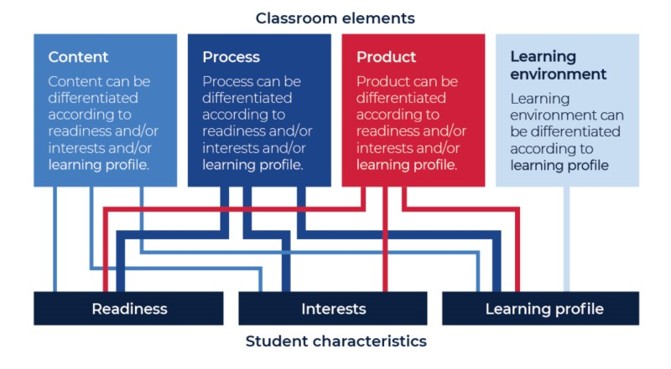
Figure 1: Four types of classroom elements (NSW Department of Education, 2025b)
Rebakah Poe (2025) in her Blueprint for Inclusion outlines strategies for teachers to support all students in the classroom. She clearly states that:
“A ‘one-size-fits-all’ approach to learning will not cut it” (p.83, 2025)
So, it is important for teachers to reflect on their current practices in all stages of planning to ensure they are adequately providing suitable and appropriate learning experiences that allow students to learn. Poe has compiled a useful tool available on her website (Figure 2, 2026) that supports teachers with a quick checklist outlining key factors of differentiation in the classroom. A meaningful and resourceful way to support your planning and programming, to ensure differentiation is embedded in your thinking.
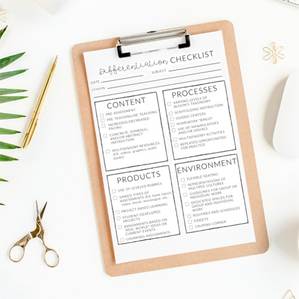
Figure 2: Differentiation checklist (Poe, 2026)
Another concept she highlights in her book, that is useful for teachers to reflect on, is the difference between differentiation, accommodation and modification. As we know differentiation refers to changing instruction to support student learning, accommodations give students the tools to participate [like Augmentative Alternative Communication (AAC) options], and modifications are where we adjust or alter the content to support students’ engagement.
Universal Design For Learning
These three concepts lend themselves into the space of Universal Design for Learning. It is the framework that minimises barriers and ensures that students of all abilities can access learning (NSW Department of Education, 2026b). It is underpinned by three principles (Figure 3), that support proactive measures in planning that benefits students across all settings.
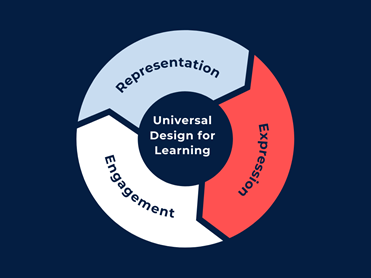
Figure 3: Universal Design for Learning (NSW Department of Education, 2026b)
The three principles of Universal Design for Learning (Poe, 2025)are:
- representation: multi-modal provision (print, audio, visual) of material, concrete manipulatives and modelling concepts;
- expression: allows for chunking of tasks and allows students to demonstrate understanding in multiple ways;
- engagement: relates concepts to prior knowledge, incorporates student interest and choice and multiple avenues to accessing content.
They allow all learners to reach their full potential across all learning environments and provides greater accessibility for all students. While it may be a little bit more arduous and work to begin, the greater implications of learner engagement, with fewer future modifications, makes it worthwhile.
To more effectively support the ever-growing diversity in our classrooms, teachers need to look at including task analysis (chunking) in their planning and programming process. According to Schmidt (2025), task analysis is a method of making learning activities more accessible, by strategically separating components into smaller more manageable steps. This allows students to build an understanding of sequencing and can prevent incidents of distraction. When breaking down tasks, it allows students to have greater success and independence, alongside a sense of achievement, they may previously not have felt.
“By clearly outlining each step, educators [and families] can reduce barriers and build independence, one step at a time.”
(Schmidt, 2025)
NSW Department of Education (2026a) provides teachers with some engaging resources in the Universal Resources Hub. This online hub supports teachers with pre-made resource packs across multiple curriculum areas, that support preparation time and can be used as a starting point to support differentiation planning for students. Have you used any of the resources on offer?
Classroom Examples
Every classroom is different. The following examples highlight different students and useful classroom strategies that allow them to engage in learning experiences as well as differentiated tools to indicate understanding, that are alternatives to a pencil and paper:
1.“A student with autism and PDA, moderate intellectual disability and limited language”
Visuals (both real life and abstract) to support language use and recognition of common emotions or instructions. Visuals also assisted the student to answer simple ‘yes/no’ questions aligned to their personalised learning plan.
Social stories were created to support this student to understand events; what is taking place and what to expect. It supported them to build understanding and capacity of expectations and was a suitable reference if anxiety began to take over.
Language choice simple, clear and choice orientated to support the student to engage in learning experiences with greater success and independence.
2.“A student with Down Syndrome, moderate intellectual disability and limited language”
Visual sequencing of main events in a story. After reading a class story or an individual one, the student engages in a cut and paste activity to demonstrate understanding of the story line.
Real objects to support communication of needs and wants. Using real objects of items in the classroom allows students that have limited language, assist them to make connections between words in print with the real-life item.
3.“A student with autism, anxiety and limited mapping skills when writing”
Drawing to convey a message. If a student finds it difficult to write or, if writing creates cognitive load that impacts ability to engage, then allow them to draw their ideas and thinking.
Voice to text is a great tool for students to provide insight and understanding of concepts during an activity. The student can use a device to relay their ideas verbally, rather than having to battle with a pencil and paper or the fear of spelling something incorrectly.
Comic Strip activity to demonstrate understanding. This allows the student to sequence with pre-made or their own pictures to engage in the writing component of a task.
4.“A student with cerebral palsy, epilepsy and a wheelchair user”
Adapted keyboards to support engagement in writing tasks, to demonstrate understanding of the lesson. Move away from pencil/paper and allow the student to type through AAC. Ensure that predictive text is activated to give the student the space to engage in reciprocal conversation with a peer or adult.
Eye Tracking Device provides the opportunity for a student that may not have fine motor control or language to provide insight into content understanding.
Voice output device to allow the student to “voice” understanding, by selecting pictures chosen during the planning stages of the activity. It allows independence for the student.
Each strategy is not exclusive to the specific students referenced.
They are just addressed in this manner, to demonstrate the diverse learners that may be in your classroom. Each strategy can be trialled and implemented for a whole range of students
More than a pencil
Teaching is such a powerfully important and creative profession. Where else are you provided the work, the end goal, the desired outcomes – but can create the path to discovery? Working in Special Education specifically, has taught me to constantly “think outside the box” to support the diverse learning of all students in my classroom and school.
Teachers can be as creative as they feel. What have you created lately?
References
NSW Department of Education (2025a). Strategies for Differentiation. https://education.nsw.gov.au/teaching-and-learning/professional-learning/teacher-quality-and-accreditation/strong-start-great-teachers/refining-practice/differentiating-learning/strategies-for-differentiation (accessed March 2026)
NSW Department of Education (2025b). Differentiating learning. https://education.nsw.gov.au/teaching-and-learning/professional-learning/teacher-quality-and-accreditation/strong-start-great-teachers/refining-practice/differentiating-learning (accessed March 2026)
NSW Department of Education (2026a). Universal Resources Hub. https://resources.education.nsw.gov.au/home?urhlibrary=collections&source=literacyandnumeracypackages (accessed March 2026)
NSW Department of Education (2026b). Universal Design for Learning. https://education.nsw.gov.au/teaching-and-learning/curriculum/planning-programming-and-assessing-k-12/about-universal-design-for-learning (accessed March 2026)
Poe, R., M. Ed. (2025). Blueprint for Inclusion: a practical guide to supporting students with IEPs in the general education classroom. LLC Beech Grove, IN: TeacherGoals Publishing
Poe, R., M. Ed. (2026). Rebekah Poe Teaching. https://rebekahpoeteaching.com/ (accessed March 2026)
Schmidt, J. (2025). Breaking Down Tasks: Understanding Task Analysis. https://lifeskillsadvocate.com/blog/understanding-task-analysis/ (accessed March 2026)
Tomlinson, C. (2006). An Educator’s Guide to Differentiating instruction. USA: Cengage Learning.
About the Author
John Skene was elected as the NSW Teachers Federation Disability Officer in November 2024. As part of this role, he is responsible for supporting students, staff and schools in the area of disability. He works closely with Organisers, Professional Support, Trade Union Training and others to support Federation members.
With over fifteen years of experience as a teacher in special education, John has worked in schools for specific purposes (SSPs) and support units (SUs). He is an Assistant Principal Special Education and has held roles as Federation Representative and Workplace Committee at school level. John was a Councillor and Special Education Contact of Sutherland and Inner-City Teachers Association (across his time in school) and a Federation Executive Branch Representative in 2023 and 2024.