Julie McMullen and John Skene reflect on the changing social and political realms in the LGBTIQA+ space, the impact on schools and positive ways to be inclusive…
Historical Context
The policies and strategic direction of the NSW Teachers Federation are determined by Council, making Federation one of the most democratic unions in Australia. These policies are reflective of the cultural landscape in which they are made and as such, Federation has often been a driving force for progressive change. This is especially apparent in the work Federation has undertaken in LGBTIQA+ advocacy.
As described in Education Quarterly Issue 5 article, Progress to be proud of, by Kerri Carr: “1975 Annual Conference delegates reiterated an aim of Federation’s Constitution: to guard members against ‘any hardship, oppression or injustice in connection with their employment … If such hardship, oppression or injustice in their employment results from discrimination on racial, political, religious or social grounds in employment or training, this Federation commits itself unequivocally to the support of such members.’”
Federation’s 1978 Sexual Discrimination policy made a powerful contribution towards communicating their standpoint and goals in this policy area.
The policy:
affirmed “the right of staff and students to enter and remain in educational institutions regardless of sex, sexuality or marital status. It will support any member who is victimised, disadvantaged or denied employment on these grounds”
declared: “Family and personal relationships, including non-marital relationships, must be respected in postings, promotions and transfers, in accordance with Federation policy” and “Teachers, the Federation and the Department of Education all have a responsibility to combat sexual discrimination in the schools”
called for “the reform of laws which prescribe or permit discrimination on the grounds of sex, sexuality or marital status.”
Member advocacy in Federation led early opposition to discrimination against same-sex attracted people, formalised in the 1978 Sexual Discrimination Policy. Members continued to shape this work over time, contributing to the Sexual Orientation and Gender Preferred Identity Policy in 1996, followed by the Gender, Sexuality and Identity Policy in 2011. This policy was updated in 2022 to reflect more inclusive language and practice. The union also established a Gay and Lesbian Special Interest Group (SIG) in the 1980s, which would later be renamed the LGBTIQA+ SIG The LGBTIQA+ Restricted Committee was formed in 2011 to work on LGBTIQA+ policy and to put a LGBTIQA+ lens on broader union policy. This committee, along with the Officer with carriage of LGBTIQA+ matters, is responsible for enacting the motions and decisions of the SIG.
Federation has also played a role in various movements within this space. Notable examples include the Yes to Marriage Equality campaign (2017) and education during the AIDS/HIV epidemic. The Education newspaper helped counter disinformation and fear that was being spread around AIDS/HIV. Education Quarterly has also published articles with strategies on how to be better allies in workplaces and the wider community. Along with this Federation has continued to create resources and advice leaflets, which are available to members through the membership portal.
Visibility and representation are important aspects to help remove stigma and, in turn, create inclusion. This visibility can best be seen through public events such as Sydney Gay and Lesbian Mardi Gras, as well as similar regional events. While Federation members participated in Mardi Gras as part of union floats previously, 2010 was the first time Federation engaged with the Mardi Festival — first with Fair Day and then with a float in the parade in 2015. Federation has continued to march each year, often with a political message or theme. Federation has also maintained involvement in Fair Day stalls.
Federation has hosted events that have helped lead to change. This has included a symposium in 1980 to support gay teachers and students, and the Diversity in Education Conference — held during World Pride Sydney (2023) — which hosted participants from around the world and interstate. LGBTIQA+ members and Officers also regularly run workshops at conferences as well as courses for contacts and association seminars.
Whilst a lot of Federation’s advocacy has been documented throughout the years, this is still just a fraction of our work in LGBTIQA+ spaces, much of which happens behind the scenes. Progress often ebbs and flows as the cultural landscape changes particularly when working with/against right wing and conservative political parties and groups. This work is not always obvious to a classroom context but creates the necessary foundations to empower change within our classroom spaces.
Policies. Schools. Resources.
“Creating schools and workplaces where people belong is central to a world-leading education system”
Murat Dizdar (NSW Department of Education, 2024a, p.7)
Public schools are a haven for diversity, accepting of all marginalised groups, supporting growth and development for those that come through the front office. Sadly, acceptance and safety are not always a guarantee.
Students often feel isolated and disconnected from their peers. Teachers can be silent and avoidant for their own safety, due to uncertainty. From Cronulla, Newtown, Albury, the Tweed to Broken Hill – both students and teachers should feel empowered to always be their true selves.
The Department has developed policies to promote a safe and secure environment for all staff and students. The Gender Diverse Students in Schools legal issues bulletin, reads “The Department of Education is committed to providing safe and supportive learning environments…” and “Research shows the supportive environment schools provide can have a lasting impact on both the educational and lifelong outcomes for students.” (NSW Department of Education, 2026a).
Other current policies state:
“1.4 Schools are required to support students on health and wellbeing issues in a way that does not discriminate unlawfully against any student.” (NSW Department of Education, 2025)
“2.3 All students and staff have the right to be treated fairly and with dignity, both online and offline, in an environment free from intimidation, violence, harassment, victimisation and discrimination, including that based on sex, race, religion, disability or sexual orientation” (NSW Department of Education, 2024b)
The policies are in place but are they working in practice? The NSW People Matter Employee Survey (2025) shows that more work is needed to support individuals (staff in the survey, but can extrapolate to students) to feel fully accepted and safe in schools across different settings and locations.
The NSW Department of Education (2026c) has created a toolkit: Supporting LGBTIQA+ Inclusive Communities which is designed to help principals and school leaders take positive action to respond to sentiment that may compromise safe, inclusive and respectful environments for all students and staff.
Schools can feel empowered to celebrate and acknowledge days of significance such as Wear it Purple Day, which is a Tier 1 event in the NSW Department of Education calendar. In doing so, it shows LGBTIQA+ individuals and allies that the school is a safe space for students and staff to be themselves.
Many schools are encouraging and support student led Gender and Sexuality Alliances (GSAs) or Rainbow Clubs, that create a safe space for students to connect and support one another. A collaborative resource that was made possible to support the discussions, creation and organisation of GSA groups is available through Twenty10 (2026).
Classroom inclusion
For both students and teachers, it’s important to create a space that is accepting, and safe to the diversity of our communities and schools. This can be done through allowing inclusive language within the classroom to show all students that they are seen and valued for who they are.
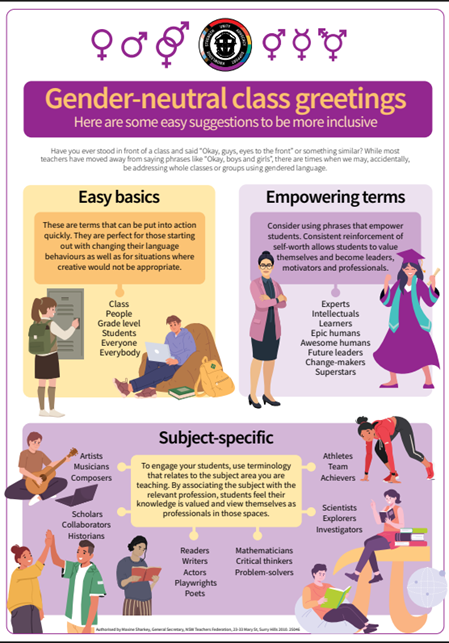
Have you ever stood in front of a class and said “OK, guys, eyes to the front” or something similar? While most teachers have moved away from saying phrases like “OK, boys and girls,” there are times when we may accidentally be addressing whole classes or groups using gendered language.
This can be an incredibly hard habit to break as teachers have been using some version of this in one way or another for as long as teaching has existed.
Pictured (NSW Teachers Federation, 2025) is a handy resource to help break some of these habits and create more safe, supportive, and fun schooling environments.
Purposeful, not tokenistic text/lesson/content selection, can increase inclusivity in your classroom. Allow for a wide variety of picture books in your book corner for students to engage with; feeling seen in the classroom allows students to feel comfortable to be their true selves and seek support when needed.
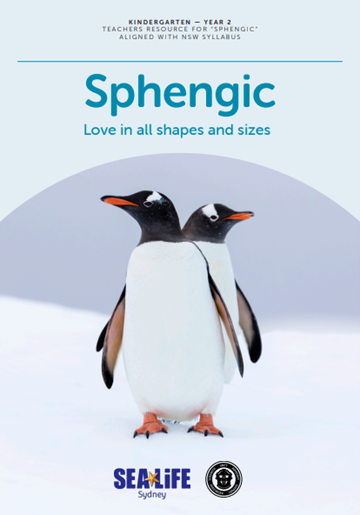
Thinking outside the classroom and partnering with external organisations such as the pictured ‘Sphengic’ resource (NSW Teachers Federation, 2023a) can link curriculum content and learning to real life. In 2023, Federation members came together to create a fun, engaging and relevant resources (NSW Teachers Federation, 2023b) to support K-2 learning. Sphengic is the story of SEA LIFE Sydney Aquarium’s same sex penguin couple, Sphen and Magic who began developing a strong bond in 2018 and became inseparable before breeding season. They were constantly seen waddling around and going for swims together in the Penguin Expedition. This resource allowed schools to engage in activities linked to an in-person or virtual excursion to SEA LIFE to bring purposeful learning for students.
The NSW Teachers Federation Library has an ever-growing catalogue of texts for students across primary and secondary to support connection and understanding. The Library is a great resource for teachers to tap into, to diversify their bookshelves and highlight a variety of voices through story to support inclusive dialogue within their classes.
Qtopia Sydney (2026) is a fantastic excursion destination and resource for schools to engage with to support student learning. It explores Sydney (and Australian) Queer history ensuring that stories aren’t lost but acknowledged, whilst platforming the voices of today.
What will it look like for you?
As public school teachers, it’s our responsibility to create positive, safe and respectful classrooms that accept and celebrate the diversity of each student.
How do you celebrate difference? Start the conversation today.
Julie McMullen was elected as the NSW Teachers Federation Communications Officer in November 2024, having previously relived in the role 2022 and in 2023. As part of her role, she works closely with all officers to create and promote Federation content across all media.
As a secondary English and Drama teacher with more than ten years’ experience, and worked across regional and metro schools, she values building a solid understanding of the working conditions and needs of teachers. She has held roles as Federation Representative and Women’s Contact at school level and Association Secretary and Treasurer positions. She is also an elected member of the LGBTIQA+ restricted committee (2023-present).
John Skene was elected as the NSW Teachers Federation Disability Officer in November 2024. As part of this role, he is responsible for supporting students, staff and schools in the disability space from Early Childhood to TAFE. He works closely with Organisers, Professional Support, Trade Union Training and others to support Federation members.
With over fifteen years of experience as a teacher in special education, John has worked in schools for specific purposes (SSPs) and support units (SUs). He is an Assistant Principal Special Education. He has held roles as Federation Representative and Workplace Committee at school level and elected as Branch Representative on Federation Executive (2023-2024).
Professor Jacqueline Ullman discusses how teachers can support students who identify as gender and sexuality diverse and to assist them to improve their sense of belonging…
Many schools recognise that, as our society becomes more open to and supportive of gender and sexuality diversity, numbers of gender and sexuality diverse students (e.g. those who might identify as lesbian, gay, bisexual, transgender, gender-diverse, or as another diverse gender or sexuality identity) have appeared to increase. The word ‘appeared’ is intentional, as experts in the field argue that the increase in young people identifying as gender and sexuality diverse (GSD) is attributable to the impact of rising social acceptance rather than an increase in actual numbers; in other words, GSD individuals have always existed in similar proportions, however – historically, and in some contexts still today – they have been compelled to hide their identities. In Australia in 2025, as parents/carers and peers are more accepting, more young people are able to be open about who they are.
It is part of the labour of teachers to ensure that all their students feel comfortable and supported to be their authentic selves and to be proud of their diverse identities. While this expectation of teachers is aligned with both federal[1] and state-based[2] guidance, at a more basic and relational level, this commitment to positive representation and inclusion of students’ diverse identities is typically aligned with teachers’ positive feelings towards the diverse range of students in their care. Put simply, most teachers like kids and want to support their self-acceptance and sense of belonging.
Talking about Gender and Sexuality Diversity
However, for a variety of reasons, including lack of relevant pre-service or in-service training, the curricular inclusion of gender and sexuality diversity can feel a bit more challenging than the inclusion of other diverse identities and backgrounds. Some teachers feel nervous about what they are and are not ‘allowed’ to say in the interests of inclusivity and – despite growing numbers of GSD students at all levels of education – teachers sometimes express concerns about whether or not gender and sexuality diversity-inclusive content is appropriate for the primary or secondary school classroom (van Leent, 2017). Even within the area of relationships and personal development education, which includes many suitable content areas where gender and sexuality diversity could easily be integrated, almost a third of Australian teachers do not include same-sex attraction or sexual orientation and a quarter do not include gender diversity (Ezer et al., 2018).
Recent survey research with Australian teachers shows that the large majority report positive feelings about gender and sexuality diverse people and a general sense of comfort engaging with related topics – answering questions, addressing name-calling, and providing a safe environment for GSD students (Burns et al., 2023). An important finding of this research is that, while participating teachers were almost uniformly supportive of inclusivity of gender and sexuality diversity at both the policy and curriculum levels, many reported that this was not enacted at their schools. Less than half reported having a gender and sexuality diversity-inclusive school enrolment policy and less than a third said that inclusive topics were featured in the curriculum in a positive way at their school (Burns et al., 2023).
NSW-Specific Supports for the Inclusion of Gender and Sexuality Diversity
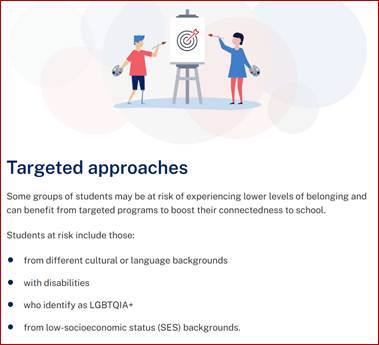
As wise educator Emily Style penned back in 1988, the curriculum should function as “both window and as mirror” to validate students’ experiences of self within the public world of the school as a strong foundation for their lives as adults in broader society. For GSD young people, the majority of whom are raised by “straight”/heterosexual, cisgender[3] parents/carers, school-based validation is even more critical. The New South Wales (NSW) curriculum encourages inclusion of diverse identity characteristics both in the classroom and at the whole-school level and gender and sexuality diversity-inclusive content options exist within many curriculum areas, including PDHPE, English, History, Society and Culture, Community and Family Studies and Legal Studies. Further, the Department acknowledges that students who identify as LGBTQIA+ (or GSD) are at risk of experiencing lower levels of belonging and benefit from “targeted programs to boost their connectedness at school” via education/curriculum, inclusive language and through educators working to curate an inclusive physical environment[4]. Additional support is provided via the “Transgender students in schools” legal issues bulletin 55 (LIB55)[5] which reminds teachers to be “inclusive of all students’ individual learning identity” and acknowledges that gender identity can be discussed across many curriculum areas.
Parents’ Attitudes to the Inclusion of Gender and Sexuality Diversity
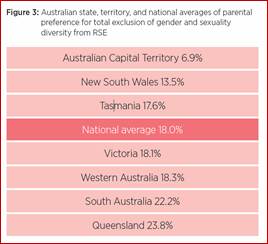
One of the most commonly reported reasons for teachers’ and school leaders’ lack of engagement with gender and sexuality diversity is their concern about parental opposition and subsequent complaint. Recent Australian survey research has addressed this point head-on, finding that 86.5% of public-school parents in NSW support the introduction of gender and sexuality diversity-inclusive topics during K-12 schooling, with most wanting these introduced by the end of Stages 3 or 4 (Ferfolja et al., 2021). Conversely, just 13.5% preferred total exclusion of gender and sexuality diversity from relationships and sexuality education. NSW parents were more supportive of the inclusion of these topics than the national average (see Ullman et al., 2021 for full, nationally representative survey results).
From: Gender and Sexuality Diversity in Schools: Parental Experiences and Schooling Responses, New South Wales Snapshot Report, available here.
Topics such as diverse romantic relationships and families; the negative impact of GSD bias-based discrimination; and understanding gender diversity were viewed by parents as necessary for creating a positive, safe and supportive school culture and preparing students for living well as adults in a diverse, socially cohesive society. Additionally, while media headlines might have us believe that gender diversity (or transgender identities) is a particularly divisive topic, 65% of public-school parents rated the “difference between biological sex and gender” as this relates to gender diversity and transgender individuals as of “moderate” or “high” importance, with just 19.5% viewing this as “not important” (Ullman et al., 2021).
Crucially, this research was nationally-representative, meaning that – rather than survey results being dismissible as the niche sentiments of those in particular locations or demographics – these findings are our closest reflection of the attitudes and preferences of the public-school parent population. While some communities might have an overrepresentation of vocal oppositional parents, most will have an abundance of supportive parents who may be far less likely to contact the school with positive feedback.
New Professional Learning Resource for Supporting GSD Students
Many teachers and school leaders want to support GSD students to feel visible and included within the school community and there are a plethora of easily-accessible online resources to support their efforts, including many offered by the NSW Teachers Federation. However, educators regularly ask for professional learning in this area, which is much more limited in availability and access.
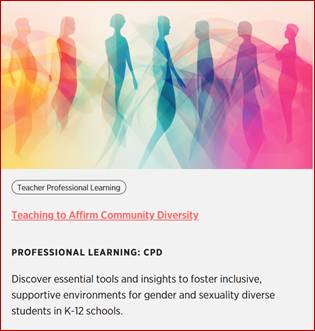
To meet this need, Associate Professor Jacqueline Ullman and Professor Tania Ferfolja, both academic researchers in Western Sydney University’s School of Education, designed the “Teaching to Affirm Community Diversity” online short course (or ‘micro-credential’). This 10-hour short course is designed with the busy educator in mind – flexibly-available and self-paced, with asynchronous engagement with the academics, and able to be used to satisfy professional learning requirements in NSW and nationally.
The course draws from current Australian research and uses federal guidance and state-based education policy to support teachers seeking to create gender and sexuality diversity-inclusive environments in K-12 schools. Through five modules, each including interactive activities, teacher-learners explore legal and policy frameworks, best practice ideas, and strategies for fostering student belonging through a supportive, safe, and affirming school climate for GSD students.
The “Teaching to Affirm Community Diversity” micro-credential is available through Western Sydney University and can be accessed here.
Drawing from empirical research with parents and GSD students, this short course bridges the gap between legal obligations, known best practices, and real-world application, and aims to increase educators’ awareness about how a positive school climate is related to GSD students’ wellbeing, academic success and sense of belonging.
By the end of the 10-hour short course, teachers and school leaders will be able to:
Identify and understand the unique challenges and experiences faced by GSD learners in K-12 settings and their families;
Apply relevant state and federal departmental policies to confidently implement inclusive pedagogical strategies and administrative practices that support GSD learners;
Address and counteract gender-based violence and bullying, fostering a school environment that supports both GSD learners and educators;
Critically reflect on and improve their own practices to create more inclusive and supportive classroom environments; and,
Critically reflect on their school’s local-level policies and work with colleagues to reshape and enact these in line with their learnings.
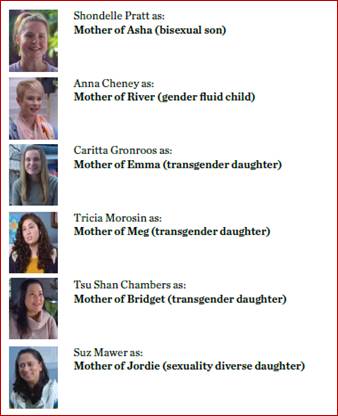
Central to the micro-credential is a short film, shown in three parts, where learners are introduced to the real-life (word-for-word, verbatim) experiences of six public school mums, parenting GSD children attending primary and secondary schools. These parents’ experiences of working with public school teachers and school leaders to support their children, shared through short films using their spoken interview data as ‘performed’ by professional actors, expose what schools and educators are doing well and where practices could be improved. Their stories are at once emotional and inspirational and offer a unique backdrop for the ‘why’ of local school policy and pedagogical reform in this area.
The six parents, as professionally acted, in the “What Parents Want: Talking about Gender and Sexuality Diversity” short film, featured in the micro-credential.
As with other areas of diversity and inclusivity, best-practice models for inclusivity of gender and sexuality diversity in schools advocate for whole-school approaches, bringing together both macro-level policy guidance documents and interpersonal, relational considerations for school community. Targeted professional learning in this area is an important, foundational element of such a shift. Importantly, it is evident that the large majority of parents want to see schools working to include GSD students – not just for the benefit of those young people, but to enhance cohesion and reduce bullying for the whole school community.
Want to Know More?
The “Teaching to Affirm Community Diversity” micro-credential at Western Sydney University is available here (https://westernx.edu.au/courses/tacd/?cl=1) and open for rolling enrolment throughout the year. Participants receive a digital badge of recognition upon completion.
Training can also be arranged in-person at the whole-school/team levels. For more information or to register your interest, please reach out to Associate Professor Jacqueline Ullman via j.ullman@westernsydney.edu.au
References
Burns, S., Saltis, H., Hendriks, J., Abdolmanafi, A., Davis-McCabe, C., Tilley, P.J., & Winter, S. (2023). Australian teacher attitudes, beliefs and comfort towards sexuality and gender diverse students. Sex Education, 23(5), 540-555. https://doi.org/10.1080/14681811.2022.2087177.
Ferfolja, T., Ullman, J., & Hobby, L. (2021). Gender and Sexuality Diversity in Schools: Parental Experiences and Schooling Responses. New South Wales – Snapshot Report. Western Sydney University. https://doi.org/10.26183/tmjr-zj59.
Ullman, J., Ferfolja, T., & Hobby, L. (2021). Parents’ perspectives on the inclusion of gender and sexuality diversity in K-12 schooling: Results from an Australian national study. Sex Education, 22(4), 424–446. https://doi.org/10.1080/14681811.2021.1949975.
van Leent, L. (2017). Supporting School Teachers: Primary Teachers’ Conceptions of Their Responses to Diverse Sexualities. Sex Education, 17(4), 440–453. https://doi.org/10.1080/14681811.2017.1303369.
About the author
Professor Jacqueline Ullman has a Bachelor of Science (English Education, Secondary) from New York University; a Master of Arts (Sociology and Education) from Teachers College, Columbia University; and a Master of Education (Research Methods) and PhD (Educational Psychology) from the University of Sydney. She began her career as a public high school English teacher in NYC before deciding to upskill with the goal of informing educational policy reform in the interests of making schools more equitable and inclusive. Professor Ullman has published more than 80 journal articles, book chapters, research reports and resources for educators’ professional learning since 2012, is in the top 1% of published academics worldwide in the field of sex education (ScholarGPS), and is a featured author on UNESCO’s Health and Education Resource Centre. Her research-based resources for classroom teachers and school leaders are featured by Australia’s federal Student Wellbeing Hub and within guidance documents for educators distributed by several other state/territory Departments of Education. Her extensive track record of consultation and professional development with schools across Sydney further attests to her understanding of the complexities of diverse school communities and the sensitivity required to successfully work with teacher, parent and student cohorts to conduct research in the areas of sexualities, gender and gender diversity, relationships and health.
Dr Lorri Beveridge, Michael Murray and Hannah Gillard explore the high gravitas and practicalities of raising awareness of intersex, sexuality and gender diverse people in the primary classroom through teaching LGBTIQ literature.1 Teaching students LGBTIQ texts can better address students’ academic and emotional needs…
SETTING THE SCENE
The scene is a Year 6 classroom. The lesson is a novella study of a text dealing with racism,
(Pascoe, 2016). Increasingly, deep and significant class discussions are sprouting and intertwining, making the text come alive, resulting in high student engagement, that oftentimes occurs when teachers draw on quality texts in the teaching of English. Defined by Ewing, Callow and Rushton (2016, p103), quality texts are those that engage students and teachers alike, are rich in language and imagery, multi-layered and evoke a range of different communities and responses. Conversations about quality texts allow children to dive into rabbit-holes, to engage in complex and nuanced conversations they might not be exposed to inside and/or outside school, yet are so crucially important to their young lives. These conversations help children to make sense of their world in an open way, as they explore issues dialogically through the eyes of characters in texts, fostering positive wellbeing, at a safe distance. Mrs Whitlam narrates the struggles of an adolescent girl, tussling against covert racism in her daily life. The teacher in the Year 6 classroom steers the class to strengthen meaning through the complex interplay of context, narrative and character. One eloquent class member contributes at length regarding a particularly relevant aspect of the text. To encourage continuation of the important conversation string, the teacher reflects to the class, “She said, …”.
The student promptly responds, “I am a boy”, in a matter-of-fact way. Surprisingly, there is no reaction from the class. The teacher apologises profusely and moves the lesson right along. The above narrative is a real-life example of a teacher feeling under-confident and underprepared to correctly address transgender and gender diverse students in the classroom. In this paper, we argue that teaching quality LGBTIQ literature can open up an exploratory and open space for students and teachers to learn about intersex identities, and sexuality and gender diversity. Teaching these modes of diversity through literature means intersex identities and gender and sexuality diversity can be explored in a way that involves all students (those within and outside LGBTIQ communities) so that LGBTIQ students don’t feel singled out and confronted in the classroom due to questions or speculations about their difference. Teaching LGBTIQ texts can help make school a safer environment for LGBTIQ students, as well as their friends and family more broadly.
Why primary schools should support LGBTIQ students and address intersex identities, and sexuality and gender diversity
It is a reasonable expectation that LGBTIQ positive content is provided to children so they feel supported, and also so they can envision sexuality and gender diversity, for instance, as positive potentialities for themselves.
A related reason to teach LGBTIQ literature is the confronting, unacceptable and possibly all-too-familiar narrative of a child being misgendered in a classroom, which is a timely reminder to educators to reflect on how we support transgender and gender diverse students and their families. We may not be providing these students with the attention they require, and deserve, to set them up for success at school. The idiomatic expression, “viva la difference”, attributed to the French resistance movement (Vernet, 1992), encourages us to celebrate difference and diversity. Yet academic research ubiquitously points the finger at insensitive education systems, including a lack of LGBTIQ support, failure to recognise transgender identity, bullying and victimisation. These are widely regarded as contributing factors to spiralling youth suicide rates (Gorse, 2020; Lee & Wong, 2020; Turban & Ehrensaft, 2017).
Paediatric gender diversity is a burgeoning area of research (Ehrensaft, 2020; Ristori & Steensma, 2017; Henderson, 2016). Young children who are transgender or gender diverse also suffer from anxiety, depression and suicidality. A recent Canadian parent-report study (MacMullin, 2020) found that 9.1% of 6-12 year olds who expressed gender non-conformity had attempted suicide or self-harm. What is particularly notable in Australia is the marked scarcity of data on suicide and mental health for young people who are Indigenous and LGBTIQ (Henningham, 2021 p14; Rhodes and Byrne, 2021 p34). Scholar Mandy Henningham says this requires further research to recognise the impact of factors like intergenerational trauma and institutionalised racism on health outcomes for LGBTIQ and Indigenous young people (Henningham, 2021 p14). In recognising the poorer health outcomes for many LGBTIQ young people (and the need for more research), we as educators can assist LGBTIQ children and their families by creating inclusive school communities underpinned by values such as respect, acceptance (as opposed to tolerance) and honesty.
In failing to address the learning and wellbeing needs of LGBTIQ students, we are espousing a particular, mostly unintended, point of view, relegating our LGBTIQ students to the null curriculum, often referred to as the hidden curriculum (Kazeemi et al, 2020; Banja, 2020; Eisner, 1994). Schools socialise students in ways that are viewed as educationally significant, including shared values, images and beliefs (Eisner, 1994). The null curriculum is that which is not taught at school, important due to its conspiracy of silence. Pedagogy around intersex people, and those who are gender and sexuality diverse may indeed be regarded as part of the null curriculum. LGBTIQ diversity may be an uncomfortable subject for many educators to address. The null curriculum implies that being heterosexual and ‘cisgender’ (a term meaning not transgender) is normal and being LGBTIQ is abnormal. Promoting awareness of sexuality and gender diversity reduces anti-LGBTIQ stereotypes, bullying and violence against LGBTIQ students.
Mel Smith (2020) argues that public schools are fundamentally, and necessarily, inclusive and have a particular responsibility to recognise and represent the diversity of their communities in the ways they plan and execute schooling. This responsibility does not begin in high school. According to Smith, ‘the need to also incorporate LGBTIQ inclusive topics in the curriculum in primary schools is highlighted by the fact that at least half same sex attracted young people realise their attraction while in primary school (Hiller et al., 2013), and that there are often rainbow families that are not recognised, or acknowledged, in the stories that are read or the content that is covered in class’.
Practical ways primary schools can support LGBTIQ students and address LGBTIQ diversity
It takes a village to raise a child, according to an African proverb. Similarly, it takes a whole community to support LGBTIQ students in schools. We can collectively create inclusive school communities by focusing on a number of key strategies:
Neither endorse nor empower heteronormativity2 or gender stereotyping3. Create spaces for discussion about being intersex, and gender and sexuality diverse. Encourage class conversations about LGBTIQ issues in ways that students can connect with, for example, relations with family. This can be achieved by making conscious decisions about what stories to read to children, setting up classrooms and school routines free of gender constraints, including enabling students to wear the school uniform they want. If teachers fail to discuss intersex identities, and sexuality and gender diversity, many students will go unsupported and find fitting in socially at school challenging. A culture of care and inclusion is necessary for successful school performance.
Explore LGBTIQ matters with young children in a safe, familiar space by reading books that reflect different family compositions, including LGBTIQ families, exploring classroom resources from a human rights perspective. In doing so, students learn that all families are special and to value diversity in our society. Students and their families have a right to see themselves reflected in books and other resources used in classrooms.
Ensure staff are well-informed and have access to, and opportunities to discuss, research-based articles about bullying, and LGBTIQ students. Professional learning provides teachers with methods to intervene and de-escalate threatening situations. Teachers need to know they will be supported because teaching content on intersex identities, and gender and sexuality diversity, is regarded as controversial by some sectors in society. That said, some students and families do not identify with the nuclear family and deserve to read about families similar to their own. Teachers need to know that they have the support of school leaders when intervening in challenging situations. Together, teachers and school leaders play an important role in challenging phobias against LGBTQ people and bullying in schools, providing support to our LGBTIQ students and their families.
Address issues of phobia against LGBTIQ students as a high priority. There is staff agreement that inappropriate language will not be tolerated, and staff will intervene to protect students from bullying and homophobia. Leadership attitudes are identified as the most influential factor in keeping LGBTIQ students safe at school. School leaders contribute to moral purpose in their schools and the wider community.
Seek feedback from openly LGBTIQ students as to whether they feel safe at school. Interview parents, counsellors, psychologists and students themselves as to how to support LGBTQ students and what assistance they require to succeed at school. (DeJean & Sapp, 2017; Dewitt, 2012).
In addition to the points raised above, we make two other important suggestions about how primary schools can be more LGBTIQ inclusive. Firstly, when developing curriculum for LGBTIQ topics and when teaching this content, teachers and education departments should be aware that there are often specialist groups and resources that should be consulted in relation to different parts of LGBTIQ communities. This is important given the distinctiveness of identities and issues faced in intersex, and gender and sexuality diverse communities. Finding out which groups and resources to consult can be facilitated by online searches, reading LGBTIQ media, attending LGBTIQ events as well as consulting with LGBTIQ groups and community members. The importance of consulting specific communities when teaching and developing curriculum is emphasised by intersex activists in the Darlington Statement- a document published by intersex activists in 2017. Here, they, ‘call on education and awareness providers to develop content with intersex-led organisations and promote delivery by intersex people’ (p8). Notably, Intersex Human Rights Australia (2021) and Intersex Peer Support Australia (n.d.) are both specialist intersex groups in the Australian context that provide things like resources, information and support regarding intersex identities. Teachers and education departments being consultative, and recognising the specificity of experiences in LGBTIQ communities, is a practical way they can make primary schools more LGBTIQ inclusive.
Secondly, to make primary schools more LGBTIQ friendly, primary educators should include content that recognises the way LGBTIQ identities intersect and overlap with multiple forms of minoritised difference – for instance, being a young person who is part of LGBTIQ and Indigenous communities in Australia (Rhodes and Bryne 2021, p30). Research by David Rhodes and Matt Byrne shows a lack of attention is paid to being LGBTIQ and Indigenous in the education of primary teachers and students in Australia. Given the specificity of being part of both LGBTIQ and Indigenous communities, and the importance of educating children about Indigenous histories and cultures, teaching children about the particularities of LGBTIQ and Indigenous experiences is crucial. Understandably, Rhodes and Byrne note this practice should be backed by the inclusion of non-tokenistic content covering the intersection of LGBTIQ and Indigenous experiences in the tertiary courses for primary teaching. In addition to this, they argue for, inter alia, the amendment of school and education department policies to speak to this intersection (Rhodes and Byrne 2021, pp37-38). One cost of not educating students about LGBTIQ and Indigenous identities is the potential siloing of minoritised difference, which can perpetuate the idea that being LGBTIQ and Indigenous, for instance, are mutually exclusive4. Writers who are part of LGBTIQ and Indigenous communities, like Maddee Clark and Mandy Henningham, have identified this stereotype as a serious issue (Clark 2014 quoted in Henningham 2019, pp101-102; Clark 2014 quoted in Henningham 2021, p12). For instance, drawing on the work of Maddee Clark, Henningham highlights the way Clark was questioned about the very existence of people who were both LGBTIQ and Indigenous (Clark 2014 quoted in Henningham 2021, p12). When teaching about LGBTIQ experiences at the primary level, education should be inclusive of the way gender and sexuality diversity, for instance, intersect with cultural and racial difference, to reflect the realities of young people’s lives.
Curriculum links
The NSW PDHPE curriculum (NESA, 2019) addresses LGBTIQ students indirectly. Outcome PDe-1 – 5-1 relates to characteristics that make us similar and different, and how we manage personal challenges as they arise. PDe-1 – 5-2 relates to feeling safe and strategies to support self and others. Following on from here, PDe-6 – 5-6 deals with the importance of context in health and wellbeing. Similarly, PDe-7 – 5-7 describes actions that promote health, safety and wellbeing. In these COVID times, there has been a particular focus on student wellbeing, which coheres with addressing gender diversity at school.
The NSW English curriculum (NESA, 2012, 2019) also provides space for teachers to address issues of gender diversity in the classroom. Objective D, in particular, states that students will develop knowledge, understanding and skills in order to ‘express themselves and their relationships with others and their world’. The outcome for Stage 1 (Years 1-2) that occupies Objective D, EN1-11D, requires that a student ‘responds to and composes a range of texts about familiar aspects of the world and their own experiences’, including of course the LGBTIQ student’s own experience of family. By Stage 2 (Years 3-4), the equivalent outcome, EN2-11D, extends this challenge to composing and responding to texts ‘that express viewpoints of the world similar to and different from their own’, indicating that by this stage students could be exposed, through texts, to experiences of gender that might be different to their own. For Stage 3 (Years 5-6), EN3-8D requires that a student considers how ‘different viewpoints of their world, including aspects of culture, are represented in texts’. Gender diversity, an essential aspect of culture, falls neatly into the gamut of ‘different viewpoints’, but this outcome is a reminder that in English it is not gender diversity itself which is the focus but rather how gender diversity is represented in texts. Concepts endorsed in the English conceptual framework (NSW DoE & ETA, 2017), co-developed by the English Teachers Association NSW and the NSW Department of Education that support a focus on gender diversity, include narrative, character, context, representation, perspective, and point of view. Clearly the study of English in primary school provides rich opportunities for students to learn about gender diversity in relation to themselves, each other, and the world at large.
Even the new skills-oriented K-2 English syllabus (NESA, 2021), recently released but not due for mandatory implementation until 2023, recognises the diversity of learners in the classroom and requires that students ‘identify aspects of their own world represented in texts’ (Early Stage 1) and ‘identify representations of groups and cultures in a range of texts’ (Stage 1). The rationale of the English K-2 syllabus (2021) states ‘students are to engage with Australian diversity by exploring a range of texts … and a range of linguistic, cultural and social perspectives’ (NESA, p9). By engaging with diverse literature, students feel empowered to express their identities, broadening their perspectives and world views.
Significantly, all curriculum documents in NSW schools (e.g. NESA, 2019) contain learning across the curriculum content, including cross-curriculum priorities, and general capabilities, areas that are embedded in all key learning areas, identified as essential learning for all students. Teaching students about LGBTIQ diversity in the primary classroom is supported, identified and incorporated by the following learning across the curriculum content. The icons below are visual symbols that identify the particular content embedded across the various syllabi:
Cross curriculum priority of Aboriginal and Torres Strait Islander histories and cultures
General capabilities of critical and creative thinking, ethical understanding, intercultural understanding and personal and social capability
Additionally, other learning across the curriculum area of difference and diversity
The cross-curriculum priorities and capabilities, identified above, exemplify the high gravitas of learning about LGBTIQ diversity in primary classrooms. They are identified throughout our syllabus documents as important learning for all students.
Texts that address LGBTIQ diversity and ideas for their use in the primary classroom
Books hook us in, and it is our challenge as educators to ensure that “the right book falls into the right hands” (Old Souls Book Club, 2021). Age-appropriate books, that depict LGBTIQ characters and families woven into their storylines, expose students to the diversity of the real world. Similarly, texts that empower students to stand up for themselves and others help children to learn coping skills that assist them in dealing with situations of homophobia and bullying. Quality literature provides a safe space to expose students to LGBTIQ related topics, which some might regard as controversial, in thought-provoking ways. Schools can play an important role in countering anti-LGBTIQ sentiment and lead the way towards a better world for everyone.
Reading a great book and identifying with its characters is an enjoyable and powerful means of opening up conversational spaces with students. Many of the texts traditionally used in classrooms contain heterosexual and cisgender characters and images. LGBTIQ students do not see themselves or their families reflected in these texts. By drawing on texts that include LGBTIQ characters and non-traditional family structures, these students see mirrors of themselves. Characters are more relatable to them. Teachers are promoting self-acceptance in gender diverse students, and increased awareness in all students, curbing anti-LGBTIQ stereotypes and reducing bullying and violence against LGBTIQ students.
Appendix 1 below lists a wide range of texts for primary-aged children that address gender, sexuality and family diversity, including suggested links to the NSW curriculum, particularly English. It also provides an overview for teachers to assist them in selecting texts that address the wellbeing needs of students in their classrooms. These texts could form the basis of English units, focusing on concepts of narrative, character, context, theme and representation, perspective or point of view. Outcomes and content from other subjects, especially PDHPE, could be incorporated into these units. Note that while PDHPE curriculum fails to directly address issues related LGBTIQ experiences, there is enough scope in this syllabus to justify the inclusion of content that might promote learning for all students in relation to LGBTIQ diversity.
The books listed in Appendix 1 are but some of the vibrant LGBTIQ young people’s literature available, and we encourage teachers to be on the lookout for other age appropriate LGBTIQ texts they could teach. We encourage teachers to stay attuned for primary school texts that feature intersex identities, and that speak to the intersection between Indigenous and LGBTIQ experiences in Australia, so that students who occupy these identities can see themselves represented and feel included.
Lonesborough, G. (2021). The boy from the mish. A&U Children’s.
Whilst not a primary school text, we would like to highlight the recently released book The Boy from The Mish by Gary Lonesborough by Gary Lonesborough (2021) for exploring the intersection of Indigenous and LGBTIQ+ communities.
The book is a queer Indigenous novel for readers 14 and up about a 17-year-old exploring his identity in a rural community of Australia. Finding and teaching texts that speak to the diversity of LGBTIQ experiences is crucial so that students and teachers can appreciate the heterogeneity of LGBTIQ communities.
Conclusion
As can be seen through the narrative of the child being misgendered by a teacher at the beginning of this paper, it is crucial there is greater awareness and understanding of LGBTIQ issues within primary classrooms. Teaching students LGBTIQ literature, such as the texts that we have included in our appendix, in an accepting way creates an open, explorative space where children and teachers can be educated about intersex identities, and gender and sexuality diversity. As stated, we recommend teachers stay on the lookout for texts that address the multiplicity of LGBTIQ experiences – for instance, being Indigenous and sexuality and gender diverse. Teaching LGBTIQ texts is particularly important given the way LGBTIQ literature has been described as being part of the ‘null’ or ‘hidden’ curriculum’ in schools. The invisibility of the diversity of LGBTIQ experiences can perpetuate heteronormative biases in teaching, which can result in children being unaware that being a part of the LGBTIQ community is a positive potentiality for them – one life course amongst many that is legitimate and that they can be proud of. Providing students with the opportunity to explore LGBTIQ experiences in an open, explorative way through texts is a positive move in the direction towards promoting better health and wellbeing outcomes for LGBTIQ students and teachers.
While this paper explores the power of literature to educate about LGBTIQ experiences, it is one change amongst many that could occur to make primary schools more LGBTIQ inclusive. For instance, we have discussed the importance of consulting with intersex communities regarding the development of educational curriculum relevant to that community. Additionally, education scholars David Rhodes and Matt Byrne have highlighted an array of opportunities for improving the primary school experience for teachers and students who are part of both Indigenous and LGBTIQ communities (Rhodes and Byrne 2021). This includes embedding teaching about the intersection of these identities in the university education of primary school teachers, and the modification of school and education department policies to recognise the experiences of those who are LGBTIQ and Indigenous (Rhodes and Byrne 2021, p.38-39). Doing so would improve pedagogy and encourage the celebration of ‘diversity in all its forms’ (Rhodes and Byrne, 2021 p.38).
Endnotes
‘LGBTIQ+’ is an acronym that popularly stands for lesbian, gay, bisexual, transgender, intersex, queer and more (signified through the ‘+’). The ‘+’ is intended to be inclusive of gender and sexuality diverse identities not explicitly or fully represented by the letters ‘LGBTIQ’.
Heteronormativity refers to the belief that heterosexuality, along with other dominant identities like being cisgender, are the default, preferred, or normal modes of being
Gender stereotyping is the propensity to evaluate people on the basis of their perceived gender
Numerous writers have explored how sexuality and gender diversity is something that has existed in Indigenous cultures in Australia since before colonisation (for instance, see Moon 2020; Riggs & Toone, 2017 quoted in Henningham 2019, p.103). Texts such as Colouring the Rainbow: Blak Queer and Trans Perspectives. Life Stories and Essays by First Nations People of Australia (2015), edited by Dino Hodge, is an important anthology that explores contemporary Indigenous, queer and trans experiences.
Open All
Texts
Curriculum Links
Overview
Carr, J. & Rumback, B. (2015). Be Who You Are. Bloomington, Indiana: Authorhouse.
Suitable S1, S2. PDe-1 identify who they are PD1-1 describe characteristics that make us similar / different PD2-1 explore strategies to manage physical, social, and emotiona change English K-2 (2021): ENE, EN1-OCL-01; ENE, EN1-UARL-01
A child is born into the wrong body – one that doesn’t match the gender the child feels inside. Assigned male at birth, the child is described as having a “girl brain”. This book is designed to educate readers about gender diverse and transgender children.
Walton, J. & McPherson, D. (2016). Introducing Teddy: a gentle story about gender and friendship. London, UK: Bloomsbury.
Suitable ES1, S1. Useful text to discuss complex issues. The bear is the main character who is exploring gender identity in the text. Useful to act out and facilitate class discussion. English K-2 (2021):ENE, EN1-OLC-01; ENE, EN1-UARL-01
The main character is a teddy whose outside does not match what’s felt on the inside. A story about being true to self, friendship and acceptance. “Wear whatever makes you happy” is the main message of the text.
Gonzalas, M. (2014). Call Me Tree. Llamame arbol. San Francisco, CAL: Children’s Book Press.
Suitable ES1, S1. Multicultural text. English/Spanish vocabulary. Useful for teaching figurative language including metaphor, simile, personification. Also rhetorical questions. English K-2 (2021): ENE, EN1-CWT-01; ENE, EN1-UARL-01
The text figuratively describes a child growing from a seed, like a tree. “A seed, a tree, free to be me”. The inspiring text encourages readers to reach for their dreams and accept themselves for who they are.
Ewert, M. & Ray, R. (2008). 10,000 Dresses. NY: Seven Stories Press.
Suitable S1, S2; possibly S3. The changing use of personal pronouns when referring to transgender and gender diverse people. English K-2 (2021): ENE, EN1-CWT-01 English K-6 (2012): EN2-9B; EN3-6B.
Bailey is assigned male at birth but wishes to wear dresses-something others have told him boys can’t do. Bailey struggles when her family won’t accept her gender and dress preferences. She finally finds a friend who helps her feel confident in pursuing her dream to wear dresses and express her true identity.
Valentine, J. & Schmidt, L. (2004). The Daddy Machine. Boston, Mass: Alyson Wonderland Publishers.
Suitable S1, S2; possibly S3. A useful text to teach code and convention including punctuation, speech marks, sentence complexity. English K-2 (2021): ENE, EN1-CWT-01 English K-6 (2012): EN2-9B; EN3-6B.
Two siblings with two mums long for a father. They make a daddy machine out of junk materials and make many more daddies than they bargain for. How do they solve their problem? An extremely funny text.
Parr, T. (2010). The Family Book. NY: Hachette Book Group.
ES1, S1. Identifying words describing diverse families e.g. “Some families have two mums and two dads”. English K-2 (2021): ENE, EN1-VOCAB-01; ENE, EN1-OLC-01.
There are different kinds of families. Bright, fluoro colours characterise the illustrations in this simple text. The book has multiple layers of meaning. A lot of information is inferred in few words. It is a useful text to discuss family diversity with young children.
Arnold, E.K. & Davick, L. (2019). What Riley wore. NY: Beach Lane books.
ES1, S1. Vocabulary- building word banks from illustrations. Discussion questions: How is Riley different? How does this make others feel in the text? How does it make you feel? English K-2 (2021): ENE, EN1-VOCAB-01; ENE, EN1-OLC-01.
“Are you a boy or a girl?” the reader ponders throughout the text. Riley replies, “Today I’m a firefighter and a dancer and a monster hunter and a…”. Riley dresses according to how they are feeling, irrespective of gender expectations. The message of the text is, “We are all unique and important. It doesn’t matter whether we are a boy or a girl”. This text is a celebration of difference.
Gale, H. & Song, M. (2019). Ho’Onani Hula Warrior. NY: Tundra Books.
ES1, S1, S2. Multicultural text. Links to History syllabus: share heritage stories (ES1) investigate changes in family life (S1) identify traces of the past in the present (S2). English K-2 (2021): ENE, EN1-OLC-01; ENE, EN1-UARL-01; ENE, EN1-VOCAB-01. English K-6 (2012): EN2-9B; EN2-10C.
The protagonist doesn’t see herself as a boy or a girl, but occupies “a place in the middle”. She queries gender stereotypes and triumphs in a contemporary setting relevant to students today. The story is consistent with “Mahu” people in Hawaiian culture, who embrace both male and female traits. The theme of the text is “show respect for all people”.
Willhoite, M. (1991). Daddy’s Roommate. Boston, Mass: Alyson Wonderland Books.
ES1, S1. Large, colourful illustrations which lend themselves to teaching visual literacy. Discussion questions: What is happening in the pictures? What stands out? Why? -What feelings are portrayed in the illustrations? How do you know? English K-2 (2021): ENE, EN1-OLC-01; ENE, EN1-UARL-01.
A social story which opens a communicative space about divorce and a child’s growing understanding of homosexual love. “Being gay is one more form of love” and “Love is the best kind of happiness” are the main messages of the text.
Parr, T. (2010). The Daddy Book. NY: Hachette Book Group.
ES1, S1. Sentence building describing the diversity (and similarities) of fathers e.g. “My/ your daddy has…”. English K-2 (2021): ENE, EN1-OLC-01; ENE, EN1-UARL-01; ENE, EN1-CWT-01.
This book is about fathers who do different things with their children. Bright, fluoro colours in illustrations. Simple text. Multiple layers of meaning. A lot inferred in few words. The theme of the text is celebrating family diversity.
Richardson, J., Parnell, P. & Cole, H. (2005). And Tango Makes Three. NY: Simon & Schuster.
Suitable S1, S2. Discussion: Do the two daddy penguins act the same way as other penguin parents? How are they the same/ different? English K-2 (2021): ENE, EN1-VOCAB-01 ENE, EN1-SPELL-01 prefixes, suffixes compound words ENE, EN1-UARL-01.
This is a true story of two male chinstrap penguins who live at the Central Park Zoo, NY, and raise a penguin chick together. It raises questions about heterosexuality/homosexuality in the animal kingdom and how this might relate to humans. New vocabulary: carousel, cotton top tamarin, ice rink, red panda bear.
Newman, L. & Cornell, L. (2015). Heather Has Two Mummies. London: Walker Books.
Suitable ES1. Starting School English K-2 (2021): ENE, EN1-OLC-01; ENE, EN1-UARL-01; ENE, EN1-CWT-01. CAe3MVA makes artworks… to communicate ideas; CAe-4IVA explores how artworks and the artwork of others communicate ideas.
A useful discussion starter about starting school and learning about other peoples’ families. The setting of the text is a family consisting of two mums and a 5-year-old child who is starting school. At kindergarten, the children paint their families as an introduction to a lesson about family diversity. The main focus of the text is that each family is special, and the common link is that families love each other.
Savage, S. & Fisher, F. (2017). Are You a Boy or a Girl? London: Jessica Kingsley Publishers.
Suitable S1, S2. English K-2 (2021): EN1-OLC-01; EN1-UARL-01; EN1-CWT-01. Use background knowledge of a topic to make inferences about the ideas in a text. Identify text connectives, cohesive links in text. English K-6 (2012): EN2-11D. Responds to/ composes texts expressing views similar to/ different from own.
A child called Tiny likes to dress up and does not conform to gender norms. Children at their new school keep asking them whether they are a boy or a girl. Tiny avoids the question, as they do not identify as either a boy or a girl. A useful text to introduce the topic of gender diversity with young children. Discussion: Why does it matter if Tiny is a boy or a girl? Why do you think Buster tries to bully Tiny? How do you know this?
Donaldson, J. & Scheffler, A. (2004). The Gruffalo’s Child. London: Macmillan.
Suitable ES1, S1. English K-2 (2021): EN1-OLC-01; EN1-UARL-01; EN1-CWT-01.ENE, EN1-PHOKW-01;ENE, EN-REFLU-01. ENE, EN1-RECOM-01. Identifying rhyme, rhythm in text. Word families, vowel digraphs. Punctuation including question marks, exclamation marks, quotation marks, direct speech. Opportunities to make meaning through drama. Creating story map to sequence activities in text. Building noun groups, verb groups. Narrative structure is also something to discuss.
Donaldson’s widely popular, ubiquitous texts contain witty, rhythmic verses, instantly familiar to children and parents alike. The setting of The Gruffalo’s Child, a sequel to the award-winning text, The Gruffalo (1999, 2019) is a single parent Gruffalo family in the deep, dark wood. It is unclear whether the child is male or female, and the author embellishes on this in Miller (2020). Key discussion questions: Who looks after the Gruffalo’s child? Did you wonder about the gender of the Gruffalo’s child? If so, why? If not, why not? Do you think the child’s gender matters?
Hegarty, P. & Wheatcroft, R. (2017). We are Family. London: Caterpillar Books.
Suitable S1, S2 English K-2 (2021): EN1-OLC-01; EN1-UARL-01; EN1-CWT-01; EN1-PRINT-01. Visual literacy – following story maps in text. Recording student responses and captioning illustrations in text. Identifying contractions, rhyme, figurative language, nouns, verb groups.
A simple text that elaborates on the diversity of families. The book celebrates family similarities and differences. The story in this text is descriptive, presented in rhyming couplets, with no clear storyline. However, the illustrations are multifarious and lend themselves well to modelled, guided and independent writing activities (EN1-7B, EN2-7B).
Green, B. & Zobel, A. (2020). Who’s Your Real Mum? Brunswick, Vic: Scribble.
Suitable ES1, S1. English K-2 (2021): ENE,1-OLC-01; ENE,1-UARL-01; ENE,1-CWT-01; ENE,1-PRINT-01. Modelled, guided and independent writing activity. Students write a text in Q&A format.
An imaginative text. Elvie has two mums. Both mums are equally important to Elvie. She compares her mums to superheroes. Her friend asks, “Who is your real mum?” The text is in a Q&A format. She tries to make her friend understand that both mums are equally important to her. Beautiful illustrations make effective use of colour – yellows/browns for reality, blues for imagination.
Bell, D. & Colpoys, A. (2017). Under the Love Umbrella. London: Scribble.
Suitable ES1, S1. English K-2 (2021): ENE,1-OLC-01; ENE,1-UARL-01; ENE,1-RECOM-01. Use comprehension strategies to build literal and inferred meaning. Discussion: What does “Under the Love Umbrella” mean? Who do you love? Why?
A text of rhyming couplets which describes a parent’s over-arching love for their child. Familiar situations of sorrow, fear and danger are outlined, including being scared of the dark, bad dreams, frightening dogs, broken toys, arguments with friends, feeling shy, and having no friends. The text is a segue into class discussions about significant people in children’s families and how they help them… Who do you love? Why?
Beer, S. (2018). LOVE makes a family. Richmond, Victoria: Little Hare Books.
Suitable ES1, S1. English K-2 (2021) ENE,1-UARL-01; ENE,1-CWT-01; ENE,1-PRINT-01. Code and convention focus.: Understands how sentence punctuation is used to enhance meaning and fluency. Focus on figurative language e.g. “lending a hand”.
A colourful text about family diversity. There are few words in this book. The words describe happy family situations to unpack and discuss with the class. The illustrations depict the diversity of families. Discuss, “What is happening in the pictures?”
Keegan, L.J. & Stapleton, M. (2019). Things in the Sea are touching me! Gosford, NSW: Scholastic.
Suitable ES1, S1. English K-2 (2021) ENE,1-OLC-01; ENE,1-UARL-01; ENE,1-RECOM-01; ENE,1-CWT-01 Understands how text structure contributes to the meaning of texts, text organisation, narrative structure. Make a story map to visually represent the story. Sentence complexity. Phonics.ENE,1-PHOKW-01 e.g. see, me.
A child with two mums participates in a family outing to the beach. The child is scared of the water and her two mums comfort her and explain each of the sources of her fear. A story told with humour and warmth through a child’s eyes.
Shirvington, J. & Robertson, C. (2020). Just the Way We Are. Sydney, NSW: ABC Books. HarperCollins.
Targets ES1, S1. English K-2 (2021): ENE,1-OLC-01; ENE,1-UARL-01; EN1-REFLU-01. Draw on an increasing range of skills to read, view and comprehend a range of texts on increasingly challenging topics.
The text deals with family diversity, racial diversity and inclusion. The main characters are children from different racial backgrounds who describe their families from their particular points of view. This text is useful for students to see children like themselves in quality children’s literature, in an engaging narrative format. It describes the inclusive, collaborative lived experience of children growing up in diverse families, through children’s eyes.
Wild, M. & Rossell, J. (2020). Pink. Sydney, NSW: HarperCollins.
Targets ES1. Publisher recommendation is for 2-5 years. English K-2 (2021): ENE,1-OLC-01; ENE,1-UARL-01; ENE,1-RECOM-01.ENE,1-CWT-01 Recognises linking words in texts, responds to shared reading for enjoyment and pleasure. Compose texts using pictures and graphics to support their choice of words. Make connections between text and own life, retells story in sequence, identify main idea. Explore how words and pictures work together to make meaning.
The main message of this text is one of self-acceptance. The main character, Pink, is born into a family of green dinosaurs. She struggles to fit in, but her difference finally saves her and her friends. This text is the second collaboration between literary heavyweights Wild and Rossell. The first, Bog Trotter (2015), encourages children to challenge themselves to try new things. The colours in Pink comprise vibrant pinks and greens. The textures and luminosity of the illustrations make the characters come alive. This text lends itself to class discussions about how we are the same, yet different, and how difference should be viewed as a strength.
Stuart, S. (2020). My Shadow is Pink. Dandenong, Victoria: Larrikin House.
ES1, S1. That said, I have discussed the important themes of equality, self- acceptance, diversity and gender identity in this text with adults- so possibly suitable for all ages. English K-2 (2021): ENE,1-OLC-01; ENE,1-UARL-01; ENE,1-RECOM-01. Discuss how that students may have different responses to a text, explore the different contribution of words and images to meaning in stories. Share feelings and thoughts about the events and characters in text.
This text is a rhyming narrative. It is about a boy who likes to dress in female clothing yet feels ashamed when his peers at school laugh at him. The author, Scott Stuart reported on his website that he wrote the story for his young son, who, on beginning school, was bullied for dressing up like Elsa, from the movie, Frozen. Through this text, Stuart aims to raise awareness of gender identity and diversity, in doing so broadening society’s narrow view of masculinity. He aims to affirm to his child, and all children; “You are loved. Exactly as you are”.
Walliams, D. & Blake, Q. (2008, 2018). The Boy in the Dress. London: HarperCollins.
This text suitable S3. EN3-2A: Engage personally with texts, experiment and use aspects of composing that enhance learning and enjoyment, present a point of view about particular literary texts using appropriate metalanguage and reflecting on the viewpoints of others. EN3-3A Understand, interpret and experiment with literary devices; summarise a text and evaluate the intended message or theme.
A children’s book written by David Walliams, a comedian well-known for the television series, Little Britain (his first), and illustrated by Quentin Blake, well known illustrator of the Roald Dahl books. The text uses humour to explore children wearing clothes not normatively associated with their cisgender, their assigned gender at birth. Dennis, a 12 year old boy, enjoys football and fashion. His parents are divorced, and he lives with his father and brother, who do not tolerate or understand Dennis’s need to dress up in girls’ clothing. He is an ordinary boy, who lives in an ordinary town, with an unusual hobby. A humorous narrative which elicits interesting class discussions about the serious topic of gender stereotyping with pre and adolescent students.
Texts that address gender and family diversity in the classroom.
DeJean, W., & Sapp, J. (2017). Dear gay, lesbian, bisexual, and transgender teachers: Letters of advice to help you find your way. Information Age Publishing.
DeWitt, P. (2012). Dignity for all: Safeguarding LGBT students. Corwin Author and Consultant.
Ehrensaft, D. (2020). Treatment Paradigms for Prepubertal Children. In: Forcier, M., Van Schalkwyk, G., Turban, J. (eds) Paediatric Gender Identity. Springer, Cham. https://doi.org/10.1007/978-3-030-38909-3_13
Eisner, E. W. (1994). The educational imagination: On the design and evaluation of school programs (3rd ed.). Macmillan.
Ewing, R., Callow, J., & Rushton, K. (2016). Language and Literacy Development in Early Childhood. Cambridge: Cambridge University Press. https://doi.org/10.1017/CBO9781316442791
Gorse, M. (2020). Risk and protective factors to LGBTQ+ youth suicide: A review of the literature. Child & Adolescent Social Work Journal: C & A, 39(1), 17–28. https://doi.org/10.1007/s10560-020-00710-3
Henderson, B. (2016). Building fires: Taking a critical stance on how we view gender in early childhood education through teacher research. In Voices of Practitioners; Washington volume (Vol. 11, Issue 1, pp. 25–29).https://issuu.com/naeyc/docs/vop_for_web_fall_2016/32
Henningham, M. (2019). Still here, still queer, still invisible. In T. Jones (Ed.), Bent Street 3: Australian LGBTIQA+ Arts, Writing and Ideas 2019 (pp. 98–105). Clouds of Magellan.
Henningham, Mandy. (2021). Blak, bi+ and borderlands: An autoethnography on multiplicities of Indigenous queer identities using borderland theory. Social Inclusion, 9(2), 7–17. https://doi.org/10.17645/si.v9i2.3821
Kazemi, S., Ashraf, H., Motallebzadeh, K., & Zeraatpishe, M. (2020). Development and validation of a null curriculum questionnaire focusing on 21st century skills using the Rasch model. Cogent Education, 7(1), 1736849. https://doi.org/10.1080/2331186x.2020.1736849
Lee, C. S., & Wong, Y. J. (2020). Racial/ethnic and gender differences in the antecedents of youth suicide. Cultural diversity & ethnic minority psychology, 26(4), 532–543. https://doi.org/10.1037/cdp0000326
Lonesborough, G. (2021). The boy from the mish. A&U Children’s.
MacMullin, L. N., Aitken, M., Nabbijohn, A. N., & VanderLaan, D. P. (2020). Self-harm and suicidality in gender-nonconforming children: A Canadian community-based parent-report study. Psychology of Sexual Orientation and Gender Diversity, 7(1), 76–90. https://doi.org/10.1037/sgd0000353
NSW Department of Education & English Teachers’ Association NSW. (2016). English textual concepts and learning processes. English Textual Concepts. http://www.englishtextualconcepts.nsw.edu.au/
Rhodes, D., & Byrne, M. (2021). Embedding Aboriginal and Torres Strait Islander LGBTIQ+ issues in primary Initial Teacher Education programs. Social Inclusion, 9(2), 30–41. https://doi.org/10.17645/si.v9i2.3822
Ristori, J., & Steensma, T. D. (2016). Gender dysphoria in childhood. International Review of Psychiatry (Abingdon, England), 28(1), 13–20. https://doi.org/10.3109/09540261.2015.1115754
Turban, J. L., & Ehrensaft, D. (2017). Research Review: Gender identity in youth: treatment paradigms and controversies. Journal of Child Psychology and Psychiatry, and Allied Disciplines, 59(12), 1228–1243. https://doi.org/10.1111/jcpp.12833
Dr Lorraine (Lorri) Beveridge is a sessional academic and independent consultant. She has published articles on aspects of teaching subject English in primary schools. Her doctoral research area is the impact and sustainability of collaborative teacher professional learning.
Michael Murray
Michael Murray is a former English teacher, head teacher and chief education officer, and working as an independent consultant in English and literacy K-12.
Lorri and Michael share a website that provides resources for teachers in subject English: https://primaryenglish.education/. Their shared passion is teaching the big ideas of English through the vehicle of quality texts.
Hannah Gillard
Hannah Gillard is a non-binary academic in the final stages of their PhD at the University of Sydney. Hannah’s doctoral research area is LGBTQ+ diversity in the workplace.
Mel Smith asserts that protecting young people and maintaining student wellbeing are whole school responsibilities. She gives some practical advice to teachers about how to support LGBTIQ students as part of our commitment to ensuring that all our students (from all different backgrounds) feel safe and part of the school community and that they see themselves in the content that is taught. . .
Introduction
Public schools are representative of the diverse community of which they are a part and include people from a range of backgrounds, geographic locations, skills and abilities. Part of the diverse mix of schools includes those students, teachers and families that are lesbian, gay, bisexual, transgender, intersex, queer or additional gender and sexuality diverse identities (LGBTIQ).
There have been a number of Australian and international research projects that have examined the experience of young LGBTIQ people and their school lives. From research we know that LGBTIQ students often experience bullying due to their gender identity and/or sexuality, which can lead to negative outcomes for these young people in a range of areas (Hillier et al., 2010). We also know that a lot of this bullying occurs in educational settings and there are things that schools can do to address such behaviour (Hillier et al., 2010; Ullman, 2015).
LGBTIQ young people exist in schools whether they are seen or “out” to the school community, and as the Department of Education (D of E) states, in Legal Issues Bulletin 55 (2014), that schools need a “…proactive approach to the development of positive school environments in which every student is respected and valued. Additionally, schools have a legal duty to protect students from foreseeable risk of harm and to do what is reasonably practicable to ensure their safety.”
Research indicates that ALL schools will have LGBTIQA+ students (and/or families). Findings from the 6th National Survey of Australian Secondary Students and Sexual Health 2018 (Fisher et al. 2019) revealed the sexual attraction of students in Years 10, 11 and 12 with 39% of respondents indicating they did not exclusively have heterosexual feelings of attraction.
This finding is something that has increased over the years of the survey with the percentage of young people reporting some, or exclusive, sexual attraction to people of the same gender growing from 6% in 1997 to 39% in 2018 (Fisher & Kauer 2019).
New Zealand research about secondary students that included a transgender option indicated that up to 4% of students identified as transgender or were not sure of their gender (Clark et al. 2013). Recent Australian research (Fisher et al. 2019) reported a trans/gender diverse group of 2.3% but noted that, due to unknown response biases, the results do not constitute a representative sample of students in the senior years of secondary school.
Additionally, we also know that 1.7% of people could be intersex (Intersex Human Rights Australia, 2020) and LGTBIQ matters apply to primary schools as well as to high schools. There are many transgender students living as their authentic self from a young age and same sex parents/rainbow families form part of the school community in many of our schools.
Wellbeing
Protecting young people and maintaining student wellbeing are whole school responsibilities and need to be reinforced throughout the school, in all classes as well as the wider school curriculum.
Research indicates that where school environments are marginalising, LGBTIQ students have lower levels of morale, safety and connection to peers, teachers and the school more generally as well as higher levels of distress (Ullman, J. 2015). However in schools that are more inclusive, the opposite was found to be the case. The report also found that those LGBTIQ students who were more connected to school were happier and less distressed while there and also felt as if their teachers were personally invested in them. These students were more likely to report enhanced academic outcomes, including a stronger reported likelihood to attend university.
The Melbourne Declaration on Educational Goals for Young Australians (2008) states that, “Schools play a vital role in promoting the intellectual, physical, social, emotional, moral, spiritual and aesthetic development and wellbeing of young Australians,” which is reflected in the NSW DoE’s Wellbeing Framework for Schools. The Wellbeing Framework (2015) recognises that the concept of wellbeing and its close links with learning are not new and that a wealth of evidence is available on this topic.
Additionally, the Department recognises that “Particular groups of students may be more vulnerable to experiencing low levels of connectedness, including those from different cultural and linguistic backgrounds, students with disabilities, and lesbian, gay, bisexual, and transgender students. Students with low connectedness are two to three times more likely to experience depressive symptoms compared to more connected peers.” (Centre for Education Statistics and Evaluation, 2018)
Consequently, schools and teachers should be seeking to boost LGBTIQ students’ wellbeing at school through ensuring their safety and freedom from bullying, as well as connection to the school. Examples of ways that schools and teachers can build connections with their LGBTIQ students or those from rainbow families include:
the use of welcoming symbols and visual cues (e.g. rainbow flags, LGBTIQ inclusive posters etc.)
developing positive professional relationships with students which are safe and supportive
training for staff which addresses expectations of inclusivity of LGBTIQ students/families (including inclusive language, the use of pronouns and how to challenge homophobia /transphobia in the classroom or playground)
promoting a positive school climate through ensuring LGBTIQ students are included and referenced in school policies (including uniform, wellbeing and discipline policies)
setting clear guidelines for a consistent whole school approach to address bias based bullying and harassment (of LGBTIQ students or those perceived to be) which focuses on an educative and/or restorative approach
the opportunity for engagement with the school via student groups such as GSAs (Gender and Sexuality Alliances)
establishing safe and supportive classroom/school environments that respect diversity and identity and where LGBTIQ students/rainbow families feel safe and have a sense of belonging. This safety should extend to the ability to report marginalisation from others.
recognising significant LGBTIQ community dates including, but not limited to, International Day against Homophobia, Biphobia and Transphobia (IDAHOBIT),Wear It Purple Day and Pride month (June)
knowing where, and how, to refer students for additional information and support, including community LGBTIQ groups, if needed
encouraging, facilitating and incorporating same-sex parents/caregivers in the classroom and school community activities
being visible as an ally, which can be done through the display of LGBTIQ inclusive materials such as posters, and role modelling appropriate language and behaviour
Curriculum
Educational programs should be respectful and inclusive of all students, including those who are LGBTIQ or from rainbow families. Relationships and gender identity may be discussed in many curriculum areas, including PDHPE classes. Topics covering human rights, the changing nature of the law as well as family histories may all include discussion about LGBTIQ perspectives. Such practices are in line with syllabus guidelines and enable students to connect with content that is meaningful to them.
Research has shown that one aspect of LGBTIQ marginalised school environments was limited representations of sexuality and gender diverse individuals. However, teachers who spoke in a positive and supportive manner about sexuality and gender diversity contribute to a positive school environment (Ullman, 2015).
In this report many students felt that their teachers were reluctant to discuss sexuality and gender diversity with them despite student interest to do so, and even in the face of overtly discriminatory behaviours (Ullman, 2015). These findings echo other research and anecdotal reports where teachers have expressed discomfort or reluctance to address LGBTIQ topics due to a lack of direction or support from their educational system or because of fears of becoming targets of the media or broader community (Cumming-Potvin & Martino, 2014; Leonard et al, 2010).
These concerns have been exacerbated for some with claims that the federally funded Safe Schools program and Gayby Baby resource were banned in NSW. However, this has not ever been the case and schools can continue to use both resources, ensuring they adhere to Departmental policy while doing so (particularly the Controversial Issues and Audio-visual Materials Policies).
Research has also found that current sexuality education in many schools is a problem for young people but more so for LGBTIQ young people whose sexual health needs are not acknowledged, or included, and in some cases the messages that are being given are harmful (Hiller et al 2010, Robinson et al 2013). The experience is more isolating for gender diverse and intersex young people who in many cases fail to be represented in teaching topics at all.
The need to also incorporate LGBTIQ inclusive topics in the curriculum in primary schools is highlighted by the facts that at least half same sex attracted young people realise their attraction while in primary school (Hiller et al. 2013), and that there are often rainbow families that are not recognised, or acknowledged, in the stories that are read or the content that is covered in class.
Overall this research indicates that including LGBTIQ inclusive topics in teaching and learning programs contributes to creating safer and more inclusive schools. This results in improvements in students’ wellbeing, their educational engagement and, ultimately, academic achievement.
Steps teachers and schools can take to create a more inclusive curriculum include:
ensuring LGBTIQ and diverse family representations are included in library books and resources
incorporating inclusive and representative materials in both primary and secondary school curricula, which serves to reflect and validate their identity and/or family
incorporating LGBTIQ inclusive material into sexuality education programs
exploring and addressing gender expectations and stereotyping, and incorporating discussion of gender diversity more directly
engaging in professional development to expand knowledge and understanding of LGBTIQ inclusivity in schools
Conclusion
The strategies that have been suggested above are not the only ways to be inclusive of LGBTIQ students, and individual students will respond to different approaches based on their personality, past experiences and interests. It is important that, as educators, we ensure that students (from all different backgrounds) feel safe and part of the school community and that they see themselves in the content that is taught. Doing so leads to more engaged and successful students who flourish and who are more likely to reach their full potential. It also expands other students’ horizons of their own lived experience and builds empathy and understanding of diversity.
References:
Centre for Education Statistics and Evaluation 2018. Every student is known, valued and cared for in our schools – an environmental scan, NSW Department of Education, https://www.cese.nsw.gov.au
Clark, T. C., Fleming, T., Bullen, P., Denny, S., Crengle, S., Dyson, B., Fortune, S., Lucassen, M., Peiris-John, R., Robinson, E., Rossen, F., Sheridan, J., Teevale, T., Utter, J. 2013 Youth’12 Overview: The health and wellbeing of New Zealand secondary school students in 2012. Auckland, New Zealand: The University of Auckland
Cumming-‐Potvin,W. & Martino, W. 2014. Teaching about queer families: surveillance, censorship, and the schooling of sexualities. Teaching Education, 25(3), 309-‐333.
Fisher, C.M. and Kauer, S. 2019. National Survey of Australian Secondary Students and Sexual Health 1992 – 2018: Trends Over Time, (ARCSHS Monograph Series No. 118), Bundoora: Australian Research Centre in Sex, Health & Society, La Trobe University.
Fisher, C. M., Waling, A., Kerr, L., Bellamy, R., Ezer, P., Mikolajczak, G., Brown, G., Carman, M. & Lucke, J. 2019. 6th National Survey of Australian Secondary Students and Sexual Health 2018, Bundoora: Australian Research Centre in Sex, Health & Society, La Trobe University.
Hillier, L., Jones, T., Monagle, M., Overton, N., Gahan, L., Blackman, J. and Mitchell, A. 2010. Writing Themselves In 3: The third national study of the sexual health and wellbeing of same-sex attracted and gender questioning young people. The Australian Research Centre in Sex, Health & Society, La Trobe University, Melbourne.
Leonard, W., Marshall, D., Hillier, L., Mitchell, A., & Ward, R. (2010). Beyond homophobia: Meeting the needs of same sex attracted and gender questioning (SSAGQ) young people in Victoria. A policy blueprint. Monograph Series Number 75. The Australian Research Centre in Sex, Health & Society, La Trobe University: Melbourne.
Ministerial Council on Education, Employment, Training and Youth Affairs (Australia) 2008 Melbourne Declaration on Educational Goals for Young Australians, Ministerial Council on Education, Employment, Training and Youth Affairs, Melbourne.
Robinson, KH, Bansel, P, Denson, N, Ovenden, G & Davies, C 2013, Growing Up Queer:Issues Facing Young Australians Who Are Gender Variant and Sexuality Diverse, Young and Well Cooperative Research Centre, Melbourne.
Ullman,J. 2015. Free to Be?: Exploring the schooling experiences of Australia’s sexuality and gender diverse secondary school students. Centre for Educational Research, School of Education, Western Sydney University, Penrith.
Mel Smith is the Trade Union Training Officer for the NSW Teachers Federation. Her work involves training union representatives and activists as well as organising and conducting conferences for beginning teachers, principals and other specific groups.
Mel also has responsibility for the union’s Lesbian, Gay, Bisexual, Transgender, Intersex and Queer (LGBTIQ) Special Interest Group and Restricted Committee, which entails working with NSW public school teachers to address matters affecting LGBTIQ teachers and young people.
Mel worked as a secondary teacher and prior to working for the union she taught a range of HSIE subjects, particularly Commerce, Business Studies and Society & Culture.