Skip to content

Join Today

Member portal

NSW Teachers Federation
  • Home
  • Courses
    • All Courses
    • All Conferences
    • Primary
    • Secondary
  • Journal
    • Journal Issue
    • For your Classroom
    • For your Staffroom
    • For your Future
    • For your Research
  • Podcast
  • About
    • Who we are
    • What we do
    • Our Presenters
    • FAQ
    • Contact Us
NSW Teachers Federation
  • Home
  • Courses
    • All Courses
    • All Conferences
    • Primary
    • Secondary
  • Journal
    • Journal Issue
    • For your Classroom
    • For your Staffroom
    • For your Future
    • For your Research
  • Podcast
  • About
    • Who we are
    • What we do
    • Our Presenters
    • FAQ
    • Contact Us

Subject: History

Conviction Politics ARC Project:  Unshackling Convict History 2022-2025

Professor Tony Moore (Monash University)) gives us an update on what is currently happening with the international digital history project ‘Conviction Politics’…

Conviction Politics is a digital history project funded by the Australian Research Council and industry partners as part of the Linkage scheme. The NSW Teachers Federation, through its Centre for Professional Learning, is a major Partner Organisation in this project joining with the ACTU’s Trade Union Education Foundation, the Australian Manufacturing Workers Union and the UK Trades Union Congress. 

Our project re-conceptualises convict transportation as one of the great forced global labour migrations of history, continuous with the slave trade, used to build settler capitalist colonies in Australia. It flips the narrative of a downtrodden criminal class by revealing the agency of the coerced workforce in collectively resisting this system. At the same time its focus on the transported political prisoners reveals Australian colonies vitally connected to the revolutions, ideas, movements and media innovations sweeping the Atlantic world. Harnessing the latest data mapping technologies, Conviction Politics, reveals how from the earliest days of settlement, Australia’s first work force resisted exploitation through inventive solidarity in the face of coercion, while a vanguard of transported rebels, liberal pamphleteers, industrial protesters, trade unionists, Chartists, Irish independence fighters, and radical agitators changed the political direction of the colonies. 

What follows is an update Conviction Politics’ achievements and activities since our last article for the Journal of Professional Learning .  Click this link to Tony’s Semester 1 2022 article

New Book Unfree Workers reveals extent of convict resistance

Chief Investigators Professor Hamish Maxwell-Stewart (University of New England) and Emeritus Professor Michael Quinlan (University of NSW) researched and published a new book that engages a key focus of Conviction Politics: Unfree Workers: Insubordination and Resistance in Convict Australia 1788-1860 (Palgrave Macmillan, London):

https://link.springer.com/book/10.1007/978-981-16-7558-4

It explores the role that penal transportation played in the development of capitalism in Australia as well as exploring the many ways in which the active resistance of convicts shaped both workplace relations and institutions. Drawing on two unique ‘big datasets’, the book provides both a quantitative and qualitative assessment of convict-worker resistance from the moment of their embarkation on ships bound for the Australian colonies of New South Wales and Van Diemen’s Land to their arrival and deployment into various categories of state and private employment.

The book reveals the terrain and scale of resistance by convicts. Between 1788 and 1860 there is evidence of over 11,000 collective protests (including strikes, mass absconding, go-slows and riots). Michael and Hamish conservatively estimate that in excess of 43,000 convicts participated in these actions. Using data for the entire nineteenth-century, the book places the scale of dissent by convicts in the context of later non-union and union organised industrial action by free workers.

It demonstrates that convicts dominated workplace dissent prior to 1850. This included the 1804 Castle Hill rebellion in which nearly 10 percent of the transported workforce participated. The book also reveals a marked prolonged crisis of dissent that occurred between 1822 and 1834. This was a direct response to the abolition of convict wages and the introduction of more intense work regimes in road gangs and on rural estates. The book argues that this wave of resistance eroded the cost-savings that accrued to those who sought to hire unfree labour over free, contributing to the demise of convict transportation.

Michael and Hamish show the extent to which convict actions informed subsequent struggles over working hours and other conditions of employment by free workers. Nothing in Australian history comes close to matching this activism until the titanic maritime and pastoral strikes of the early 1890s.

British Irish/Documentary shoot 2022

The ending of Covid lockdowns allowed Roar Film’s Steve Thomas and Lead Chief Investigator Tony Moore, assisted by our man in London Paul Smith, to embark on an extensive interview, location and archive shoot of the UK and Ireland in 2022.

Interviews included Trade Union Congress (TUC) General Secretary Paul Nowak, in London; Secretary South West TUC Nigel Costley (head of the Friends of Thomas Muir) in Glasgow; Dr Tim Causer from the Bentham Centre at University College London; convict author Katharine Quarmby; and leading Irish, Scottish and English historians. With help of freelance documentary crews, we captured locations across the British Isles associated with convict transportation or where democratic and labour movement activism occurred, and digitally photographed the rare collections of the People’s History Museum in Manchester.

This overseas field trip climaxed in a special presentation on Conviction Politics led by Tony Moore at the Menzies Australia Institute, Kings College London chaired by its Director Dr Agnieszka Sobocinska, and smaller presentations on the project at University College Cork and sat the Tolpuddle Martyrs Festival summer school.

Melbourne and Sydney Shoots 2021-23

The Conviction Politics team (Roar’s Steve Thomas and Aaron Wilson, Tony Moore, and Kyle Harvey) undertook extensive shoots in Melbourne and Sydney in 2023, making use of stunning locations provided by our collaborators, including Trades Hall in Melbourne, Unions NSW ‘banner’ museum in Sydney, the Hyde Park Barracks, and Cockatoo Island UNESCO convict heritage site on Sydney Harbour Sydney interviewees included Geoff Gallop, Tom Keneally, Noelene Timbery, Margaret Vosand John Dixon from the NSW Teachers Federation, Peter Lewis from Essential, John Jeremy (former CEO of Cockatoo Island dockyard), Libby Bennett (Sydney Harbour Trust), Warren Fahey from Larrikin Records, Neal Towert from Unions NSW and Prof. Nick Carter from Australian Catholic University.

Melbourne interviewees included economist Alison Pennington, Steve and Andrew Vizard, Research Fellow Dr Monika Schwarz, PhD student Daisy Bailey, and Profs. Gordon Pentland, Mark Andrejevic, Judith Brett and Andrew Reeves.

NSW Teachers Federation – Friday Forum and Other Presentations

The discoveries and media by the Conviction Politics project were unveiled on the evening of May 5, 2023 at the Federation’s Friday Forum, opened by the union’s General Secretary Maxine Sharkey, chaired by Margaret Vos with closing remarks by Kate Ambrose. This full house heard from Tony Moore, Steve Thomas, Hamish Maxwell-Stewart and Monika Schwarz, about the project’s reconceptualising of the convicts as an unfree workforce that collectively resisted exploitation and impacted both the development of Australian democracy and the early labour movement.

The audience was treated to a sample of the project’s short documentaries, its online Hub, and heard how these resources can be deployed in the classroom.

Tony’s opening speech on the project’s significance can be read here:

( See Appendix One – 2023 Friday Forum: Introductory remarks by Tony Moore)

Other Project presentations include

• The ACTU Congress Fringe Festival, June 2024

• Moreton Bay Bicentennial Symposium, Brisbane, September 2024

• The MEU National Congress, Opening, October 2024. Listen to MEU Podcast interview with Tony Moore here: https://meu.org.au/podcast-how-convicts-made-australia-fair/

• at the official opening of IndustriALL, the international congress of 1,000 trade union leaders from around the world, held at Sydney’s Darling Harbour Convention Centre from 4 to 7 November 2025. 

Canadian Research Trip 2023

The Conviction Politics team of Tony, Monika and Daisy presented papers and documentaries at the International Association for Media and History conference (20-22 June 2023), which was held at Université du Québec à Montréal, Canada.

 The team hosted a panel discussion and screened microdocumentaries in a communal conference space. The panel demonstrated the transnational history of a shared struggle to advance democracy across various parts of the British Empire, and how the ambitious linking of digitised and analogue archives through international institutional partnerships has revealed the political agency of prisoners who had long been obscured as recidivists in individual records.

Tony then embarked on a road tour with Canadian-Australian filmmaker maker, Deke Richards, researching and photographing sites of the Canadian revolutions of 1837-38. Deke has made a major documentary Land of a Thousand Sorrows Revisited about the Québécoise rebels transported as political prisoners to Sydney, in the early 1840s.

 They also met with museums in Montreal, Ottawa and Toronto and the Australian High Commission to commence discussions about Canada potentially hosting a tour of the Conviction Politics exhibition.

 In 2022 Tony had joined Deke and the Canadian Consul-General André François Giroux, and Marie-Anne Alepin, President of the Saint-Jean-Baptiste Society of Montréal, in the unveiling of a series of plaques to the Canadian prisoners at the burial sights of those who did not return to their homeland, including the Dapto grave of revolutionary Joseph Marceau, who married a local girl and became a farmer and grocer in the Illawarra.

Conviction Politics Hub – Check it out

With over 80 short documentaries, combined with long and short reads, original songs, timeline, podcasts, songs, data visualisations and rich image archive the Conviction Politics Hub is now live to the public and available for use in schools and by our Partner Organisations. Go to:

https://convictionpolitics.net

A trailer about the Conviction Politics documentaries can be viewed here:

The Hub was test driven with the help of the Centre for Professional Learning. Under the guidance of Margaret Vos, in 2024 teachers undertaking the CPL course  Teaching Conviction Politics learned from Steve Thomas and Professors Hamish Maxwell-Stewart and Tony Moore about the project’s academic discoveries. They also  discovered how  the Hub could be used in the classroom  as a resource for parts of the NSW History syllabuses. During the course, in real time, Roar Film garnered valuable feedback from teachers that helped us tweak the Hub ahead of it doing public.

Please explore the Hub and provide any feedback directly to Margaret Vos at cpl@nswtf.org.au

Conviction Politics’ Unshackled Exhibition launches in Hobart

‘Unshackled: The True Convict Story’ is Conviction Politics’ culminating research

output, that launched on the 12th of March 2024 at the Tasmanian Museum and Art Gallery (TMAG). It had over 40,000 visitors in its four month run. Unshackled is a ground-breaking, multimodal experience melding traditional museum presentation with engaging storytelling, short documentaries, data-visualisation, innovative technology, original music and soundscapes with traditional museum objects. The creative approach and visitor experience has been described as ‘surprising, immersive and moving’.  Its video trailer can be viewed here:

It features curated collections of key objects and images including selections from the magnificent Dempsey portraits of British working-class women and men, a collection of radical tokens, reproductions of radical posters and cartoons from Britain, Ireland and Australia.

 A highlight of the exhibition is a life size reproduction of the portable solitary ‘box’ used on the female convict transport ships. Interactive screen-based media, large projections and augmented reality lead the visitor through the exhibition themes: Repression, Exploitation, Resistance & Redemption. These media installations are complemented by real objects to provide a truly unique museum experience.

Unions Tasmania hosted a Workers Day at the Unshackled exhibition in June featuring presentations by union activists, and the Conviction Politics Team. Here is a video of event: https://player.vimeo.com/video/953006465?h=5b0138214c

Please see here the professional photographs of the Unshackled exhibition and launch provided by Tasmanian Museum and Art Gallery available at this URL:

https://rosie hastie photography.pic-time.com/By8398ltXJ0WN

Here’s link to the exhibition web app visitors use on their smart phones while at the exhibition that provides more information about the solid objects, accesses the short documentaries by theme that appear on screens in the exhibition, and provides images and information on characters and events, including AI generated talking portraits:

https://exhibition.unshackled.net.au/themes

The exhibition shows how one of the nineteenth century’s largest forced migrations of unfree workers  was preserved in time by a remarkable set of records and demonstrates that far from being a downtrodden, supplicant workforce, convict men and women fought back against tyranny and exploitation and changed Australia for the better.

Unshackled is designed, curated, and built by the project through its principal exhibiting Partner Organisation, Roar Film, working closely with TMAG. Thanks Steve Thomas, Matt Daniels Tony Moore, Daisy Bailey and Hamish Maxwell-Stewart. As well as the generous support to the project from NSW Teachers Federation and the ACTU, the exhibition has been made possible by generous sponsorship from the Mining and Energy Union, its Mineworkers Trust and Maurice Blackburn Lawyers, with the later becoming a new partner of Conviction Politics.

The exhibition generated extensive media

Here’s the link to podcast Late Night live interview with Philip Adams:

https://www.abc.net.au/listen/programs/latenightlive/unshackled-true-convict-stories/103583600

A review on Arts Hub’s must-see museum blockbusters of 2024:

https://www.artshub.com.au/news/features/major-new-museum-show-unshackles-convict-stories-from-myth-2709586

and a feature article on ABC Online:

https://www.abc.net.au/news/2024-03-30/forgotten-political-history-of-australia-convicts/103621728

A travelling ‘pop up’ version of Unshackled that can be assembled in a day has also been produced, and the plan is for it to be assembled at the NSW Teachers Federation building in tandem with a suitable conference event in 2026.

Unshackled will tour from 2025-2027 to Sydney, Brisbane, Melbourne, Queensland’s Bowen Basin, the Hunter, Illawarra, North Tasmanian and overseas to Dorchester, London and Cork.

A Stitch in Time

A different bespoke exhibition focused on resistance by Tasmanian female convicts called a ‘A Stitch in Time’, was ‘created by Conviction Politics research fellow Monika Schwarz and was launched at the Penitentiary Chapel in Hobart in June 2023. The exhibition features 18 ‘data embroideries’ created by Monika of 21 convict women chosen for their participation in protest and resistance, especially in the Female Factories.

This project uses data embroidery, a new form of data physicalisation, to display historical life courses of Australian female convicts. The source of the data includes the female convict records of Van Diemen’s Land kept by the British Bureaucracy, including their trial and voyage, their colonial offences and sentences, their marriages and births or their official status like receiving a Certificate of Freedom. These data titbits inspire the sketches for the data embroideries, focusing on acts of resilience or resourcefulness. The data is integrated in the form of a lifeline with the inspiring data points highlighted in colour. The embroideries try to capture moments where the women’s personality is shining through the records, showing that these women weren’t so different from us. Here are two examples.

Daisy Baily Awarded Doctorate

In early 2025 Conviction Politics’ Monash PhD student Daisy Bailey submitted her Thesis:
Emotions of Activism and Exile: A study on Chartist and Young Ireland political prisoners transported to the Australian colonies in the nineteenth century

The work was praised for its originality, discoveries and writing by the two examiners, and accordingly passed by Monash. The project congratulates Dr Baily and looks forward to the thesis being published as a book.

Unshackled: The Convict Memorial

In partnership with the National Trust of Tasmania, Professor Hamish Maxwell-Stewart, Steve Thomas and Roar Film’s creative technologist Matt Daniels installed the digital convict memorial in Hobart Penitentiary Chapel Historic Site in October last year. Sharing the brand name Unshackled, the memorial links to, and visualises, the UNESCO Heritage Listed Tasmanian convict records held by project partner Libraries Tasmania.

Powered by the Digital History Tasmania convict dataset, the digital memorial tells the stories of 75,000 convicts through a four-metre interactive obelisk that performs a role not unlike the honour wall of a war memorial. Hamish Maxwell-Stewart reports that “feedback from data visualisation, tourism and heritage experts has been overwhelmingly positive and the descendants of convicts report that the experience is respectful and deeply moving.”

New funded ARC Project: Making Crime Pay

Building on, and enhancing, the memorial this new 2023 project includes Monash academics Prof. Jon McCormack (SensiLab), Prof. Tony Moore and Research Fellow Dr Monika Schwarz who worked on Conviction Politics, as well as Dr Jenny Wise, Associate Prof. David Roberts and Prof. Martin Gibbs from the University of New England. The project aims to create digital tools to allow visitors to experience Australian convict sites and historical big data in new and novel ways. The successful grant awarded to Making Crime Pay enables further analysis and public engagement with convict records and colonial history, the longevity of Unshackled and the continued collaboration with Roar Film and National Trust Tasmania.

Appendix 1 – 2023 May 5 Friday Forum: Introductory remarks by Tony Moore

Thanks Margaret Vos, Kate Ambrose and Maxine Sharkey and the NSW Teachers Federation for inviting us.

The NSW Teachers Federation has been a generous and energetic partner in this project, and shares with our other union partners (the ACTU, TUC and the AMWU) a commitment to retrieving the contribution of the convicts to the early development of democracy and the labour movement in this country. Also Principals Conference.

What the project is

Conviction Politics is a digital history project funded by the Australian Research Council and industry partners as part of the Linkage scheme. It investigates how Britain’s Australian colonies – beginning as some of the most unfree and unequal jurisdictions on earth – became some of the first polities to give all working men the vote by the 1850s and in quick time earned a reputation as the social laboratory of the world.

The answer is to be found in newly digitised convict records, which reveal a very different story of the empire-wide struggle for political and human rights and the unlikely victory of Britain’s reformers and radicals in their place of exile. Harnessing the latest data mapping technologies, Conviction Politics, reveals how from the earliest days of settlement, Australia’s first work force resisted exploitation through inventive solidarity in the face of coercion, while a vanguard of transported rebels, liberal pamphleteers, industrial protesters, trade unionists, Chartists, Irish independence fighters, and radical agitators changed the political direction of the colonies. 

Our project re-conceptualizes convict transportation as one of the great forced global labour migrations of history, continuous with the slave trade, used to build settler capitalist colonies in Australia. It flips the narrative of a down – trodden criminal class by revealing the agency of the coerced workforce in collectively resisting this system. At the same time its focus on the transported political prisoners reveals Australian colonies vitally connected to the revolutions, ideas, movements and media innovations sweeping the Atlantic world. To put it in Star Wars terms, there’s not just an evil empire, but a rebel alliance too, and its exiled leaders and foot soldiers make quite a mark in Australia and back in Britain and Ireland. The project reveals this new take on convict Australia through an array of media that we will sample tonight.

Indigenous People:

Notwithstanding the role of convicts in the seizure and occupation of the First Nations’ land in Australia, there is also a shared experience here, between Indigenous people and the transported convicts. Unrest in Britain, Ireland, and throughout the empire was triggered by capitalist commodification, land enclosure, colonialism within the British Isles and the destruction and disenchantment of traditional ways of life. The invasion of the Australian continent brought the same dislocating forces to bear on the Indigenous people of Australia, who fought against this dispossession, with many internally exiled into the convict system, from where they continued to resist. There was violence and death, with convicts used to dispossess. Indigenous land was stolen for the land hungry of Britain and Ireland, that helped the rulers avoid a revolution back home. However, our project reveals some remarkable acts of recognition and solidarity between Indigenous people and European convicts.

Developing the project’s application, we took heart from the Sally McManus’ comments in March 2017 that sometimes it is necessary to resist unfair and unjust laws. It is a key proposition of Conviction Politics that political and social democracy was not simply ceded to the Australian colonies by a caring mother country, but had to be fought for by brave, principled and persecuted people, first in their home countries and then again as convicts.

The project looks at 2 groups. At least 3600 protestors, reformers, radicals and revolutionaries sacrificed their own liberty, and sometimes their lives, for the freedoms and rights we take for granted.  Meanwhile the 160,000 convicts who composed our first workforce undertook collective action to resist exploitation of its unfree labour through insubordination, absconding, uprisings, refusals to eat, strikes, and forming union -like combinations from at least the 1820s. Conviction Politics examines both these groups.

So often in the period we’re examining we find that it was new laws buttressing a new economic system that created the crimes. While many such as the United Irishmen took up arms in revolution against the Crown, both at home and then in Castle Hill, Sydney, others were transported simply for what they wrote, said or published. So many British workers, known to history by colourful names like Luddites, Swing Rioters, Tolpuddle Martyrs and Daughters of Rebecca, smashed the machines that were taking or automating their jobs, or demolished the tolls and turnpikes that heralded the privatization of the roads and commons they had travelled free for centuries. Still others were transported simply for coming together in a trade union.

Conviction Politics puts into practice the powerful injunction of media scholar Raymond Williams that drawing a new line with the past can inform contemporary social change. To that end, the scholars and partners in this project mobilise history to speak to our present moment. We consider the persistence from the colonial period of problems that drove our convicts to resist: precarious, insecure, and coerced work; decline in wages: our current cycle of automation: privatisation; our use surveillance and facial recognition; threats to freedoms in speech, media, and assembly; and  the ease with which we incarcerate the marginalised. Most importantly we look at the unfinished work of decolonisation in Australia, not just for Indigenous people, but of us all.

We will now watch the first of our short documentaries about the Indigenous Convicts

About the author

Dr Tony Moore is Professor of Communications and Media Studies at Monash University and former Director of its National Centre for Australian Studies. Tony is author of the critically acclaimed Fringe to Famous: Cultural Production in Australia After the Creative Industries (Bloomsbury 2024) Dancing with Empty Pockets: Australia’s Bohemians since 1868 (2012), Death or Liberty: Rebels and Radicals Transported to Australia 1788 – 1868 (2010), adapted as an ABC TV documentary (2015) and The Barry McKenzie Movies (2005). Tony is lead investigator on the ARC the ARC Linkage Projects Conviction Politics: the convict routes of Australian democracy (2019-2025): https://www.convictionpolitics.net and Comedy Country: Australian Performance Comedy as an Agent of Change (2022 – 2027)

Tony was specialist consultant on the major exhibition Bohemian Melbourne, held at State Library Victoria 2014-15 https://www.slv.vic.gov.au/search-discover/galleries/bohemian-melbourne

He is a former ABC TV documentary maker and commissioning editor at Pluto Press and Cambridge University Press and worked in youth policy and advocacy for the Education Commission of NSW, International Youth Year and Youth Affairs Council of NSW. His documentaries include Bohemian Rhapsody: Rebels of Australian Culture, TimeFrame history of ASIO, Lost in Space: Australians in their Cities and Nobody’s Children.

Get Death or Liberty book here:

https://www.murdochbooks.com/browse/book/Tony-Moore-Death-or-Liberty-9781741961409

Rent or purchase Death or Liberty documentary here:
Tony MooreDownload

Reading Between the Syllabus: Searching for Women in the Secondary School History Curriculum

Jen Sonter, in the last of the 2025 In Focus articles on Women in History, explores how teachers can include more of the history of women into their teaching. Her analysis of the history syllabuses shows that women (and their complete stories) are underrepresented in the content…

Historically, on average, women have made up 50% of the population. In coeducational public schools, this statistic will continue to impact our decisions as teachers as we aim to design meaningful lessons to engage classes that are at least half female. Currently in 2025, women represent a significantly higher percentage of the public school teaching profession, with 81.8% in primary schools and 61% in secondary schools. Additionally, within the New South Wales Teachers Federation in 2025, 73.7% of members are also women, with 52.1% holding Executive positions and 55.8% of Associations electing female Presidents.

Unfortunately, these statistics are in stark contrast to the representation of women in the NSW secondary schools History Syllabi. A content analysis of the current History Syllabi found that, in my context, for a student who studies mandatory junior History and chooses Stage 5 Elective History from 7-10, as well as all three possible senior History subjects (Ancient, Modern and Extension), only 11.49% of the content dot points they will learn are explicitly about women. Interestingly, for this student, only 3% of the Modern History Years 11-12 syllabus specifically references women, whereas the Ancient History Years 11-12 syllabus has 25% more specific female content.

The new secondary History Syllabi, to be implemented in 2027, sees an improvement in the inclusion of women’s history in my teaching context, with a 12% increase in female content from 7-10, and an 8% increase for 11-12, for a combined total increase of almost 10% from 7-12.

The most significant improvement for women in the new syllabus is the inclusion of a Depth Study Option, titled ‘Rights and Freedoms of Australian Women (c. 1945 – c. 2012)’. This gives students an exciting opportunity to learn about the impact of women’s suffrage, their changing roles in politics and the workplace, as well as the ongoing impact of inequality and discrimination against women.

However, this data still demonstrates an alarming disparity between the number of female students in our classes and the amount of female content that we teach. That is why, as History teachers, we must read between the lines of the syllabus to reclaim women’s rightful place as equal contributors to the past.

Reading Between the Lines of the Syllabus

“There are brilliantly feisty women from history who have made an impact, and whose stories need to be told. For historians it’s our job to fill in the gaps in history. We need to actively look for women’s stories, and put them back into the historical narrative. There are so many women that should be household names but just aren’t.” (Bettany Hughes, Interview with English Heritage, 2016)

What teachers must do to more accurately reflect the contributions of women throughout History is to read between the lines of the syllabus. That is, as historian and presenter Bettany Hughes puts it, to “fill in the gaps” of the syllabus with our own expert and specialised knowledge of the people and times that we teach. 

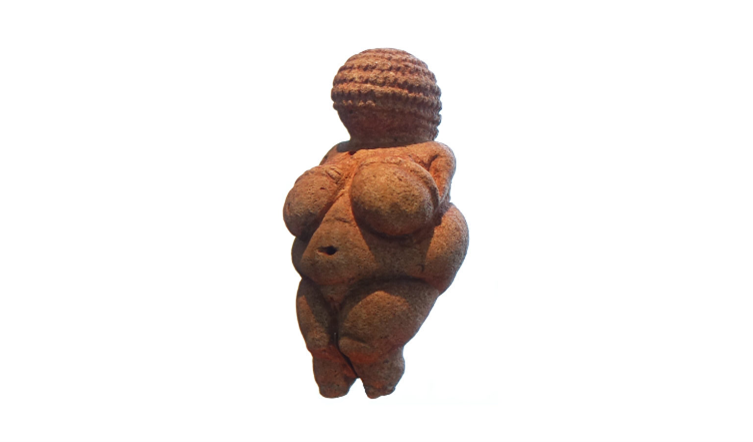
Hughes also acknowledges the statistical inconsistencies of female representation of History, stating that despite being 50% of the population they “only occupy around 0.5% of recorded history”. Although, things have not always been this way. Hughes cites that between 40 000 BCE to 5000 BCE the archaeological record demonstrates that 90% of figurines made during this period are of women (such as the Venus of Willendorf, pictured below). These remains give evidence for the high status of women in religion, property ownership and the arts; however, expansion of civilisations through increased militarisation shifted the story of history from women to men, who were traditionally the arbiters of war and politics in most ancient societies. Consequently, the stories of men, war and power became the focus of the early written histories of figures such as Herodotus, Thucydides and Livy, which have been perpetuated in the written record ever since. This is a significant problem that historians and teachers alike face today when trying to increase the visibility of women in History. For example, the World Wars still dominate the Stage 5 and Stage 6 Modern History Syllabi, with women remaining as footnotes as either nurses, homefront workers or grieving mothers and widows. Reading between the lines of the syllabus aims to reclaim the real women at all levels of power and to attempt to mitigate the bias which has forced most women out of the written historical record.

The Venus (or Woman) of Willendorf, c. 24 000 – 22 000 BCE (Naturhistorisches Museum, Vienna; photo: Steven Zucker, CC BY-NC-SA 2.0) Source – https://smarthistory.org/venus-of-willendorf/

In doing this, teachers must look at the syllabus content dot points that relate to women even if they don’t explicitly reference them. An example of this is the content dot point of ‘Local political life, including magistrates and elections’ in the Ancient History 11-12 Core topic of Cities of Vesuvius: Pompeii and Herculaneum.

By teaching aspects of this dot point through the Building of Eumachia, a public priestess of the city, demonstrates the integral role elite women played in promoting the political careers of their male relatives. This is what is meant by reading between the lines of the syllabus. In applying this approach again to my own teaching context, teachers can reclaim a higher percentage of women’s history in the following areas:

  • An additional 27% of the syllabus for Stage 4, 28% for Stage 5 for a total increase of almost 24% across the junior school
  • Almost an additional 10% in the Stage 6 Modern History
  • 16% increase in Stage 6 Ancient History
  • Some interesting changes for History Extension, with more dot points explicit about the role of gender on historiography for an increase of over 20% of within the topic of Constructing History
  • Overall, for Stage 6, this means that there is almost a 15% increase.

And, if we are reading between the lines of the syllabus from 7-10, we can increase and reclaim over 18% for a total of over 40% of syllabus content dot points connected to women’s history. Reading between the lines of the syllabus in this way is getting us closer to the 50% mark!

Reading Between the Sources: Historiographical Rethinking

“Roman women – no cause about them or without them. To me they are an integral part of the story. Absence of evidence is not evidence of absence.” (Kathryn Welch)

As historians, sources are our greatest weapon and one of the most effective teaching tools in the classroom. However, the interpretation of these sources often read the social values and historical context of historians into the past thus creating problematic anachronisms for our students to unpack. This process of historiography is an essential part of History as an academic discipline, and is also identified at the top of all topics in the current Year 12 Ancient History Syllabus, providing teachers with the responsibility to teach this fundamental concept to our students. 

The reinterpretation of sources is the focus of historian, academic and former secondary school teacher, Kathryn Welch She wasalso a former Associate Professor in the Department of Classics and Ancient History at the University of Sydney. Welch advocates for a rethinking of how women are understood in History, specifically in the context of ancient Imperial Rome. Her work questions the accuracy of historical heavyweight Theodor Mommsen’s (German classicist, 1917 – 1903) belief that Roman women held only positions of domestic subjection, which clearly does not align with the available archaeological evidence. Welch believes that Mommsen removes women from history even more so than ancient writers such as Livy did. Whilst she acknowledges that much of Mommsen’s work is influential, it is his social and historical context’s attitudes towards women which either exaggerate or downplay their historical roles Their own cultural norms and values thus influence their writings of History 

Welch’s  specific rethinking of women asks where are women absent in the sources, and why? Was it men’s place to talk about women? Perhaps not. Are women always being belittled or ignored in the sources, or was it seen as improper for men to talk about women in this way? Perhaps. Her work reminds us that the silences in the sources are critical, but we should not be reductive about them. This approach teaches students to reconfigure their ideas of existing evidence and to factor women in, even when they initially appear invisible. It encourages them to read between the sources.

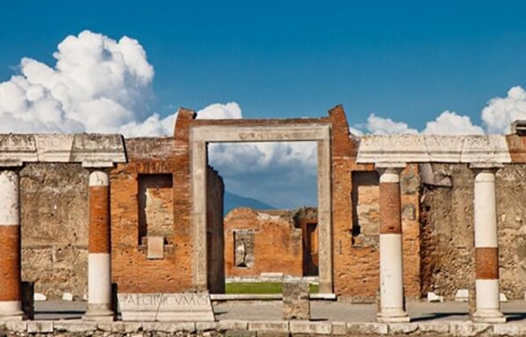
The edifice of the Building of Eumachia in the Forum of Pompeii, Italy. Source – https://www.planetpompeii.com/en/map/the-building-of-eumachia.html

An example of this rethinking is best illustrated through the archaeological remains of the Building of Eumachia in Pompeii, Italy. Eumachia was a public priestess of Venus who commissioned the most imposing building on the eastern side of the Forum in Pompeii. Many houses and streets had to be demolished to make way for its immense construction.

It was originally interpreted to have functioned as the warehouse or headquarters of the wool and fuller’s (laundry) guild, then later as an auction house for slaves. But how could this be considering its grand size, prize location and inscription?

 The inscription reads:

Eumachia, daughter of Lucius, a public priestess, in her own name, and in the name of her son, Marcus Numistrius Fronto, made the chalcidicum [portico/vestibule], the crypta [vault/underground chamber] and the porticus [covered walkway] with her own money and dedicated the same to Concordia Augusta and to Pietas.

Inscription from the Building of Eumachia. Source – https://www.drshirley.org/latin/inscription.html

Welch’s rethinking recontextualises this building into the era it was constructed (the early First Century CE), understanding that Concordia (harmony/concord) and Pietas (piety/devotion) are foundational elements of the new and highly experimental Augustan principate, or empire with which Eumachia is very clearly keen to be associated – as evidenced by both the visual and written elements of this building. The Latin grammar of this inscription is very specific – ‘in her own name’ – Eumachia is in the nominative case, she is active as the dedicator and financier, and her name is in much larger letters than her son’s. And perhaps most tellingly, her husband is never mentioned.

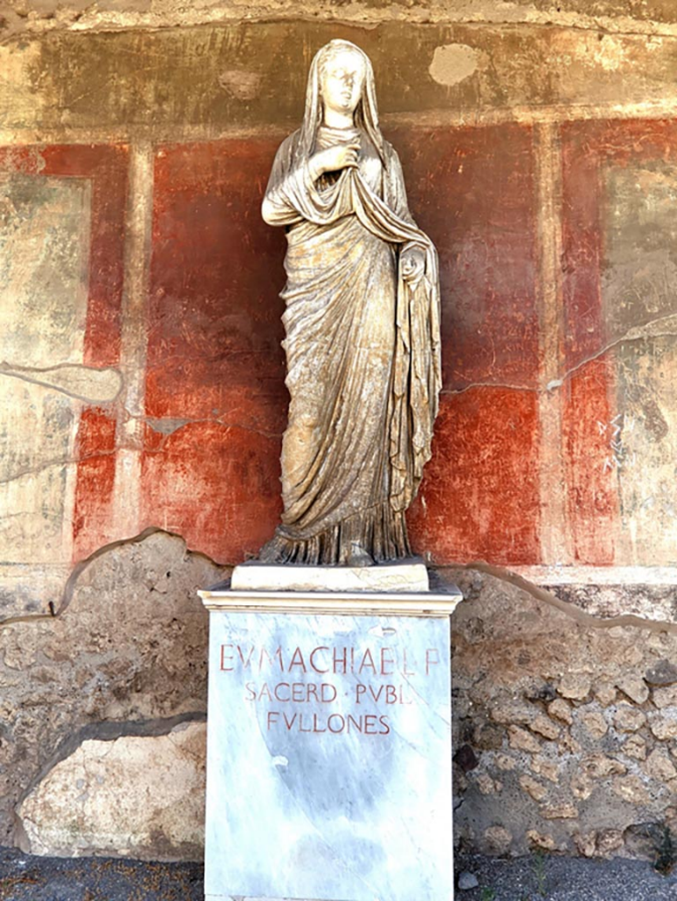
Confusion sets in with the interpretation of another inscription at the base of a statue dedicated to Eumachia within the complex by the fuller’s guild:

To Eumachia, daughter of Lucius, public priestess of Pompeian Venus, from the fullers.

Welch’s rethinking reads this as evidence of her patronage of the fullers and not the fact that any fullery or textile work occurred in the building. Here is a clear example of men being inserted into a building where they historically were not. This then opens the question for your students –  what was the building used for? Ongoing analysis and historiographical debate will only tell.

In the meantime, in the case of Eumachia, reading between the sources in this way gives us evidence of the significant economic, social, and therefore, political power that elite women occupied in imperial Rome.

VII.9.1 Pompeii. April 2022.
Broad niche 13 with the statue of Eumachia. Photo courtesy of Giuseppe Ciaramella.
Source – https://www.pompeiiinpictures.com/pompeiiinpictures/r7/7%2009%2001%20p4.htm 

Welch’s developing historiography of this one building reminds us that even though women could not vote or be elected to political office, they could still wield immense political influence.  They just had to find more ingenious ways of accessing it. Eumachia is a far cry from the domestic sphere to which Mommsen, and others like him, attempt to confine the women of history. This is an essential source to give students in the Core study: Cities of Vesuvius – Pompeii and Herculaneum to guide them on how to read between the sources, whilst simultaneously enhancing the syllabus content dot point on women within the social structure.

Other interesting sources being reinterpreted for women in both Pompeii and Herculaneum:

  • Julia Felix and her praedia (estate) which took up an entire insulae (block) in Pompeii, including a revealing inscription about her ability to rent out different parts of her estate
  • Eva Jakab’s work on wax tablets detailing the legal and economic agency of women in both Pompeii and Herculaneum
  • Vibidia Saturnina, a public priestess who began her life as a slave but eventually rose to a position able to erect a large marble inscription and donate large sums to the cult of Venus.

Making Women Visible in the New History Syllabi

As you and your colleagues plan for the new syllabus, consider the following to better incorporate women’s history into your classrooms and the lives of your students:

  • Choose women! In optional depth studies, case studies and site studies.
  • Take opportunities given by the syllabus – ‘Social impacts’, ‘differing perspectives’, ‘differing interpretation/experiences’… This equals women!
  • Women are already in (some of) the sources – ‘Nature/range of sources’, ‘limitations/gaps of sources’ – so take these opportunities to teach through female focused sources
  • Technological developments in archaeology – How can scientific developments reveal more detail about women’s lives? Especially those of the slaves and the lower classes.
  • Historiographical developments – How are women being reinterpreted by each new generation of historians and writers? How have early modern values of women impacted how ancient and/or medieval sources were interpreted? How is this currently being revised?

Further Reading

Other interesting authors who also write about reclaiming women’s history, with a particular focus on the ancient world, are:

  • Sarah B. Pomeroy – Goddesses, Whores, Wives and Slaves: Women in Classical Antiquity (1975); Spartan Women (2002)
  • Joyce Tyldersley – Hatshepsut: The Female Pharoah (1996)
  • Judith Ginsburg – Representing Agrippina: Constructions of Female Power in the Early Roman Empire (2005)
  • Mary Beard – Women and Power (2017)
  • Kara Cooney – When Women Ruled the World: Six Queens of Egypt (2018)
  • Bettany Hughes – Helen of Troy (2005); Venus and Aphrodite (2020)
  • Emma Southon – Agrippina: Empire, Exile, Hustler, Whore (2018); A History of the Empire in 21 Women (2023)

References

English Heritage. (2016, February 29). Why were women written out of history? An interview with Bettany Hughes. English Heritage. https://www.english-heritage.org.uk/visit/inspire-me/blog/blog-posts/why-were-women-written-out-of-history-an-interview-with-bettany-hughes/

Jakab, E. (2017, January 21). Sale and Community from the Roman World. Academia.edu. https://www.academia.edu/31024546/Sale_and_Community_from_the_Roman_World

NESA. (2021). History Elective 7–10 NEW | NSW Education Standards. Nsw.edu.au. https://educationstandards.nsw.edu.au/wps/portal/nesa/k-10/learning-areas/hsie/history-elective-7-10-2019

NSW Education Standards Authority. (2012). History K–10 | NSW education standards. NSW.edu.au. https://educationstandards.nsw.edu.au/wps/portal/nesa/k-10/learning-areas/hsie/history-k-10

NSW Education Standards Authority. (2024, October 28). Ancient History Stage 6 Syllabus (2017). NSW Government. https://educationstandards.nsw.edu.au/wps/portal/nesa/11-12/stage-6-learning-areas/hsie/ancient-history-2017/

NSW Education Standards Authority. (2025a, March 10). Modern History Stage 6 Syllabus (2017). NSW Government. https://educationstandards.nsw.edu.au/wps/portal/nesa/11-12/stage-6-learning-areas/hsie/modern-history-2017/

NSW Education Standards Authority. (2025b, March 11). History Extension Stage 6 Syllabus (2017). NSW Government. https://www.nsw.gov.au/education-and-training/nesa/curriculum/hsie/history-extension-stage-6-2017

Planet Pompeii. (2019). The Building of Eumachia – Planet Pompeii. Www.planetpompeii.com. https://www.planetpompeii.com/en/map/the-building-of-eumachia.html

Rollinson, D. S. (2017). Latin Inscriptions – Dr. Rollinson’s courses and resources. Drshirley.org. https://www.drshirley.org/latin/inscription.html

Smith, L. (2025). ANNUAL REPORT 2025 CONTENTS. https://conference.nswtf.org.au/wp-content/uploads/sites/5/2025/07/25053-AR25-Book_DigitalV3.pdf

Welch, K. (2022). Roman Women. Roman Women.

Zygmont, Dr. Bryan. (2015, November 21). Venus of Willendorf. Smarthistory.org. https://smarthistory.org/venus-of-willendorf/

(2014). Pompeiiinpictures.com. https://www.pompeiiinpictures.com/pompeiiinpictures/R7/7%2009%2001%20p4.htm


About the author

Jen Sonter began teaching in 2016 around the Central Coast, eventually landing at Terrigal High School in 2018. She has since been working full time at Pittwater High School on the Northern Beaches of Sydney, finally achieving permanent employment there in 2022. She has predominantly worked in mainstream classroom settings throughout this time, but has also worked in wellbeing roles such as Year Advisor. She is a passionate history teacher and takes up any opportunity to travel and experience historical sites from far and wide. She brings this passion into the classroom in the hopes of passing it on to her students.

Jen SonterDownload

Reclaiming (In)Visible Women in the History Curriculum

Judy King suggests that a woman’s place is everywhere, including the NSW History Syllabuses : HSIE K-6, History Years 7-10, History Elective Years 9-10, Modern History Years 11-12, Ancient History Years 11-12 and Extension History Year 12...

Ensuring that the achievements of women are included in the History curriculum cannot be left to a happy accident. It requires systematic planning and programming. It does not require extensive lists of content, but it does require some fresh approaches to programming and the framing of challenging enquiry questions which will engage students K-12.

The scope and sequence for each year or stage will depend on the time allocated for History lessons in each school. The hours in each school vary and are not always the same number of hours prescribed in the NESA syllabuses. The scope and sequence for a Year 8 class allocated 80 hours of History per year will be different from that of a Year 8 class allocated 100 hours or 120 hours.

The planning does not have to cover pages and pages. For mandatory History years 7-10, schools often allocate one major area/unit of work per term, a total of 4 each year, or 6-8 per year if some units are allocated half terms of 5 weeks instead of a whole term of 10 weeks.

Hours allocated for excursions, tests/exams, school assemblies and events should be factored into the planning page so as the ELT (engaged learning time) is the planning focus rather than the TLT (theoretical timetabled learning time)

The planning for each topic or area of enquiry can be outlined on a single A3 page, which includes brief notes on

  • Essential knowledge and understanding (what will students know and understand?)
  • Big enquiry questions which will stimulate debate, research, discussion
  • Historical concepts from the syllabus (including cause and effect, continuity and change, contestability, heritage, empathy)
  • Evidence of learning (what am I going to see, read, view, assess as a result of the work completed by the students? formal/informal assessment)
  • Skills relevant to the chosen area of study (these will vary from topic to topic and will not necessarily be the same each time (recall, summarise, explain/account for, define, argue, interpret, compare and contrast, deconstruct sources/evidence, draw inferences, investigate, research)
  • Essential vocabulary (all key terms associated with the new area of study)
  • Resources (including written, film and visual sources, graphs, maps, sites, websites, photographs, monuments)
  • Extension activities or modifications for mixed ability classes

Years 7-10 students should be exposed to all the skills listed in the syllabus over a four year period and this requires keeping records especially if Mandatory History and Geography courses are semesterised in the timetable and are not taught by the same teachers over each of the four years.

We do not have to lift large slabs of content straight from the syllabus. We do not have to outline every lesson over the 5 or 10 weeks per unit. Lesson outlines can be part of a support document rather than the streamlined teaching program itself. It is essential that students are issued with a unit of work outline before each unit of work begins. The essentials will fit on one page. Expectations of what students will come to know and understand and be able to do as a result of the unit should be clearly identified. Evidence of learning should also be clearly indicated and then followed up and recorded in each unit.

Thematic programming gives teachers the opportunity to teach more than one area of the syllabus in the same unit of work. In Stage 5 students are required to study seven focus areas in 100 hours, including three core depth studies Australia: Making a Nation, Australia at War and Human Rights and Freedoms via the choice of two options a case study and a site study.

Why not list the big enquiry questions up front and then use the content from all three or some of the Stage 5 depth studies to answer them. If half the population of any given period is to be included in the academic discourse, some key questions will need to refer specifically to women and women’s achievements

Some of the questions could include:

1.In what ways has the history of women and women’s voices been silenced over millennia/the last 200 years/until post-World War Two?

2.Why is the image of a “green faced witch with a pointed hat, large nose and broomstick” constantly used in the 21st century to denigrate women politicians and leaders (e g Thatcher, Gillard, Merkel, Clinton)?

3.What ten items would you select to represent the history of women in Australia in an exhibition covering the period of World War 1/Word War Two /post-World War Two?

4.What are the opportunities available in 2025 for us to hear the voices of Aboriginal women and/or migrant women in our 21st century Australia? What rights and freedoms have been gained, and which ones have been denied?

5.Why were women in France granted the vote in 1944 while Australian women were granted the vote and the right to stand for public office in 1901 at Federation?

6.Did militancy hinder or assist the campaigns by the suffragettes in the UK, USA and Australia to secure the franchise for women? What was the difference between a suffragist and a suffragette? Why is the distinction important?

7.Why and how were convict women, transported to Australia 1788-1867, demonized as “damned whores and obstreperous strumpets” in 18th and 19th century Australia?

It doesn’t matter which areas of the syllabus are being taught, the questions really matter.

When studying Ancient Greece and Rome in Stage 4 we need to ask questions similar to these:

1.Why were women excluded from the Agora and from the Forum in Ancient Greece and Rome?

2.Can Athens really be regarded as the “birthplace of democracy” if only 35% of the population could vote, women, slaves and metics were excluded from voting and engaging in popular discourse?

3. How has the fact that most of what is taught about Roman history includes military campaigns and “big events” led to the ignoring of the significant contribution of Roman women?

If teachers have programmed a unit of work on Heroes and Villains for Elective History

Years 9-10 there is perfect opportunity to ensure that the achievements of women and girls are included as part of the focus on “good/bad” deeds of individuals and groups of both men and women. Lots of possible organizing themes comes to mind, including:

Organizing themeKey individual womenImportant questions
Women warriors and leadersJoan of Arc, Boudicca, Cartimandua Queen of the Brigantes, Nancy Wake and the SOE women spies of World War 11, Soviet Women’s Airforce and Sniper Brigades of World War 11, Cleopatra V11, Zenobia of Palmyra, Margaret of Anjou,How were they viewed by their contemporaries?  
How were they viewed by later historians?
Have the views changed over time? If so, why?  
Who opposed the women leaders or groups of women at the time?  
How did the women withstand the criticism and vilification?   How did they lose/retain their power?  
Why were women scientists excluded from the Royal Society 1662-1946?  
Why are so few women awarded the Nobel Prize?  
Did the women leave any documents, art works, publications?
What is their legacy in 2025?  
Which women with a book, an opinion and an ambition to be heard or included in public discourse have been silenced over the centuries and how?  
Why were women forbidden to run the Marathon in the Olympics until 1984 ?    
Why were Sophie Scholl and fellow members of the White Rose Resistance to Nazi Germany guillotined in 1944?
How widespread was the resistance to Hitler inside Germany during World War Two?  
In what ways did Aboriginal men and women resist the British colonial government and armed forces 1788-1850s?  
Why has the AWM consistently resisted pleas to include the Frontier Wars in its displays within the War Memorial?  
Who were the radical women who were transported to Australia after the Peterloo Massacre 1819 in Manchester and the Irish rebellion in 1799?
Why are they regarded as some of the “first teachers in the new colonies of NSW and Tasmania”?
Women as social justice agents, reformers in UK, USA and AustraliaCoretta King and the civil rights activists in the USA, Mary Wollstonecraft, Emily Davison, Emmeline Pankhurst, Vida Goldstein, Ruth Bader Ginsburg, Malala Yusofzai, Rachel Perkins, Oogeroo Noonuccal, Chartists, Abolitionists, Convict radicals, Suffragists
Scientists and MathematiciansLaura Bassi Italy, Marie Curie Poland and France, Caroline Herschel UK, Fiona Wood Aus, Elizabeth Blackwell USA, Rosalind Franklin UK
Women with “Dangerous Ideas”Mary Wollstonecraft, Mary Shelley, Afra Behn, Margaret Cavendish (Duchess of Newcastle), Louisa Lawson, Gloria Steinem, Malala Yusofzai, Greta Thunberg, Taylor Swift, Artemisia Gentileschi, “Witches” 14th– 19th centuries  
Women in the dock and executedMary Queen of Scots 1587, Ruth Ellis 1955, Sophie Scholl 1944, Mata Hari 1917, Edith Cavell 1916, Ethel Rosenberg 1953, Martha Corey 1692, Marie Antoinette 1793, Mary Surratt 1865, Dora Kaplan 1924, Charlotte Corday 1793
Early Colonial History of AustraliaMary Bligh, Elizabeth Macarthur, Mary Reiby, Barangaroo, Truganini, Elizabeth Macquarie, Anna King, 25,000 women convicts transported to Australia 1788-1867, Emancipated, ticket of leave women    

It is essential that, as History teachers, we inspire students to

  • Ask further questions
  • Make connections
  • Interrogate sources and determine ones which provide us with evidence
  • Extend their vocabulary
  • Understand our political, social and cultural heritage
  • Construct arguments based on the evidence available

 We cannot meet any of those challenges in our History classrooms if we omit half the population from our steely gaze and from our historical enquiry questions.

No matter what the unit of work and no matter what the age and experience of the student we should be asking students to think about:

  • Who has the power?
  • How did they achieve that power?
  • Who has been prevented from sharing that power?
  • How did they keep/lose that power?
  • What terms and concepts have we inherited from ancient civilisations?
  • What were the consequences of a narrow power base in the short/longer term?
  • Which websites speak with authority? How do we know?
  • Are historical facts different from scientific facts? if so, in what ways?
  • What photos or images have changed the world?
  • In what ways can false images be created in the 21st century?
  • What are the challenges for the next generation of historians?

If you make a deliberate decision to include women in all aspects of your History teaching, after a few years it will be so usual to see them there, that CPL would not need to run any courses about Reclaiming (In)Visible Women in the History Curriculum. Women would be right there as you prepared of your units of work, your big questions, your formative and summative assessment strategies. They would appear in the source materials and written and visual stimulus materials you provided for the students. They would pop up in verbal quizzes and games. If you have your own classroom, their pictures would be on the wall and on the noticeboards alongside the men being studied.

Do give it some thought and good luck!

References

What is History Teaching Now ? A Practical Handbook for All History Teachers and Educators (John Catt 2023) Alex Fairlamb and Rachel Ball

History Thinking For History Teachers, A New Approach to Engaging Students and Developing Historical Consciousness (Routledge 2020) ed. Tim Allender, Anna Clark and Robert Parkes

About the author

Judy King OAM  MA Dip Ed

Judy King is a former high school principal and a Life Member of the NSW Teachers Federation, the Australian Education Union and Secondary Principals’ Council. She retired from Riverside Girls High School in 2010 after 19 years as a secondary principal.

Since retirement Judy has worked part time at Chifley College Mt Druitt campus, Northmead High and Georges River College in an executive support role with a strong focus on teaching and learning, assessment and reporting, especially in the areas of reading for meaning and writing for purpose.

She currently teaches History and Politics at WEA , the oldest adult education foundation in the CBD of Sydney.

Judy represented secondary principals on the Board of Studies (now NESA) from 1998-2004 and was History Inspector at the Board in 1991. Judy was deputy president of the SPC from 1998-2006.

In 2018 she researched and wrote a history of the NSW Teachers Federation 1918-2018 as part of its centenary celebrations. The articles were published throughout each edition of Education in 2018 and were featured as part of a three week exhibition in the Federation building.

In 2007 Judy was awarded the Meritorious Service in Public Education medal by the Department of Education.

Judy has an abiding interest in all aspects of Ancient, Mediaeval and Modern History as well as archaeology, politics and film. In 2014 and 2019 she attended the Cambridge University History Summer School for international students and hopes to return in 2025.

In 2024, Judy was awarded an OAM for “services to secondary education.”

Judy KingDownload

Convict Women

Monika Schwarz uses modern data analysis to shed new light on how 19th Century female convicts resisted the system designed to keep them in place. . .

The Bread Riot

In May 1839 the usual proceedings in the Cascades Female Factory in Hobart were disrupted by a major incident. 200 convict women, all held at the crime class1 of the institution at the time, instigated a food riot after they found that instead of wheat the bread they received, as their ration that day, had been made of inferior barley. The women took control over the factory, forcing the principal superintendent for convicts, Josiah Spode, to hurry to the scene, followed by the chief constable and a dozen police men. When they arrived, the Colonial Times, a Hobart newspaper at the time, claimed that they were held ‘absolutely in deviance’ by the women (Smith 2021, p. 205). It wasn’t the only riot ever to occur in a female factory with similar events documented in Parramatta or Launceston (Daniels 1998, pp.146-151).

The Function of the Female Factories

Female Convicts could see the insides of a female factory at various stages of their passage through the colonial penal system. The first time was usually directly after their arrival, as the factories were used as distribution centres. In total, between 1788 and 1868, 168.000 convicts, predominantly from England and Ireland, were transported to Australia. Instead of filling up English gaols, they were brought across the seas to help with the colonisation of the newest addition to the British Empire . One in every six convicts was female, about 25,500 women overall. After their first brief stint in the assignment class of a factory, female convicts were usually assigned as servants into the settler households.

Image 1 Chart Showing Convict Arrival by Gender (visit https://monalena.github.io/vue-colonialbackdrop/ to explore this interactive visualisation)

The Conduct Registers

Every offence perpetrated by a convict while ‘under servitude’ and brought to a prosecution was entered into the conduct registers. Female convicts, different to male convicts, often worked and lived in very close proximity to their employers, usually under the same roof, and under the constant surveillance of their mistresses. Naturally, this situation could cause a lot of friction. An analysis of the offences recorded for female convicts bears witness to the kind of workplace battles in which the female convict servants and their colonial keepers were embroiled. 65% of the entries can be classified as offences against convict regulations, and ranged, in escalating order, from mere insolence and disobedience to neglect of work or refusing to work, to being out after hours or absent without leave, and finally, if things turned really sour, absconding (Cowley et al. 2021, pp. 29-30).

Image 2 Chart Showing Female Offences per Classification (visit https://monalena.github.io/vue-colonialbackdrop/ to explore this interactive visualisation)

Repeated offences, or severe offences like absconding, could bring a convict woman back into the factory, but this time she would serve a limited time, ranging from one month to a year, in the crime class. And while the women could be cut off from their peers while assigned to a specific household, the crime class in the factory gave them a chance to exchange experiences and get organised. As the superintendent of the Cascades Female Factory, Mr. Hutchinson, put it when he was interviewed for an official inquiry into the state of the factories, the biggest problem in the factory was that the women ‘talked’ (Smith 2021, p. 193).

It is incredibly lucky that the convict archives of Van Diemen’s Land have been fully preserved. And, through massive volunteering efforts like the one spear-headed by the Female Convicts Research Centre (https://femaleconvicts.org.au/), recent years have seen the complete digitisation and transcription of all female convict records. Having the conduct registers available in tabular, machine-readable form has a particular advantage. The original conduct registers are large leather-bound ledgers, where, for each arriving ship, details about every new convict, like their name, birthplace, age on arrival and reason for transportation, were recorded. After those details a part of the page was initially left empty, but every time a convict was brought to trial, the ledger would come out again to record the new offence along with its date, the sitting magistrate and the resulting sentence. Until now, these conduct registers were mostly used to reconstruct individual life courses. But in machine-readable form it is now possible to reorder the recorded offences by date and find connections between them. It is now possible to read the conduct registers across the grain.

Image 3 Fanny Jarvis Conduct Register (CON40-1-6P117 file downloaded from https://libraries.tas.gov.au)

The Plot Thickens

This means that we can now identify collective action in the female factories, in total 87 incidents between the years 1823 and 1854, when counting every instance where more than two women were sentenced for the same offence on the same day, in the same factory and by the same magistrate (Schwarz 2023, pp. 177-78). For example, the Bread Riot mentioned above led to the sentencing of 49 women, presumably the ring leaders. On the 6th of May 1839, every one of their offence registers received the same peculiar entry ‘Insubordination on the 4th instant in a forcibly, violently and turbulent manner resisting Mr. Hutchinson & and openly refusing to obey his lawful commands’.

The Bread Riot as an event made the news at the time and has been described by historians previously (e.g. Frost 2012, p.71; Smith 2021, p. 205). But through digital analysis we now know 49 names of participating female convicts.

One of these convict women was Fanny Jarvis. Originally a servant girl from Staffordshire, she was sentenced to life after stealing from her employer. It was a harsh sentence which may have caused Fanny’s recalcitrance. Her conduct register tells us that she spent long stints in the factories rather than serving some employer. She tried to incite her fellow prisoners to insubordination on at least one more occasion and once refused to testify in court (Follow this link to Conviction Politics’ documentary Fanny Jarvis – Right in the Middle )

And she participated not only in the Bread Riot, but ,three years later, also in the second largest collective event in the Cascades Female Factory, now dubbed the We Are All Alike incident:

In August 1842 the water pipes in the wash yard, where most of the women of the crime class would spend their day washing the colony’s linen, froze and broke down. Workmen had to be brought in to repair them, and the women were locked up in one of the upper bedrooms instead.

‘By mid-afternoon about 150 of them had reached frustration point. They began singing, dancing, shouting, clapping their hands and stamping their feet’ (Smith 2021, p. 206). When pressed for their ringleader’s names, the women first started chanting ‘We are all alike’. Eventually, 31 women were sentenced as a result of their involvement in this incident.

It is possible to look back at these events from a network analysis angle. By participating in the two separate events Fanny Jarvis created a connection between them, just like other women who participated in multiple events created further connections. And it is possible to visualise this network. It proves that collective resistance in the female factories were not isolated incidents. They were connected events, carried out by a body of women grouping together, time and again, to fight back against a system designed to exploit them as a cheap labour force. The network visualisation shows an intriguing amount of collusion, reflecting the social network the women became part of in the factories. The network also shows that the web of collusion spread across the different Van Diemen’s Land factories, most prominently the Cascades Female Factory, a converted distillery in the west of Hobart and the custom-built panopticon- style Female Factory at Launceston (Frost and Maxwell-Stewart 2022).

Image 4 Visualisation of the Female Factories Resistance Network (blue nodes: Cascades Female Factory, red nodes: Launceston Female Factory, beige nodes: other factories)

Conclusion

Historically, convict women were judged harshly. Comments by their contemporaries, usually coming from male writers with little to no experience nor understanding of the life of the lower classes, described them as ‘rebellious hussies’ (Frost 2012, pp. 66-67) or ‘contumacious, ungovernable and incorrigible’ (Reid 1997, p.106). This judgment was repeated for decades and only questioned by a first wave of female historians in the nineteen nineties (Daniels 1996, Oxley 1996, Damousi 1997). A lot of the early misconception around convict women, the female part of this first forced wave of European settlers, came from their own voices being largely absent. The use of modern data analysis can continue to change this perception. Originally the conduct registers were designed by the British bureaucracy to keep convicts in check by minutely recording every single one of their colonial perpetrations. Now, through digitisation and a modern ‘big data’ approach, the same registers can be used to show the convict women in a new light. Not as criminals. Not as victims. But as courageous and determined women, ready to organise themselves to fight back.

End notes

1 Crime class – the part of the factory set aside for female convicts who were repeat offenders.

References

Cowley, T., Frost, L., Inwood, K., Kippen, R., Maxwell-Stewart, H., Schwarz, M., Shepherd, J., Tuffin, R., Williams, M., Wilson, J. & Wilson, P. (2021). Reconstructing a longitudinal dataset for Tasmania. Historical Life Course Studies, 11, 20-47.

Damousi, J. (1997). Depraved and disorderly: female convicts, sexuality and gender in colonial Australia. Cambridge University Press, doi.org/10.1017/CBO9780511470172.

Daniels, K. (1998). Convict Women. Allen & Unwin.

Frost, L. (2012). Abandoned women: Scottish convicts exiled beyond the seas. Allen & Unwin.

Frost, L. &  Maxwell-Stewart, H. (2021). A Panoptic Eye: The Punishment and Reform of Female Convicts in Van Diemen’s Land. Revenue D’études Benthamiennes 21. doi.org/10.4000/etudes-benthamiennes.9802

Oxley, D. (1996). Convict maids: the forced migration of women to Australia. Cambridge University Press.

Reid, K. (1997). ‘Contumacious, Ungovernable and Incorrigible’: Convict Women and Workplace Resistance, Van Diemen’s Land, 1820–1839. In. I. Duffield & J. Bradley (Eds.), Representing Convicts: New Perspectives on Convict Forced Labour Migration. Leicester University Press.

Schwarz, M. (2023). ‘Round ring on the floor’—Collective resistance networks in female factories. Australian Journal of Biography and History, (7), 175-196.

Smith, B. (2021). Defiant Voices: How Australia’s Female Convicts Challenged Authority 1788–1853. NLA Publishing.

About the author

Dr Monika Schwarz is a research fellow at Monash University’s SensiLab. She holds a PhD in archaeology, with over 15 years of experience in that field, and a Master’s degree in information technology. Now specialising in the analysis, visualisation and even physicalisation of historical data, she has been and continues to work on various projects like ‘Conviction Politics’ (ARC funded), ‘A Stitch in Time’ (Whyte fund grant), ‘Putting Death in its Place’ (ARC funded) or ‘Making Crime Pay’ (ARC funded) since 2020. In these projects she is combining skills from her two careers in archaeology and information technology, for example by turning 19th century convict records into interactive data visualisations. Monika’s work has a particular focus on female narratives.

In 2024, Monika presented at the CPL’s course: Women in History: Reclaiming Invisible Women.

Monika SchwarzDownload

Conversations about Texts in Secondary Schools

Conversations about Texts in Secondary Schools

Overview

The focus of this one day course presented by Kathy Rushton and Joanne Rossbridge is to develop understandings and strategies for engaging secondary students in writing.

Participants will:

  • Develop strategies for teaching writing as the context in which grammar is taught.
  • Identify the language demands of texts commonly read and written in secondary schools.
  • Explore the differentiation between oral and written language and the grammatical features which identify each mode.
  • Develop deep understanding of a model of language and scaffolding, and practical strategies to explicitly teach relevant aspects of language across subjects.
  • Will focus on the teaching of writing as the context in which grammar is taught to support meaning
  • Be supported to recognise and analyse their students’ written work.

  • 13 March 2026 – NSW Teachers Federation, Surry Hills
  • 22 May 2026 – Wagga Wagga RSL
  • 14 August 2026 – NSW Teachers Federation, Surry Hills

All CPL courses run from 9am to 3pm.

$220 for one day

Please note, payment for courses is taken after the course takes place.

Secondary teachers especially teachers of all subjects requiring extended response writing such as HSIE, English, PDHPE and Science.

Teacher Librarians

Joanne Rossbridge is an independent language and literacy consultant working in both primary and secondary schools and with teachers across Australia. She has worked as a classroom teacher and literacy consultant with the DET (NSW). Her expertise and much of her experience is in working with students from diverse linguistic and cultural backgrounds. Joanne is particularly interested in student and teacher talk and how talk about language can assist the development of language and literacy.

Kathy Rushton is interested in the development of language and literacy especially in disadvantaged communities. She has worked as a classroom teacher and literacy consultant and provides professional learning for teachers in the areas of language and literacy development. Her current research projects include a study of multilingual pre-service teachers and the impact that teacher professional learning has on the development of a creative pedagogical stance which supports translanguaging and student identity and wellbeing.

Completing Conversations about Texts in Secondary Schools will contribute 5 hours of NSW Education Standards Authority (NESA) Accredited PD in the priority area of Delivery and assessment of NSW Curriculum/Early Years Learning Framework addressing Standard Descriptors 2.5.2 & 3.3.2 from the Australian Professional Standards for Teachers towards maintaining Proficient Teacher in NSW.

Women in History: Reclaiming (In)Visible Women

Women in History: Reclaiming (In)Visible Women

Overview

In this exciting new CPL course participants will delve into women in history, investigating programming approaches for History 7-10, History Elective years 9 and 10 as well as Extension History Year 12.

Utilising history case studies of both the well-known and forgotten women of history, participants will explore thematic, comparative and biographical event-based programming approaches, taking in key historical debates and the big questions in history.

Primary, Secondary and TAFE teachers are encouraged to apply to attend this course.

Presenter Judy King will take participants through planning units of work in History 7-10, History Elective years 9 and 10 and Extension History Year 12, including perspectives on women’s history in a variety of topics.

As well, participants will be given an overview of the Australian Research Council (ARC) international digital history project Conviction Politics.

If you are interested in this course, you may also be interested in a connected social event. Meet History’s (In)Visible Women over a drink and snack, is designed to complement the course and offers a relaxed social setting for those interested in women’s history and activism.

Friday 31 July 2026

NSW Teachers Federation, Surry Hills

All CPL courses run from 9am to 3pm.

Judy King

Judy King is a former high school principal and a Life Member of the NSW Teachers Federation, the Australian Education Union and Secondary Principals’ Council. She retired from Riverside Girls High School in 2010 after 19 years as a secondary principal.

Since retirement Judy has worked part time at Chifley College Mt Druitt campus, Northmead High and Georges River College in an executive support role with a strong focus on teaching and learning, assessment and reporting, especially in the areas of reading for meaning and writing for purpose.

She currently teaches History and Politics at WEA , the oldest adult education foundation in the CBD of Sydney.

Judy represented secondary principals on the Board of Studies (now NESA) from 1998-2004 and was History Inspector at the Board in 1991. Judy was deputy president of the SPC from 1998-2006.

In 2018 she researched and wrote a history of the NSW Teachers Federation 1918-2018 as part of its centenary celebrations. The articles were published throughout each edition of Education in 2018 and were featured as part of a three week exhibition in the Federation building.

In 2007 Judy was awarded the Meritorious Service in Public Education medal by the Department of Education.

Judy has an abiding interest in all aspects of Ancient, Mediaeval and Modern History as well as archaeology, politics and film. In 2014 and 2019 she attended the Cambridge University History Summer School for international students and hopes to return in 2025.

In 2024, Judy was awarded an OAM for “services to secondary education.”

Jen Sonter

Jen Sonter began teaching in 2016 around the Central Coast, eventually landing at Terrigal High School in 2018. She has since been working full time at Pittwater High School on the Northern Beaches of Sydney, finally achieving permanent employment there in 2022.

She has predominantly worked in mainstream classroom settings throughout this time, but has also worked in wellbeing roles such as Year Advisor.

She is a passionate history teacher and takes up any opportunity to travel and experience historical sites from far and wide. She brings this passion into the classroom in the hopes of passing it on to her students.

Emma Seabrook

Emma Seabrook began teaching in 1992 at Crestwood High School in Sydney’s Northwest.  Her first permanent position, in 1995, was at Cambridge Park High School in the Western suburbs.

She has worked in public education her whole career and is currently teaching History and Society and Culture at Winmalee High School, in the Blue Mountains. As well as teaching History through all stages, Emma’ focus is on student well-being and has her career has included various stints as Year Advisor.

$220 for one day

Please note, payment for courses is taken after the course takes place.

“Excellent resources provided by all speakers.”

“Judy’s session was very thought provoking and a great way to start. Very inspirational woman.”

“All presenters were engaging and informative. I appreciate their generosity in sharing.”

“Very valuable course. (I have) new ideas to take back to school.”

“Thank you Federation and the CPL team for providing another extremely useful PD. All PD by the CPL has presenters who are genuine experts in their fields and provide useful resources and knowledge.”

Recent Posts

    Recent Comments

    No comments to show.

    Archives

    No archives to show.

    Categories

    • No categories

    QUICK LINKS

    QUICK LINKS

    Join The Union

    Courses

    Journal

    Podcast

    Contact Us

    Share this page

    About

    Who we are

    What we do

    Presenters

    FAQ

    Professional Learning

    Courses

    Journal

    Podcast

    Policy and Guidelines

    Privacy Policy

    Social Media Guidelines

    Our Ethics

    Useful Links

    About

    Head Office Details

    Member Portal

    Media Releases

    Become a member today

    NSW Teachers Federation

    Connect with us

    © 2025 New South Wales Teachers Federation. All Rights Reserved. Authorised by Maxine Sharkey, General Secretary, NSW Teachers Federation, 23-33 Mary St. Surry Hills NSW 2010.