Skip to content

Join Today

Member portal

NSW Teachers Federation
  • Home
  • Courses
    • All Courses
    • All Conferences
    • Primary
    • Secondary
  • Journal
    • Journal Issue
    • For your Classroom
    • For your Staffroom
    • For your Future
    • For your Research
  • Podcast
  • About
    • Who we are
    • What we do
    • Our Presenters
    • FAQ
    • Contact Us
NSW Teachers Federation
  • Home
  • Courses
    • All Courses
    • All Conferences
    • Primary
    • Secondary
  • Journal
    • Journal Issue
    • For your Classroom
    • For your Staffroom
    • For your Future
    • For your Research
  • Podcast
  • About
    • Who we are
    • What we do
    • Our Presenters
    • FAQ
    • Contact Us

Journal Category: For your Classroom

Is Inclusion Truly Inclusive?

John Skene provides some views and perspectives on the ever changing ‘concept’ of inclusion in the school context…

“…every child has a fundamental right to education, and must be given the opportunity to achieve and maintain an acceptable level of learning,”

(vii, The Salamanca Statement, UNESCO, 1994)

The education system has a responsibility to create conditions that enable teachers to lift-up and support the development of all students regardless of ability or disability.

We will unpack the differing definitions of inclusion and the impacts on your school setting as well as highlight some strategies and systems that can start the discussion in your workplace around ideas of best practice to support the learning and development of ALL students in your class.

The Inclusive divide

“If your ‘inclusion’ doesn’t allow us to be our authentic selves in the places we’re being included, then it’s not ‘inclusion’ at all. It’s assimilation.”

~Chris Bonnello (2025)

Inclusion is a term fraught with conflicting ideals and meanings from every level of education, government and within the community. From those that believe “full inclusion” (Ford, 2013, p.10) is the only way students can learn alongside peers, to those that believe in systemic structures and inclusive classrooms that embrace a holistic model of learning.

The NSW Department of Education (2021) defines inclusive education as when “all students, including students with disability, are welcomed by their school and supported to reach their full potential.”

Whichever one you believe, the research indicates both positives and negatives, without definitive conclusions either way.

To add to the debate, we must look at the difference between integration and inclusion. What most don’t realise is there is a stark difference. Integration is the action of bringing different groups or peoples together in the same space versus inclusion which values the differences of people and using these to support all learners.

Think about your current classroom.

Are all the students the same? What kinds of difference are present? Do you value these differences or see them as a burden? Do you value individuality and celebrate different ways of learning? What strategies or supports do you implement to ensure all learners are engaged? Does everyone in your class have a voice?

How you reflect upon, and answer the above questions, will determine your true view and definition of inclusion.

The following discussions and ideas will allow you to broaden, reaffirm or change your understanding of “inclusion” to build capacity in your workplace and support those around you.

One Size Does NOT Fit All

Due to the complexity of school communities, support allocation and funding, a universal approach to inclusive education is a complex phenomenon (Nilholm, 2021). We need to work collaboratively to embed inclusive practices into our system that allow individuals the opportunity to engage at all levels of learning.

The debate of inclusion and its generic ‘Band-Aid’ approach does not support or embed practices that allow individuals to thrive.
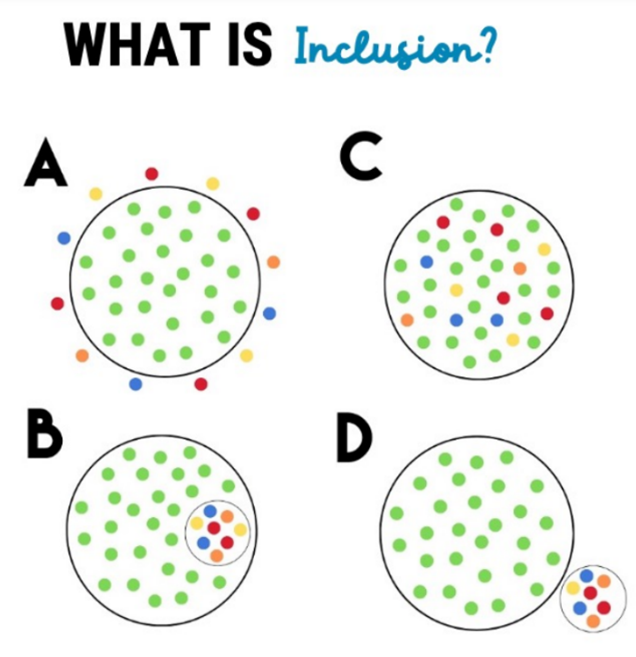
Figure 1 What is inclusion? (Moore, 2024a)

Look at Figure 1 (Moore, 2024a) – which do you pick as ‘inclusion’? Is your answer A? B? C? or D?

Take a moment to reflect on your views, beliefs and convictions. Which one did you choose? Which one reflects your current school structures and operations.
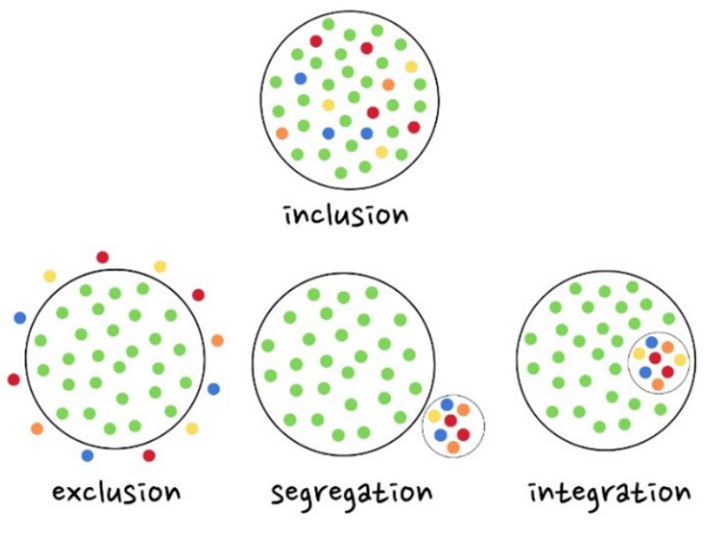
Figure 2 Inclusion, Exclusion, Segregation and Integration (Moore, 2024a)

Figure 2 (Moore, 2024a) provides you the answers to the types of thinking and belief structures when referring to difference. Did you pick “C” as inclusion? If so, this is a good place to begin.

It shows the goal of “all” being together and acknowledged in the space they are. This is where the terms integration and inclusion need to be particularly reflected on in your current context in order to assess the correct construct in your school and the philosophy that you hold. But what if there was a different view again? A way to view inclusion that will require shifts in language and thought to allow greater engagement.

Dr Shelley Moore (2016) uncovers a variation to the meaning of inclusion. Defining inclusion as: “there is no other” (p. 4). Inclusion is no longer about just the students with disability, it’s about shifting paradigms to embrace, celebrate and consider all types of diversity in our learners and world (Figure 2a).

Figure 2a Inclusion is everyone as “other” (Moore, 2024a)

Everyone is seen as the diverse individual that they are; learning ability, language, cultural background and more. And this is used to support planning and programming within the school context not seen as a hindrance.

A “one size fits all”, is not an effective model to implement, as it removes the individuality and diverse needs of the students within our settings.

This idea of inclusion works across mainstream, support classes and schools for specific purposes. It supports all teachers to widen their thinking on learning needs and difference in all its facets.

If teachers took on this view of inclusion, they would be relying on a strengths-based approach to planning and learning rather than a deficit model (Moore, 2016). It’s about bringing students together to allow them to build on their strengths and the strengths of others in a safe and supported environment. It is about allowing opportunities where available, with strongly funded support, for students to engage in learning that builds capacity and development.

Collaborative Classroom

Nilholm (2021) in defining “inclusion” moves between theory and practice to support understanding for the classroom context. It states that inclusion involves all pupils, regardless of needs, participating both socially and academically in a supported space.

In 2024, in Australia, 1,062,638 school students (government and non-government) received an educational adjustment due to disability comparative to 2015 with 674,323; a 58% growth in enrolment (ACARA, 2025).

It is more apparent than ever that teachers need to work collaboratively (mainstream and specialist), to support the diverse learning needs of students within our classrooms. Reaffirmed more with the news that a record 221,000 NSW public school students were diagnosed with a disability in 2024 (Townsville Bulletin, 2025). Highlighting that one in four students in public schools, have a disability, making the need for collaboration and more effective supports and structures a government necessity.

The Centre for Education Statistics and Evaluation (CESE) data (Figure 3) highlights the upward trend of 1,523% enrolment increase of students with autism in our support classes and schools for specific purposes (SSPs) across the last 20 years. This information demonstrates an important need for the profession to look at ways to support this group of students (and the teachers) across school settings to better meet the individual needs of all students.
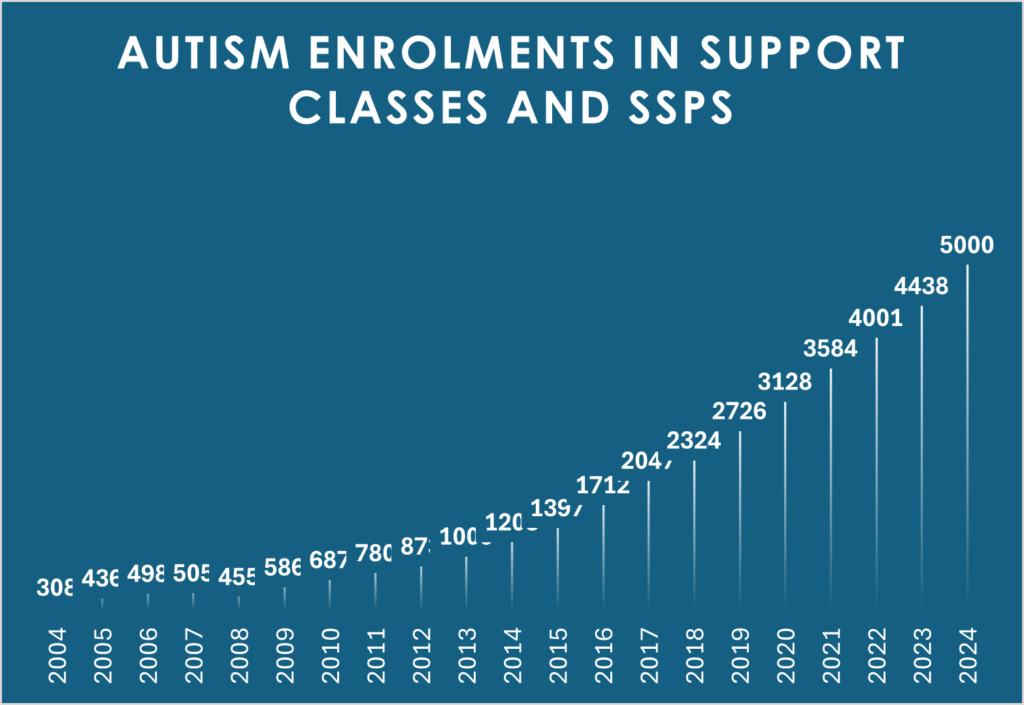
Figure 3 Number of autism enrolments across Support Units and SSPs 2004-2024  
Source: NSW CESE Statistical Bulletins (2025)

One such model that can be implemented is the Collaborative Classroom model. Collaborative Classrooms is a school-wide strategy developed to maximise inclusion and achievement by ensuring that the expertise of all staff is utilised to its full potential to support students of all abilities, across all classrooms and settings.

It gives every student access to the collective expertise of staff while ensuring individual support needs are explicitly addressed regardless of the class or program in which they are enrolled. It allows specialist teachers and SLSOs to work with parents, students and staff to allow each student a balanced experience of ‘special education’ in their “Home Class” (support unit) and benefiting from a sense of belonging in their “Peer Class” (mainstream).

Classes are formed more based on stage, than classification, to allow students (and teachers) to be linked to their peers. This organisation allows individuals and small groups from mainstream to work in the Support Unit, allowing them greater opportunities to work toward their learning goals. Conversely this structure allows students to work with their peers across the curriculum. This enhances classroom practice, experience, perspective and collegial training.
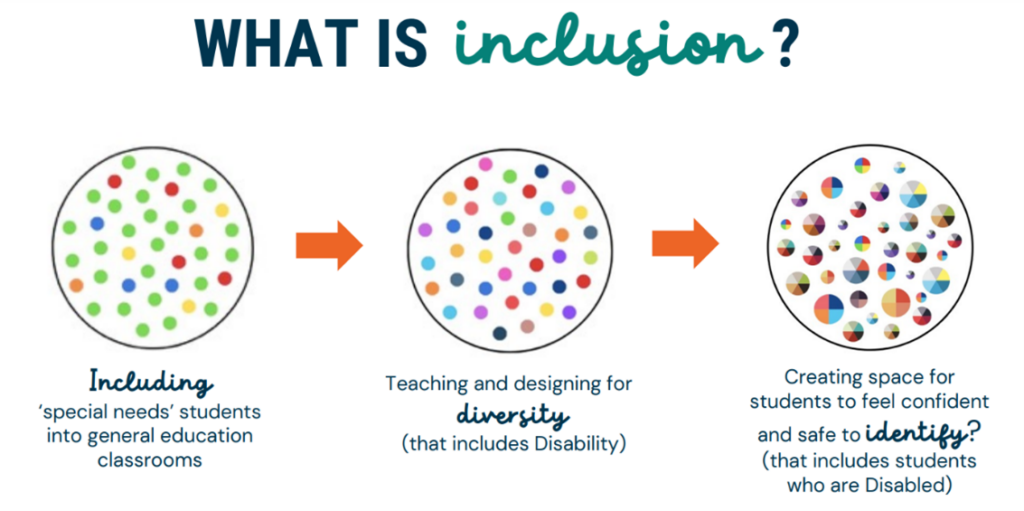
Figure 4 What is Inclusion, diversity and identity? (Moore, 2024a)

It’s a shifting of thinking, planning and collaborating that changes the language and perspectives across classes and the community.

It’s about creating an environment where every child is seen and planned for, regardless of their enrolment place.

In the school context at which I taught in 2023, an outcome of this model, six out of eight Stage Three students enrolled in the support unit had developed the skills and confidence needed to actively and successfully participate in learning with their mainstream classmates for more than 80% of the school day.  How amazing is this? For the students and the school.

Reflect on collaborative practices in your workplace.

What is working well? What could you do better?

What could you change?

Programming Adjustments

“When a flower doesn’t bloom, you fix the environment in which it grows, not the flower.”

~Alexander den Heijer (Moore, 2024b)

Students with disabilities require content and material adjustments of varying degrees that support their individual need. But what is an adjustment?

Adjustments are the “actions taken to enable a student with disability to access and participate in education on the same basis as other students.” (AITSL, 2020, p.13).

This process is a success when teachers (mainstream and specialist) work together to support all students across the school. Building capacity of one another for the benefit of the individual.

As an example, in a support class in a mainstream school, a student is working at stage level for mathematics. Amongst his peers, there are students that are not. Teachers in this team decide that levelled maths groups across the stage is a suitable structure to build capacity of both students and teachers. Therefore, they map learning out together as a continuum to allow all students an opportunity to access the learning, to the best of their ability; with necessary adjustments along the way.  

The NSW Department of Education (2025) provides online resources through the Universal Resources Hub, that allow teachers opportunities to participate in mini learning modules on different concepts in inclusive education and disability. They have collated learning strategies and resources to support teachers to meet the diverse needs of students within their classroom. While not exhaustive, it provides teachers a starting point with ideas to map out learning experiences that meet the individual needs.

If you are looking for reasonable and evidence-based suggestions to support students with disability in your classroom, get yourself a copy of “Blueprint for Inclusion” (Poe, 2025) which provides practical guidelines for teachers to effectively engage and build capacity of all students.

Ford (2013) concludes that the “priority would be ensuring the student is acquiring the academic skills necessary to be successful” (p. 15) within their scope and need. 

The Goal IS Inclusion

Not one teacher, would be able to say that they do not want to achieve inclusion in their classroom as it allows the opportunity for each student to feel empowered in their learning and development. The Disability Standards for Education 2005 state that “teachers and school communities [are] to ensure accessibility of education for student with disability” (AITSL, 2020, p. 24).

We value the inclusive system the Department of Education offers, from early intervention, mainstream, support units and schools for specific purposes, creating avenues for all learners to successfully engage in their individual learning journeys.

“Schools should be inclusive spaces where all students are afforded opportunities to thrive.”

(AITSL, 2020, p. 24)

Take the time to reflect and audit the practices in your school.

Approaches to meeting student need (with disability) need to be based on empirical validation – not “ideology, persuasive slogan, or the volume of stridency of voices advocating a particular [treatment or] position” (MacMillan D, Gresham, F and Forness S., 1996, p. 3).

I have valued my professional development and experiences across various settings. It has taught me to adjust, support and adapt my thinking and practice to best meet the needs of the individuals in my classroom. It has also given me the opportunity to support my colleagues around me. Building teaching capacity in this space for greater impact, awareness and ability.

Inclusion is a journey not a destination (Moore, 2016). It’s the way we view learning as a multilayered process that allows students to work in more ways to be more successful.

“Inclusion is a mindset – not a specific location.”

(Poe, 2025)

References

Australian Curriculum, Assessment and Reporting Authority (ACARA). (2025). School students with disability. https://www.acara.edu.au/reporting/national-report-on-schooling-in-australia/school-students-with-disability

Australia Institute for Teaching and School Leadership (AITSL). (2020). Inclusive education: Teaching students with disability. https://www.aitsl.edu.au/research/spotlights/inclusive-education-teaching-students-with-disability

Bonnello, C. (2025). Autisticnotweird.com. Instagram: @autisticnotweird

Centre for Education Statistics and Evaluation, NSW (CESE). (2025). Annual statistical bulletin, Department of Education. https://education.nsw.gov.au/about-us/education-data-and-research/cese/publications/statistics/annual-statistical-bulletin

Ford, J. (2013). Educating Students with Learning Disabilities in Inclusive Classrooms, Electronic Journal for Inclusive Education, 3 (1)

MacMillan D, Gresham, F and Forness S. (1996).  NSW Teachers Federation Full Inclusion: An empirical Perspective. Behavioural Disorders, a publication by the Council for Exceptional Children

Moore, S. (2016). One without the other: Stories of Unity through Diversity and Inclusion. Winnipeg, Manitoba: Portage & Main Press

Moore, S. (2024a). What is inclusion today and how has it changed over time? Illume Learning, Learning Sessions Handouts. https://da79a828-889c-4314-bd39-2fb742f2ad41.usrfiles.com/ugd/da79a8_e27aa0c4bcdb48bf8f8d68bfcd8d568c.pdf

Moore, S. (2024b). How can designing for one support all? Illume Learning, Learning Sessions Handouts. https://da79a828-889c-4314-bd39-2fb742f2ad41.usrfiles.com/ugd/da79a8_208d0d17818d4257a5ebe1a812ea141c.pdf

Nilholm, C. (2021). Research about inclusive education in 2020 – How can we improve our theories in order to change practice? European Journal of Special Needs Education, 36 (3), pp. 358-370

NSW Department of Education (2021). What is Inclusive education? https://education.nsw.gov.au/campaigns/inclusive-practice-hub/all-resources/primary-resources/other-pdf-resources/what-is-inclusive-education-

NSW Department of Education (DoE). (2025). Universal Resources Hub. https://resources.education.nsw.gov.au/home

Poe, R., M. Ed. (2025). Blueprint for Inclusion: a practical guide to supporting students with IEPs in the general education classroom. LLC Beech Grove, IN: TeacherGoals Publishing

Townsville Bulletin (2025). Record 221,000 NSW public school students diagnosed with disabilities. https://www.townsvillebulletin.com.au/news/nsw/record-221000-nsw-public-school-students-diagnosed-with-disabilities/news-story/8ac81c5671ec37526c2a7ccb0e38539c?btr=2b3952f16fefd2a8aa25024cb3c0e137, April 3

United Nations Educational, Scientific and Cultural Organisation and Ministry of Education and Science, Spain (1994). The Salamanca Statement and Framework for Action on Special Education. World Conference of Special Education: Access and Quality

About the Author

John Skene was elected as the NSW Teachers Federation Disability Officer in November 2024. As part of this role, he is responsible for supporting students, staff and schools in the area of disability. He is working closely with Organisers, Professional Support, Trade Union Training and others to support Federation members.

With over fifteen years of experience as a teacher in special education, John has worked in schools for specific purposes (SSPs) and support units (SUs). He is an Assistant Principal Special Education and has held roles as Federation Representative and Workplace Committee at school level. John was a Councillor and Special Education Contact of Sutherland and Inner-City Teachers Association (across his time in school) and a Federation Executive Branch Representative in 2023 and 2024.

John SkeneDownload

Teaching Drama in Secondary Schools

Jon Suffolk shares insights into teaching Drama in high school . . .

Background

My journey into the world of Drama Education developed over many years. As a student in a regional high school Drama was an extra-curricular activity and one in which I was heavily involved. I performed in school musicals and student plays, and community productions involving professional artists and secondary and tertiary students. I loved every single experience, and engaging with like-minded individuals.

After graduating from Newcastle University with a Bachelor of Music Education I was appointed to Kiama High School as a music teacher. After attending a community meeting at which a new theatre company was to emerge, I was again entrenched in the world of theatre as a musical director, composer, actor and a board member. The ten years I worked with the Roo Theatre Company were the formative years in which I developed my deep understanding of drama and theatre and the skills to work with children, youth and adults, all the while maintaining classroom teaching in various settings.

I eventually moved to Sydney and was offered a part-time music position at Fort Street High School and, when Drama was introduced to the curriculum, I was offered the opportunity of teaching the subject given my extensive experience in community theatre and education. I became a Senior HSC Drama Practical Marker for several years as well as marking the written examination and the design and video projects.

Cross curricula program

The teaching program that I am most proud of was a cross-curricula program that I established at Fort Street High School with my friend and colleague John Ockwell. We both recognised that the teaching of music composition seemed at times irrelevant and discussed over drinks one Friday afternoon how we could make it more relevant.

At the time I had chosen a play called “Our Country’s Good’ by Timberlake Wertenbaker for the Senior School Production. The play was adapted from the Thomas Keneally novel The Playmaker and was about the first play performed in the colony of Australia, “The Recruiting Officer’ by George Farquhar. The historical context of the play, its setting in early Sydney and its rich literary basis was a perfect choice for the students at “The Fort”.

John and I designed a music composition task for the Year 10 class that included the students writing the music to underscore the action. They had to play it live during the performances. I would divide the script into sections, sometimes according to the listed scenes or significant sections of an act. There were usually 10 to 15 script sections distributed to groups in the music class. They would have to read and analyse the text to establish the contexts of the section of the script they had been assigned. What was happening in the scene? Was the action intense, emotional, a climax point in the play? Where was the action taking place? How was the music enhancing the action and answers to all these questions? The music class would then develop three or four note motifs that were to be used as the basis for their sections of the score. They were encouraged to manipulate the keys, rhythms, tempos, harmonies, textures, and other musical elements to enhance the sections of the texts they were assigned using only the instruments played in the class. Once the individual musical sections were composed, the music students combined and developed a completed score. This was a collaborative process, often developed in rehearsals with the actors, guided by the expertise of the teaching staff.

Similarly, the Yr 11 Drama class took on the production roles as part of the Elements of Production unit. They were divided into pairs with each pair being responsible for set design, costume design, publicity and promotion, lighting, stage management, dramaturgy and directing. Some of the costumes were hired from the Australian Opera, Newtown High School of the Performing Arts or were purchased at opportunity shops. The set designs were to be digital and included footage of the Australian bush and water lapping at the piers at the Rocks. These images were used in the opening moments of the play and gave authenticity to the play. Other images included Creative Commons images of interiors of historical Sydney buildings, landscapes, and goal cells.

Overall, this cross-curriculum project was rich, dynamic, and meaningful learning with sophisticated outcomes. I believe that elements of it are still being implemented over 20 years later.

International Teaching Career

After 11 years at Fort Street, I moved to Malaysia and taught Drama at the Australian International School (AISM) and introduced the NSW Drama syllabus to the school. In this context, I was instructing students from diverse cultural and language backgrounds and had to work hard designing units of work that were inclusive and challenging. Moving on from Malaysia after five years I landed in the United Arab Emirates as Head of Performing Arts, Design and Technology at the Victorian International School of Sharjah.

I returned to Malaysia and again was tasked with building a Drama program. It was interesting working across the MYP (Middle Years Program) I found many similarities to the NSW Curriculum. The devising of units of work that had intense elements of inquiry and allowed students to explore their own and collaborative creativity are the keys to any good Arts curriculum.

Benefits of drama programs

There are so many benefits for students in participating in curriculum and co-curricular programs. Through explorations of, and research into the development of Drama through history, they learn how different theatrical traditions hold a mirror up to the people and places in which the traditions evolved and how theatre was used to express social, political, and cultural issues.  Topics such as Greek Theatre, Elizabethan Theatre and Shakespeare, French Restoration Comedy, Melodrama, Expressionism, Absurd Theatre and many more styles teach students about the place of drama in society at a particular time, often informing them of how dramatic techniques are used to reflect on the world at that time, the political and social contexts of a particular time and place.

Students love creativity, freedom, learning new skills and working with their friends in the classes. The secondary classroom can appear noisy and chaotic but by establishing routines and expectations it becomes a place of safety and expressive freedom. The drama teacher needs to have strategies in place to control the classroom environment. My classroom routines include students standing in a Drama circle on arrival so that learning intentions and expectations can be voiced and then straight into a drama game to develop focus and energy for the tasks ahead. As students are working on devising and rehearsing, I use a variety of different classroom management techniques to return their focus to the teacher for feedback or clarification of concepts and ideas. These can include sound cues, such as clapping or the use of a small drum or other percussion instrument.

Drama Games

Drama games are used at any stage to develop performance, improvisation and focus skills. Games such as Space Jump, Word-at-a-time Story, Death in a minute and Expert Double Figures are commonly used by drama teachers when wanting to develop focus in the classroom, improvisation skills and confidence in front of an audience. The games are played in teams of four encouraging collaboration and cooperation. Improv Australia states “Improvisation is a valuable communication and self-awareness tool that can dramatically increase one’s ability to act confidently and decisively on impulses and seizing the moment. When you gain skills in improvisation, you gain skills in assessing and reacting to a situation quickly, identifying the subtext of conversations, building rapport, and speaking confidently in front of a group of strangers.” (Impro Australia)

Student reflections

Here are some reflections from the students I teach at St George Girls High School.

 “I’m a very expressive person and I love playing different characters and working with my friends” (Maya, Year 8).

 “Drama has allowed us to learn certain skills that not only support our learning in the creative arts, but they are skills we can use in our daily lives as well. It has been a confidence booster for many people. (Dishani, Year 8)

“I can be loud and expressive and angry and sad and that all adds to the fun of the drama classroom.” (Chandra, Year 8)

It is the observations that the students have identified about their experiences in the drama classroom that keep me motivated to stay in the game. Using Drama teaching techniques to engage students in the exploration of their worlds through engaging practical and research-based activities are rewarding. Watching the development of students over several terms, or years, as they expand their performing skills, ability to recognise and control the elements of Drama and develop confidence in their own ability through collaboration is fulfilling.

Use of masks

Another area of drama and theatre that I have used throughout my career is that of the many different mask traditions and conventions. Masks encourage students to embody characters and focus on their physicality and movement skills. I have carried sets of Basel and Commedia masks with me wherever I have taught.

 The Basel masks originated in Europe and are a set of full-face masks that are designed for actors to explore their bodies to create distinctive characters. The characters include Charles, Fatso, Lizard, Sloth and Military Man.

The Commedia Masks originated in Italy and are used in Commedia dell Arte improvisation. The specific characters of Commedia include Arlecchino, Dottore, Pantalone, Brighella and many more. Each character mask encourages the actor to move, interact and speak in a particular way.  Students get a real thrill out of donning the masks, creating improvisations and performances with them and developing an understanding of why the masks developed in diverse cultures.

The Final Two Years

As students mature and hone more refined skills, the drama classroom becomes an exciting place. Working with complex historical and contemporary texts, workshopping in distinctive styles and genres and exploring their expanding worlds enables students to prepare themselves for a world outside of the school and classroom.

In the HSC year. students are required to develop performances using the texts that they study. This can include excerpts from Contemporary Australian plays (e.g. ‘Neighbourhood Watch’ by Laly Katz, ‘Norm and Ahmed’ by Alex Buzzo) and devising performances using specific drama and theatre techniques developed by practitioners such as Le Coq and Meyerhold.

So many students I have taught have considered drama as their ‘favourite’ subject even if they had no intention of continuing in the field post high school. They loved the physical nature, the collaboration, the analysis and discussion, the theatre visits, the workshops with visiting practitioners, shared playbuilding days with other schools, participation in regional and state festivals and creating performances for their own communities. Many students establish lifetime friendships through their involvement in drama.

There are many workshops that can be delivered at schools or by our major theatre companies. Sydney Theatre Company, Belvoir Street Theatre, Parramatta Riverside Theatre, Bell Shakespeare and many more have student workshop programs. State and regional drama festivals allow students to meet, perform and recognise the diversity of dramatic styles explored in schools. State and Regional Drama camps are an excellent opportunity for students to engage with other like-minded individuals with a passion for drama within a safe and inclusive environment. The NSW Arts Unit now conducts Drama Camps for Years 7 and 8, 9 and 10, as well as Preliminary Course students with priority given to rural and remote students. I have been a tutor at these camps many times. Students undergo an intense workshop program, work in groups to devise a performance for the final day and observe performances by visiting performing arts groups or attending professional production in Sydney.

As I am near the end of an extensive career teaching in many different schools and contexts, I am proud of the work I have done and the thousands of students I have had the pleasure of introducing to the world of drama and theatre. Some have gone on to professional careers in theatre, film and television, some in design, publication, and journalism with the influences of having participated in drama at school as a major contributor to their futures.

About the Author

Jon Suffolk commenced working at Kiama High School in 1985 as a secondary music teacher.

Jon retrained as a drama teacher while working at Fort Street High School from 1996 – 2007. He spent 10 years working in international schools in Malaysia and the United Arab Emirates before returning to Australia in 2018.

He now works part-time in schools in the Sydney region, conducts regional workshops for HSC Drama students as part of the NSW Arts Unit’s Outreach Program, directs productions in schools and tutors Drama Education Methodology at Sydney University.

Jon is a passionate advocate for arts education in schools and brings that passion to his classroom, workshop and extra-curricula work.

Jon SuffolkDownload

Taking the kids to the park: On-Country learning about climate change

Judith Wilks, Mark Werner and Angela Turner demonstrate the importance of learning from Aboriginal approaches to caring for Country as they tackle climate change in the classroom…

Preface

I was surfing the other day and the conditions started to change. A rip had formed where I was sitting, and water was heading back out to sea. This is not unusual, and I instinctively moved to ensure that I remained in the best position. I could have stayed where I was (but I’d probably still be there). I am also a high school teacher. My desire to learn fuels my passion to teach. As both a teacher and surfer I rely on my instincts and situational awareness to ensure my students are engaged and focused on their learning. If what I am doing is not working, then I must make changes for the benefit of my students’ learning. The ongoing challenge for teachers lies in the confines of our scope of control. I can make incremental adjustments (within my role description as classroom teacher) that will have some benefit to student outcomes. I cannot however undertake the seismic shift that is so desperately needed to support the ongoing growth of our kids’ learning. If under some miracle I could, and let’s set aside the fact that we are in a crippling staffing shortage, then I would suggest one strategy: ‘onCountry learning’ to remind ourselves what teaching was like before schools had fences, and off campus excursions didn’t involve half a dozen layers of risk assessment paperwork. [Mark Werner]

Introduction

In 2021 a collaboration between school teachers, university teacher-researchers, and a local council established an outdoor learning setting in a park known as ‘Dawkins Park Reserve’, in Macksville, rural NSW. This group coalesced around a shared desire to promote local resilience to climate change impacts, and to strengthen the local community’s understanding and engagement with local Indigenous cultural and scientific knowledge. This park was chosen as a setting primarily for two reasons: it was within walking distance of a high school, and it was suffering real and visible biodiversity breakdown due to the effects of climate change. 

Being part of this collaboration as two university researchers (Wilks and Turner) was a rich experience in terms of the lasting relationships built with local teachers and moreover, witnessing the enjoyment and significant growth in the students’ understanding of climate change. In Turner and Wilks (2022) we recounted our experiences and research findings, concluding with a concerning paradox: as the benefits of place-based environmental learning become better known, in practical terms it is getting harder to achieve with teachers increasingly burdened by layers of paperwork, risk assessment protocols, policies and procedures. The resulting disembodiment of learning from the natural environment is especially concerning, given that the endeavour of education has its very roots in nature, where over 250 years ago Jean-Jacques Rousseau recognised nature as the child’s best teacher (Taylor, 2013).  Caught in the current risk-averse milieu, many educational systems have forgotten these roots in the face of increasing litigation, and educational trends that marginalise the connectedness between nature and children and young people. (Wilks, Turner & Shipway, 2020).

Our particular focus here is to convey the experiences of collaboration that involved the teaching of climate change. We share how a different approach to teaching and learning in this rural setting might be sustained into the future through engaged environmental and Indigenous cultural learning, and creating a smoother transition for students between primary and secondary school.

The enactment of positive change is not possible without first acknowledging the need for a new direction. In the high school learning environment, collegiality and the courage to innovate are important ingredients for success in cross-curriculum and cross-cultural teaching and learning. In 2020 a small collegiate of like-minded teachers saw an opportunity for their Year 7 students to investigate climate change through authentic, active, environmental learning experiences.  Even though well-established relationships with local Aboriginal elders and Knowledge holders already existed, it was critical to invite them into our teaching collegiate. Consequently, they became integral to the students’ outdoor learning experiences.

The authors all  live and work on Gumbaynggirr Country located on the NSW Mid-North Coast, NSW. Mark Werner is a proud First Nations man from the Torres Strait, a Dauareb and member of the Ulag Clan, a clan of the Zagareb Tribe of Mer. He is also a Geography/History high school teacher.

Background

At Macksville High we were seeking to create a different type of learning environment, albeit on a shoestring budget. In order to better engage Year 7 students, we were compelled to try something new, and it turned out to be something that became a highly influential force in our teaching — the creation of a teaching and learning Year 7 ‘Hub’ [Mark Werner].

The Hub was a learning environment established to provide students with a smoother transition from local primary ‘feeder’ schools into high school. It was designed with the goal that a foundation year of focused interdisciplinary teaching and learning would support the academic success of students, and address some of the poor student learning habits we were noticing. Students coming into Year 7 are confronted with up to fifteen different teachers. This not only impacts on their sense of connectivity and engagement with the new learning environment of high school, but also on the teaching staff’s capacity to develop an understanding of each student’s strengths, capacities and inherent learning styles.

The Hub space was an open learning space (conjoined classrooms) housing up to fifty students, three teaching staff (English, Maths, Science and Geography/History), and one student learning support officer. Each lesson could be delivered to the whole group or, alternatively, a targeted skills intervention lesson could be taught on a rotation basis.

The Year 6 – Year 7 transition is often experienced by students as a difficult period,  thus there was a significant focus on student wellbeing. For students being part of this core group provided them with the continuity and consistency lacking in the traditional Year 7 structure. The establishment and maintenance of consistent classroom expectations provided a foundation for improved learning outcomes within a safe and predictable place, more attuned to the students’ social and emotional needs. The teacher-student ratio afforded staff the space to develop stronger relationships with students, target their skills, identify curriculum overlap, and withdraw struggling students to a different space without disrupting the learning of their peers.

Improving our knowledge, understanding and agency about climate change is urgent. The rapid deterioration in Earth’s natural systems presents unprecedented challenges for teaching and learning that is capable of encompassing, and bringing meaning and immediacy to the scientific, the ecological, the social, the economic/political, the moral, the cultural and the ethical dimensions of climate change (Haraway, 2015). It is not surprising that in recent years climate change learning has been embedded into Australian school curricula. In Australia, climate change learning in schools must provide the scope across key learning areas for students to be able to acquire deep knowledge about the many dimensions of human-caused ecological change. Learning about climate change therefore has played an increasingly significant role in NSW school curricula.

A series of cross curricular, collaborative learning programs and resources was developed by teachers in the Hub prioritising learning about climate change, and, under this umbrella, teaching the themes of ‘identity’ and Aboriginal and Torres Strait Islander histories, cultures and sciences. The environmental learning activities at the Park were designed to deepen students’ knowledge of climate change through authentic learning about water quality, biodiversity, ecological and technological processes in Dawkins Park Reserve.

Activities and resources were designed to promote engagement with the Australian cross curriculum priorities Sustainability and Aboriginal and Torres Strait Islander Histories and Cultures. Students learned about how our ecological landscape is shaped through natural and human-caused factors; the influences of this on animal behaviour patterns; how humans interact with ecosystems; and how these interactions may be achieved in a sustainable way. At Dawkins Park Reserve students were exposed to ‘real world’ hands-on activities such as collecting water ‘bugs’ as the students called them [microorganisms], identifying flora and fauna, observing bird migration patterns, testing the water, and using maps,  photos and light microscopes to analyse their water samples. 

Findings

The interconnectedness of fieldwork skills combined with a highly relevant case study at Dawkins Park Reserve engaged both students and teachers, and through this experience they developed the necessary knowledge to understand climate change at a deep level. But we were only able to examine climate change in any depth because of the Hub model. Previously there were very few interdisciplinary options and subjects were taught in silos.

Well established community relationships with local Aboriginal elders and local Knowledge holders also proved to be pivotal. Students learned about clan size and what the size of the group should be to sustain itself. They learned about sustainable lifestyles in the Indigenous context, how a typical day was broken up in the clan, and about structured lore/systems. They enjoyed the Gumbayngirr cultural narratives through stories, dance, song, and art. 

Students participated in an ‘On Country’ cultural immersion field trip. This excursion was organised to support the unit of learning called ‘Identity’. During this experience students and staff were offered an alternative learning environment. This alternative learning environment shifted behaviour and attitudes of both students and staff. The logistics of the journey focused on ensuring Aboriginal perspectives from across their valley were well represented. The day started with a Welcome to Country in Bowraville, delivered by a local knowledge and language holder, who then shared the history and narrative of his town and community. The immersive experience continued as the students travelled to Nambucca Heads and were met by traditional owners, elders and knowledge holders who shared narratives, culture and experiences. A smoking ceremony and the re-creation of a local dreaming narrative (using the students as actors and participants) enriched the students and teacher understanding of local Aboriginal culture and identity. The final leg of the journey was to Scotts Head. Once again cultural protocols were observed, and students and teachers learnt more about the Gumbaynggirr creation narratives regarding the how the sea was created and how waves were made. This was followed by the playing of Traditional Indigenous Games on the beach and reflecting on the history, purpose and relevance of these activities

Teachers’ interest, enjoyment and excitement in teaching climate change were stimulated by these events. Commensurately there was an increase in their self-efficacy and confidence as their knowledge grew and their understandings and perceptions deepened. It was clear that the growth in these attributes was connected to their own learning about climate change at the park. Teacher A recounted their journey as follows:

I think at the beginning … I kind of had that attitude of ‘nah Climate change’ … I’d glaze over.  But now I think I have a better understanding myself, and I think the enjoyment of teaching it, through the process that we followed … has improved my knowledge of climate change, as well as my enthusiasm for teaching it, and passing it onto the students, and encouraging them to do something [about it].

Teachers shared that at the Park they had been caught up in the same feelings of excitement and the fascination as the students when they were discovering new knowledge through for example, water sampling activities. And the growth in both teacher and student knowledge and enthusiasm had an entwined, spiraling effect, with each promoting the other. The teachers became co-inquirers with their students because  they were also making deeper connections between the different scales of climate change. Teacher B said “I think the connections I was able to make within my own personal life, and how little things that I can do can make a big difference on a bigger picture, certainly grew.”

While the teacher’s learning design and programming benefitted, they also stated that they now found it easier to link teaching about climate change with the Australian Curriculum’s Sustainability priority area. Furthermore, they envisioned the Park becoming a ‘centrepiece’ for future learning about the impacts of climate change at the local level, as it offered great affordance in terms of teaching, learning and benchmarking about key concepts in geography such as place; space; environment; interconnection; scale; and change. Fieldwork is geography; it is at its very heart (Laws, 1984; Bliss, 2009). From Teacher C’s perspective, the experience “gave me more time to spend investigating on a local level, and a pathway to teach it through because sometimes you think, ‘how am I going to embed this into the program?’ but here, if it’s the centrepiece of the program, it’s really simple.”

The teachers related that teaching climate change through an Indigenous lens gave students the opportunity to hear about Aboriginal perspectives of pristine environments and no trace practises. The Aboriginal guides embedded language into their stories. Although the Park is not an Aboriginal sacred site as it is human built, there are many sites in the district and the area has strong links to Gumma, where fresh water supply and the Nambucca River link to the sea. Students looked at the variety of vegetation types available, and their traditional Gumbaynggirr names and purposes. Students were shown the Lomandra grasses used for weaving baskets, and were encouraged to speculate about what type of things these baskets might have carried. Teacher D explained:

We’ve tried to open up their understanding as to what Indigenous communities are about and different aspects of their lives and we’re certainly incorporating a little bit more of that to increase the understanding because for some of them they really had limited understanding of pre-European settlement in the area.

Students came to realise that there were many places around them, in their daily lives, that have stories. Student A shared: “Just knowing about it makes you feel more connected”, and another (Student B) said, “Stories make it easier to remember things.”

Teachers not only observed the stimulation of their students’ interest, passion, enjoyment and engagement in learning about climate change, they also noticed their students were reflecting far more deeply about their responsibilities in relation to it. The following observations were made in this respect:

There were a lot of light bulb moments, a lot of students not only learning the information, but then also getting a bit of a fire in their belly, really wanting to change, really wanting to make action, and asking questions like what can they do about it to change. they’re kind of at that age where they’re starting to understand the world isn’t perfect. And we’re kind of called, aren’t we, it’s all our responsibility to all do something about it for the future. (Teacher A)

I guess for my generation we kind of feel responsible for what’s happened, and these guys kind of inherit a lot of our shortcuts and kind of short-sightedness.  Whereas you get some students who kind of straight away think, they just lay the blame, and see the dire consequences straight away. And then to get other students that kind of perk them up by saying, “How about this and for solutions? (Teacher B)

Students were excited about seeing things in ‘real life’ at the Park and teachers could see them getting ‘hooked in’ to their learning there. Teachers were not having to deal with behaviour issues because the setting catered for a wide variety of learners and all students were so engaged: “they really benefit … all of them … from experiential learning where they’re hands on. They’re measuring … they’re testing … they’re collecting, analysing and comparing … they’re really focused and on-task” (Teacher C). This reinforced for teachers how important it is for students to have place-based, authentic learning experiences and to “try and get the kids out of the classroom and give them those real-life experiences as much as we can” (Teacher D). When they returned to classroom learning the teachers noticed a real enthusiasm borne from what they had done at the Park. Students were motivated to venture hypotheses, do their own research, and give class presentations on what they had found out.

In their discussions with researchers before they went to the Park, students used terms such as ‘nervous’, ‘devastated’ ‘not confident’ to describe their thinking about climate change. Teachers observed that as a result of the activities their students demonstrated a greater confidence and a richer vocabulary when postulating connections between the local and the global in relation to climate change. They related that through being at the Park students were able to link their learning about climate change to a place with which they were familiar and in so doing enriching their knowledge and understanding. As Teacher A explained, “having something to pin it on”, and Teacher B observed “We’re having conversations with the students where they wouldn’t have made the links previously … floods in West Germany, record temperatures in Europe”; and another:“… for them to get an understanding about the relationship between fossil fuels and carbon emissions…It was kind of like just opening the door for a lot of them. They really hadn’t thought about it before, even though they’ve heard some of the phrases and things like that. But for them to get an understanding of the causes and the links, and also some of the possible solutions”.

According to Teacher D, the conversations they were having with their students and what they did at the park had opened up their thinking to beyond their ‘small world’ to “what’s happening around them and how that impacts everybody else in the world”. Moreover, Teacher B observed that the program had encouraged students to have bigger thoughts beyond themselves, to “go deeper … and tie a lot of things in with climate change.” 

Reflection

It not surprising that in recent years learning about climate change has played an increasingly significant role in NSW school curriculum. There are now frequent mentions of the term climate change, with Sustainability framing the entire curriculum as one of the three Australian curriculum priority areas. Nevertheless, such curriculum elements represent relatively new and emerging fields of study in both primary and secondary curricula, and teachers have had had to quickly ‘come on board’ with teaching them across all curriculum areas, as they are no longer just located within the traditional domains of geography and science. The students perceived the potential for cross curricula learning about climate change emanating from their experiences at the Park. They expressed a desire to see more art, mathematics, and writing, in addition to geography and science, associated with their activities there.

Through professional channels many teachers have anecdotally reported a lack of confidence in teaching climate change despite the many excellent professional development opportunities and resources that have been created for teachers. The problem has been that the majority of these are text-based and designed to be delivered in a classroom setting – either in digital or paper-based format. This has led to a focus on ‘climate science’ and environmental ‘issues’ (Loughland, Reid, and Petocz, 2010) privileging knowing facts about climate change over more experiential, sensory engagements inhibiting the creation of deep knowledge which, as Jensen and Ross argue, is so vitally important underpinning “all educational skills we value…knowledge begets knowledge”, (2022, p. 23). The experiences of teachers and students at Dawkins Park most certainly aided the development of deeper content knowledge about climate change.

Students related that they loved learning outside the classroom, that they felt more focused and “a bit more free” (Student B). Paradoxically, they felt “less distracted… if that makes sense” (Student C). They enjoyed learning through their senses – listening; seeing; touching and feeling; and smelling – and in so doing they felt more connected to the environment. They were more able to make connections between the local and the global manifestations of climate change; the interactions between plants and animals and the seasonal influences relating to climate change. Teachers observed students to be more curious, interested, engaged and both student and teacher appreciation of Aboriginal and Torres Strait Islander cultural, language and scientific knowledge increased. Teacher feelings about self-efficacy in teaching climate change also improved. 

As others have experienced in similar, recent programs (Burgess & Thorpe, 2024; Spillman et al., 2022), we found that well established community relationships with local Aboriginal elders were vital to the success of the program. The students thoroughly enjoyed the telling of Gumbayngirr stories by the Aboriginal knowledge holders. Through embedding an Aboriginal voice in the activities, students’ cultural awareness and engagement with holistic, spiritually-based connections to Country were enhanced. Story telling involves feelings and emotions, and helps young people to follow a series of events through a story’s structure, and to understand choices people have made in the past and the consequences of those choices (Seefeldt, Castle & Falconer, 2014, p. 232).

The Hub enabled the Year 7 student cohort to be taught as an entity, as opposed to separate classes, by a core group of teachers enabling a significant focus on student wellbeing. Students were provided with continuity and consistency during what is often experienced as a difficult transition from primary to secondary school. The synergy generated through the combined efforts of highly trained professionals created momentum and enthusiasm within the learning environment. The collaboration facilitated an even deeper mutual regard for colleagues’ professionalism, their discipline and content-specific knowledge. Sharing a teaching space between colleagues and freely exchanging ideas and feedback empowered and invigorated teaching.

Conclusion

It is imperative that our students are climate change literate. This involves understanding how our ecological landscape is shaped through both natural and human-caused factors; the ways in which water is integral to the survival of all living things; how this influences animal behaviour patterns; how humans interact with ecosystems, and how these interactions may be achieved in an environmentally sustainable way.

It was obvious to us as teachers that students were developing understandings about climate change at a deep level. As clearly beneficial as it was to take the students to this rich environmental and cultural learning setting, we were only able to examine climate change to the depth we did because of the added affordances that the Hub model offered for enriching teaching and learning. That we managed to interconnect learning about climate change with fieldwork attached to a highly relevant case study at Dawkins Park Reserve which clearly engaged the students was achieved in large part because of the Hub. Learning stations have been created at the Park for future outdoor environmental education activities, and their continued use will augment students’ understandings about climate change vulnerabilities, risks and adaptation responses.

Just as swimmers and surfers must react to the sudden formation of an ocean rip, it is imperative in teaching to change what is not working. When you change your perspective on historical, entrenched challenges in education you can deliver enhanced student engagement and success. Macksville High School in rural NSW had the courage and conviction to embrace remodelling education delivery to its newest students when it literally flung open the school gates to a world of possibilities.

Postscript

Although the ‘physical’ Hub no longer exists, relational links between the participating teachers remain strong, and the possibility still exists for cross curriculum project-based learning because of these links. Ironically, external factors associated with climate change conspired to erode teacher motivation around its continuance. These included COVID-19 and the accompanying lockdowns and extended periods of learning from home, teacher shortages and time constraints largely borne out of the COVID-19 driven workforce-wide impacts, and prolonged flooding in the region causing major disruptions to everyday life. Possible areas of future focus are teaching space redesign, classroom furniture, and redistribution of students into subject-specific skill rotation groups that coalesce around social interactions, friendship cohorts and abilities.

References

Bliss, S. (2009). Fieldwork: The heart of geography. Geography Bulletin, 41(1), 7-11. https://search.informit.org/doi/10.3316/aeipt.183894

Burgess, C., & Thorpe, K. (2024). How teachers can use the Learning from Country framework to build an Aboriginal curriculum narrative for students. Journal of Professional Learning. NSW Teachers Federation.

Jensen, B., & Ross, M. (2022, September 23). One million left behind. The Australian. https://www.theaustralian.com.au/

Laws, K. (1984). Learning geography through fieldwork. In J.Fein (Ed.), The Geography teacher’s guide to the classroom (pp. 134-145). MacMillan.

Loughland, T., Reid., & Petocz, P. (2010). Young people’s conceptions of the environment: A phenomenographic analysis, Environmental Education Research, 8(2), 187-19. https://doi.org/10.1080/13504620220128248

Seefeldt, C., Castile, S., & Falconer, R. (2014). Social Studies for the preschool/primary child. Pearson.

Spillman, D., Wilson, B., Nixon, M., & McKinnin, K. (2023). ‘New Localism’ in Australian Schools: Country as Teacher as a critical pedagogy of place. Curriculum Pedagogies. 43, 103-114

Taylor, A. (2013). Reconfiguring the natures of childhood. Routledge.

Turner, A., & Wilks, J. (2022) Whose voices? Whose knowledge? Children and young people’s learning about climate change through local spaces and indigenous knowledge systems, Children’s Geographies. https://doi.org/10.1080/14733285.2022.2139591

Wilks, J., Turner, A., & Shipway, B. (2020). The risky socioecological learner. In A. Cutter-Mackenzie-Knowles., A. Lasczik., J. Wilks., M. Logan., A. Turner, A., & W. Boyd, (Eds.), Touchstones for deterritorializing socioecologcial learning: The anthropocene, posthumanism and common worlds as creative milieux (pp. 75-99). Palgrave Macmillan.

About the Authors

Mark Werner

Mark is Daureb and part of the Ulag Clan which is a clan of the Zagareb Tribe of Mer in the Torres Strait. He is a secondary trained teacher and holds a Masters in Indigenous Languages. He lives and works on the Mid North Coast of NSW. He is passionate about Aboriginal and Torres Strait Islander education, the environment and creating On Country immersive learning experiences.  

Dr Judith Wilks OAM

Is Adjunct Associate Professor at Southern Cross University, Faculty of Education, and also Adjunct Associate Professor, Nulungu Research Institute of the University of Notre Dame Australia. She is an experienced educator with a significant research, teaching and community engagement track record in regional education services delivery in both the higher education and schooling sectors. In 2023 Judith was awarded the Order of Australia Medal (OAM) for Services to Education.  Her research interests and publications stretch across a number of fields. These include the promotion of agency, resilience, and citizenship skills through participatory methodologies for children and young people in environmental education learning settings.  Judith has also been an active member of national research collaboration (Nulungu Research Institute) that has sought to promote access, participation and success in higher education for Aboriginal and Torres Strait Islander students. In recent years she has undertaken considerable research work in the Western Kimberley region focusing on strengthening the learning experiences of Aboriginal and Torres Strait Islander higher education students living in remote locations.

Dr Angela Turner

Dr Angela Turner has 22 years higher education teaching experience.  She holds a Bachelor of Education Technologies (Hons) and a PhD in Food Technology education. Angela has been recognised for integrating the domains of teaching and research through a Southern Cross University Vice Chancellor’s Teaching Citation (2018); School of Education Recognition Award (2018); Australian College of Educators Award (2017). Her research projects have received competitive grant success over the years for actively forming university-school community engagement with rural primary and secondary school communities that have advanced teaching, learning and assessment in the classroom as an ongoing educational enterprise. She is currently an Adjunct Senior Lecturer/Researcher at Southern Cross University and a curriculum advisor for the NSW Education Standards Authority (NESA) curriculum reform for Technological and Applied Studies 7-10.

Taking-the-kids-to-the-park-Wilks-et-al-1Download

Different implementation approaches to the new English syllabus

English Head Teachers, Emma Campbell, Steve Henry, and Rosemary Henzell, share the motivators and contextual variables that were the driving force behind their approach to planning and programming for the new 7-10 English Syllabus. . .

Much like new homeowners facing a house quaintly described as “well-loved and full of character”, faculties facing a new English syllabus must ask themselves a single question: “Repaint, renovate, or rebuild?” For some, the thought of doing any more than a quick update will be overwhelming, while others may see it as a chance to fix issues that have been bothering them for years. A total overhaul offers us an opportunity to completely reconfigure our programs to fit our current world: a huge amount of work initially, but with the possibility of a wonderful final product. Regardless of where we sit along this spectrum, however, we must not allow fittings, fixtures, and furniture to distract us from the core purpose of such an endeavour: to build a home for ideas, student thinking and deep engagement with texts and language. This is, and always has been, our priority.

In her keynote address at last year’s CPL Secondary English Conference (2023), Jackie Manuel traced the through lines of the NSW English syllabus, from its origins in 1911 to its most recent iterations. Using Jeanette Winterson’s observation that ‘everything is forever imprinted with what it once was’ (The Stone Gods, 2008), Jackie reminded us of the echoic nature of our syllabus, from the original statement that it is in the ‘study of . . . literature that the High School will exercise its highest influence upon the general training of pupils’ (NSW Department of Public Instruction,1911, p. 5, p. 18) to the most recent aim of the syllabus where students learn to ‘appreciate, reflect on and enjoy language, and make meaning in ways that are imaginative . . . and powerful.’

The notion that we, as teachers, may be able to embody these ideals and affect the lives of the next generation in ways that are lasting, profound and enriching, still motivates young people to enter the classroom and our profession. Jackie’s reminder of our educational inheritance then becomes an important touchstone for the tackling of the new syllabus over the last twelve months and it is these broader aims of the new syllabus, rather than the more performative measures of ATAR or HSC band analysis that are our starting point.

Emma Campbell and Steve Henry (Head Teachers of English: Cherrybrook Technology High)

Where are we now?

Working in an English faculty, with some genuine stability and experience at the heart of the staffing roster, and with a large student cohort that is generally motivated and socially privileged, our approach to the new syllabus was equivalent to a home renovation. Yes, there were going to be drop sheets and dust and some demolition, scraping, smells of paint and turpentine but the structure of our programs would remain largely intact.

New syllabus as opportunity

Looking back over the years, the regular changes to the syllabus stand out, but there are other changes that have affected us as well and it’s worthwhile pondering these shifts in order to put the new syllabus in context. At the national level we’ve had the push for a national curriculum, but NSW has held fast to its commitment to the HSC, so it has felt less like a tidal shift and more like an insistent current. More profound has been the siloing of our schools and faculties, firstly with the loss of a structured approach to local networks of English teachers, then with Covid and now with the teacher shortage and the sheer exhaustion of administrative overload. We have all, it seems, been attempting the impossible: to develop our own networks, to connect where we can, to learn, discuss, tinker, sweep away the old, renovate, rebuild or re-shape our programs within the time and personnel limitations of our schools and system. Has it been possible to see this as more opportunity than burden? Talking with others and moving through this process, we think so. Perhaps we are limited in our own siloed experience or, perhaps, the simple fact is that the English teachers of NSW regularly do the impossible. For us, the opportunity to refresh and re-shape has been welcome, particularly given the obvious shifts within the lives of our teens, artificial intelligence, the distractions and distorting effects of social media, the rise of anxiety and the deficits left by covid. But to tell this story, it might be better to move away from a building metaphor to an image that is less static.

The car, and the kid in the passenger seat

At the centre of our review, then, we placed the students. Our classrooms demanded a new curriculum because the students sitting in them have been buffeted by these enormous forces, reforming their ways of engaging in the world. Our goals: encourage closer reading, deeper engagement, and authentic composition, so students could harness that power we have for so long been encouraging.

The new syllabus, freed from some of the clutter, offered a chance to slow down our program. Metaphorically, we wanted to upgrade the car. We wanted to take the students from passive passengers( glued to their phones in the front seat, eventually squinting into sunlight, wondering where they were and how they ended up there) to being the ones who ask for the keys.

The syllabus, with its focus areas of reading, understanding, and responding, has allowed multiple points of entry, because English, as a discipline, does not have a clear start and end point. Our students are cast as readers, who grow to critique others’ work, and develop the confidence to compose their own, before going back to read some more to help refine their writing. We want them to stop thinking about learning as a passive journey that their teachers are navigating for them from A to B to C. Instead, opening a book is being dropped at any point of the map and navigating their way back to clarity.

A clean car with seat warmers and safety cameras is offering us the best opportunity to reacquaint our teens with the power and magic of language. Upon returning to the classroom after online learning, our students were hesitant to take charge of their learning – reluctant to answer questions, mulishly splitting up a group task into four individual responses, politely asking how many quotes they need in each paragraph to get an A, before they’d actually read the end of the novel. Paring back our units, focusing on structured discussion, allowing space for confusion to grow into understanding, is, we hope, teaching them how to drive.

Rosemary Henzell (Head Teacher English: Canterbury Girls High School)

Where should we start?

Coming into a new faculty on the brink of a new syllabus was both a blessing and a curse. Having just arrived, I hadn’t had a chance to see most of the programs in action before I needed to begin discussions about what our approach should be. On the other hand, early conversations with teachers revealed the need for significant changes as well as a readiness to revamp and renew. Our school was in a Local Government Area (LGA) of concern during COVID, and the aftereffects of strict lockdowns were evident in disconnection between students and in the decline of some faculty processes, compounded by changes in staff. We settled on an ambitious but necessary project: a complete knock-down and rebuild of our 7-10 programs, recycling some quality materials where possible, but integrating them into a brand new build.

Planning our ‘dream home’

Like for Steve and Emma, the new syllabus, therefore, became a marvellous opportunity. It invited us to have reflective and evaluative conversations about our values, our expectations for our students and what we cherished about our role as English teachers. These conversations, at the beginning of 2023, centred around four key questions:

  • Where are we at right now?
  • Where do we want to go?
  • What does ‘excellence’ look like for us?
  • Why do we want to go there?

These discussions were instrumental in allowing us to drill down into what mattered most to us, and what we felt our students needed in today’s world. Similar to Cherrybrook, deeper engagement with reading, developing students’ critical thinking, and supporting them to find their personal voice through authentic writing opportunities were at the forefront of our plans. We also considered social-emotional development in our choice of concepts, ensuring positive and affirming ideas were present to balance out the dark, and providing opportunities to tackle big issues in authentic and productive ways. Armed with Jane Sherlock and Deb Macpherson’s incredible list of suggested texts from the 2022 CPL Secondary English Conference, we embarked on a revamp of our book room.

A brand new 7-10 scope and sequence, backward-mapped from Year 11 and 12, became our schematics. Introducing a conceptual framework approach, I led small faculty teams through the creation and structuring of units during once-a term planning days. Release time was hard to come by, but we were supported, wherever possible, by the Executive to achieve this. This rebuild was only made possible by the incredible dedication of our faculty, and it is a testament to those collective efforts that by the time we wrapped up in 2023, we had completed programs for all units, including assessment tasks drafts and conceptual introduction resources. The house was built…but there wasn’t a lot of furnishing in place yet!

Resisting the one-size-fits-all McMansion

I am a firm believer that programming lies at the heart of our work as English teachers. The process of interpreting a syllabus through the creation of structured, meaningful and experiential learning activities relevant to my particular content and cohort of students has always been one of my greatest joys, and methods of development, as a teacher. Collaboration with our colleagues through co-creation turns a scope and sequence into a living, breathing entity that is capable of growth, evolution and innovation. As we teach, we become what Steve calls the embodied syllabus – we are the vehicle and vessel for student learning, deep thinking, questioning, creation and reflection. Let me be clear – I’m not suggesting that every program in every school must be built from scratch, and the sharing of units and resources is central to our practice (and survival!). However, if we are not cultivating our programming skills, or supporting others to cultivate theirs, we risk losing our ability to synthesise future shifts in syllabus focus with the enduring truths and values of our subject. We must remain connected to our history, our core purpose and beliefs as English teachers, perhaps drawing inspiration from Charles Olson (1997) when he says:

whatever you have to say, leave
the roots on, let them
dangle.

And the dirt

Just to make clear
where they come from

Let us always remember where we have come from, and cherish the dirt beneath our fingernails that is a sign of our dedication and efforts.

New South Wales Department of Public Instruction, (1911) NSW English Syllabus

Olson, C., (1997) These Days from The Collected poems of Charles Olson University of California Press

Winterson, J., (2008) The Stone Gods Houghton Mifflin Harcourt  

Steve Henry is currently Head Teacher of English at Cherrybrook Technology High School and has taught senior English for many years. Steve has been the Supervisor of Marking in the Texts and Human experiences module.  

He has been involved in writing study guides and articles for the Sydney Morning Herald and the ETA on a range of HSC topics. Steve has a love for creative and innovative writing.

Emma Campbell is currently Head Teacher of English at Cherrybrook Technology High School. She has been involved in HSC marking, syllabus development, and pre-service teacher education. She is currently in the process of implementing whole school literacy and writing programs to empower students’ authentic engagement with literature.

Rosemary Henzell is currently Head Teacher English at Canterbury Girls High School. She has contributed to the Journal of Professional Learning as well as CPL podcasts, and has been published in the Journal for Adolescent and Adult Literacy. She has a keen interest in Load Reduction Instruction as a means to manage cognitive load and Project Zero’s work in Creating Cultures of Thinking.

Different-implementation-approached-to-the-new-English-syllabusDownload

Learning in the early years: Do, perform, portray – play!

Kathy Rushton and Joanne Rossbridge outline the theory and research about young children’s language and literacy development through play; and provide teachers with engaging and inclusive activities and resources to foster creativity and student engagement in the early years of schooling. . .

Learning in the early years

In the first years of schooling young children are encouraged to develop understandings about the use of language in a range of contexts – both oral and written. Before school, understandings and experiences have been developed through oral language interactions some of which may have been around the written word.

However, some children might experience the language to talk about language, metalanguage, for the first time when they go to school. Some children will be able to confidently discuss many aspects of how language works and how it is used in a variety of contexts, even if they are not yet independently literate.

Developing language for a range of purposes and the use of metalanguage to reflect on the choices speakers and writers make are most easily developed through play. Play provides opportunities for both individual choice and collaboration and, with a teacher’s support, in providing contexts and modelling language (Karaolis, 2023), individual students are enabled to develop and build on their own language resources. Scaffolding learning experiences to be both challenging and supportive (Hammond, 2021) is dependent on a pedagogy which supports language development as a catalyst for emergent literacy.

Developing language and the language to talk about language: metalanguage

In the school years students will engage with oral and written texts which are broadly categorised as imaginative, persuasive or informative. Within these broad categories there are a range of twenty or more genres (Derewianka, 2022; Humphrey, Droga & Feez 2012, p.199) which students will encounter and learn to both read and write. To comprehend or produce a text, written or spoken, the choice of grammatical features is always defined by the audience and purpose of the text and the genre. Metalanguage is developed when teachers read, deconstruct and jointly construct texts with their students. In this way knowledge of language and grammar is developed in a familiar context through oral interactions about texts (Rossbridge & Rushton, 2010).

The first language or dialect is not taught to a young child rather it is developed through meaningful oral interaction. The use of the speech functions such as statements (greet, observe, play); commands (command, demand, play); questions (greet, demand, play), exclamations (demand, command, play) begin to be developed even before a young child can speak fluently. Within a range of contexts, the choices a speaker or writer makes reflect both the audience and the purpose of the text.  Grammar“is a way of describing how a language works to make meaning.” (Derewianka, 2022, p.1)

The use of the concept of the mode continuum exemplifies the range of grammatical choices speakers and writers make to produce effective oral and written texts.

The picture books and traditional rhymes and songs that young children encounter, often use more spoken like text and are, therefore, supportive in developing decoding skills and sound and letter knowledge and phonemic awareness for emergent readers. However, as they are sung or recited in a context in which the focus may be on movement the words are often ancillary to the main focus of the activity. We learn to use language to satisfy our needs as we play, perform and “do” the moves. If every song or rhyme also includes the presentation and exploration of the written text, there will be many opportunities to develop literacy.

Not only questions but also Think alouds (statements) can explore the meaning of the rhyme. Using the Here; Hidden; Head framework, comprehension and vocabulary can both be supported e.g. Here: I think I know what a candlestick is. Hidden: I wonder what ‘nimble’ means. Head: I wonder who Jack is and why he was jumping. Modelled and guided reading can be supported by jointly constructing texts developed in meaningful play-based contexts (Davis & Dunn, 2023 & Karaolis, 2023). Drama strategies like Readers Theatre; Freeze frame and drawing; Puppet Theatre and Interviewing can be integrated with the use of quality children’s literature to provide contexts for playing with ideas and language.

Reading for meaning (Comprehension, vocabulary development and decoding)

Most students enter early years classrooms with an amazing resource which forms the foundation of language and literacy acquisition as they move through their schooling. This resource is oral language, and it is the foundation of all learning. When used in meaningful contexts to communicate with others, oral language serves to draw upon, not only existing language, but scaffolds both reading and writing. (Hammond, 2021 & Gibbons 2015)

Talk and play as a context for reading development

An effective and engaging way to draw upon the language skills that students bring to classrooms is by connecting speaking, listening, reading and writing in real world scenarios. By designing learning through play, students are given numerous opportunities to practise language and interact with others by drawing on their own background and experiences as well as the languages and dialects they use in the home and community. As a teacher models being a reader, and students engage with texts, they are not only active meaning makers but developing vocabulary and hearing the sounds and rhythm of language as they decode in the context of engaging quality literature (Adoniou, Cambourne & Ewing, 2018).

Careful selection of texts, such as picture books, can be the catalyst for designing meaningful learning situations which can be placed along the mode continuum. A context, theme, topic or concept can be selected as a starting point for text choice. The following texts were chosen for their representation of dogs and their interactions with humans. Obviously, looking at texts and interactions around getting and caring for a dog may not be the best choice for all students given their interests and background, but any context can easily lead to a range of possible texts and scenarios for play.

Let’s Get a Pup! (Bob Graham, 2001, Walker Books)

When Billy was a Dog (Kirsty Murray and Karen Blair, 2019, Walker Books) 

Too Many Cheeky Dogs (Johanna Bell and Dion Beasley, 2016, Allen & Unwin)

My Dog Bigsy (Alison Lester, 2015, Penguin)

Sad the Dog (Sandy Fussell and Tull Suwannakit, 2017, Walker Books)

A Human for Kingsley (Gabriel Evans, 2021, Hardie Grant)

Annie’s Chair (Deborah Niland, 2006, Penguin)

‘Let’s get a Pup’ by Bob Graham (2001, Walker Books) is the story of a family who visit a rescue centre to get a pup but end up with not only a pup but also old, grey Rosy. It celebrates the interactions of humans bringing dogs into their family.

Using this book, in conjunction with opportunities for play, and incorporating before, during and after reading strategies through shared reading (Gibbons, 2015), is an example of how to provide opportunities for comprehension, vocabulary development, and an explicit focus on sound and letter knowledge.

Before readingFloorstorm (display covers of all books above and ask students to share what they see)Play sounds of dogs and humans interactingList noises dogs make in different languagesPredict from front cover by focusing on human and dog relationships – record student ideas and vocabulary (add to after reading)Take turns to walk in role taking a dog for a walk (with lead and dog puppet)
During readingRead the book uninterruptedRead the book again with think alouds using Here, Hidden and Head statementsReread the book uninterrupted allowing students to respond
After readingStudents draw their own interactions with a dog and share with classRank a list of words/pictures/nouns in order of importance of what a new dog might need e.g. food, water, bed, blanket, brush etc.Group words from the book with the same sound such as ‘u’, e.g. pup and mum in comparison to cute and rescueRole play human/dog interaction scenarios with puppetsIndependent play with: a toy dog a vet kit dog washing/grooming kit etc.

Before reading strategies are critical prior to the first reading of a book as they provide opportunities to activate prior knowledge so students can bring their own life and language experiences to the book. They can also serve to provide knowledge and vocabulary needed for comprehension. Young children also feel a sense of satisfaction when they can confirm their predictions.

The first reading of a book needs to be uninterrupted, so students are able to take in the story as a whole and get the overall gist. When the teacher rereads with carefully designed think alouds, students are then exposed to what a reader does during the reading process whilst also being alerted to key meanings and language within the text. Subsequent readings invite the students to add their own thoughts and responses to the text. It is critical that the book should be read multiple times by the teacher throughout any teaching sequence.

When designing learning for after reading, strategies need to support response to the text particularly through the use of oral language and play. These strategies may need to be initially modelled and supported by the teacher but ideally the talk is coming mainly from the students as they use their own resources to directly engage with meanings in the text or beyond the text. With students controlling the talk, particularly during play scenarios, they are using their own language resources and building upon them with the meanings, language and vocabulary encountered in the book.

After reading is also an opportune time to explore targeted vocabulary and letter and sound knowledge in the context of the book as students are considering language choices, patterns andconventions based on meaning. They are in the position to discuss features with reference to meaning which is the time for the teacher to introduce metalanguage to explicitly talk about language. This might include the use of terms such as letter, word, sound, and nouns for naming things.

Extending access to a range of texts ensures students are exposed to a range of genres. Reading can be further supported through shared reading of a range of other texts related to the picture book. Based on student interests these may include:

  • looking at websites on dogs for adoption
  • viewing videos on how to care for dogs and dog training
  • reading information texts on dog breeds
  • locating pet products on pet shop websites
  • comparing online reviews / star ratings of possible food and pet toys
  • watching cartoons with dogs as characters.

Developing written text: Play as a context for writing

Many of the strategies suggested in the table above for after reading are play based and do not involve writing. For students with developing literacy, oral language is drawn upon when looking at responding to text and can be again drawn upon with the move into writing. Students can be supported to write through teacher modelling and joint construction and again the focus text and play opportunities can stimulate the creation of a range of real-world scenarios which provide a purpose for writing.

Purposes for writing could include:

  • a shopping list before going to the pet shop
  • description of a favourite dog
  • an animal meal plan or pet menu
  • instructions on how to care for a pet
  • recount of events with a pet
  • narrative about a problematic adventure with a pet.

Writing for a purpose and joint construction

To prepare for writing students can be involved in independent play such as visiting the vet, introducing a pet to other pets or friends and family, or shopping at the pet shop. This can be developed through use of props, costumes, toys and puppets.

The vet kit shown below provides opportunities for students to take on the role of a vet, client or pet. Students will need to make different oral language choices given their roles. The props such as stethoscope and thermometer also stimulate talk appropriate for the context. The mobile phone, clipboard and medication provide numerous opportunities for role playing both literacy and numeracy practices. From this play students are then able to transfer their experience and oral language to jointly constructing a text such as recounting an experience to the vet, writing a list of supplies and equipment needed by a vet or writing instructions on how to care for a pet. In doing so, language choices move from the spoken to more written-like choices along the mode continuum and possibly from a home language or dialect to include English.

When joint construction occurs with students there is a balance between the talk of the teacher and the students. The teacher acts as a guide to make thinking explicit whilst the students contribute ideas and discuss choices (Rossbridge and Rushton, 2014 & 2015). In the example below, students and the teacher were sharing the pen resulting in greater participation in the joint construction by students.

Thank you to Marie Bashir Public School.

During joint construction the teacher can support explicit discussion about the purpose and audience for the writing as well as the use specific metalanguage. For example, when writing instructions, action verbs will tend to be at the beginning of commands. When writing a recount, the focus will also be on the actions undertaken but in past tense. When writing a list, the language will be noun groups such as ‘medicine, dry food, dog treats’. If the students don’t have this language, they are able to share the experiences of other students through play which not only supports ideas for writing but also the development of metalanguage.

Conclusion

The school years are focussed on the development of literacy as well as developing knowledge about literature and language. When teachers recognise the differences between spoken and written language, they are most effectively able to build on individual students’ knowledge, understanding and use of language – both oral and written. As young students begin to explore the audiences and purposes of a range of genres, the diverse voices available in quality children’s literature can both expand and confirm children’s experiences of the world and help them to make connections to their own lives. Quality texts exemplify the effective use of language and provide great models for writing as well as opportunities to explore language and grammar in context and to develop metalanguage. Perhaps though the most important aspect of the early learning experience is that it is engaging, inclusive and enjoyable for all our young students. Play provides a context which can foster creativity and student agency as they engage with the challenges and rewards of becoming literate.

Adoniou, M. Cambourne, B & Ewing, E (2018). ‘What are ‘decodable readers’ and do they work?’. The Conversation.

https://theconversation.com/what-are-decodable-readers-and-do-they-work-106067

Davis, B. & Dunn, R. (2023) “Children’s Meaning Making: Listening to Encounters with Complex Aesthetic Experience”
Website: https://protect-au.mimecast.com/s/_Vz7CjZ1N7ijroykVuWyvoz?domain=mdpi.com
PDF Version: https://protect-au.mimecast.com/s/ZL1fCk81N9tnE2qZPIV6JeJ?domain=mdpi.com

Derewianka B. (2022) A New Grammar Companion for Primary Teachers. Newtown: Primary English Teaching Association Australia.

Gibbons, P. (2015) Scaffolding Language Scaffolding Language: Teaching English language learners in the mainstream classroom. Portsmouth: Heinemann.

Hammond, J. (2021) ‘Scaffolding in EAL/D education’ in Harper, H and Feez, S, An EAL/D handbook, Newtown, Primary English Teaching Association Australia, pp 16-18.

Humphrey S., Droga, L. & Feez, S. (2012) Grammar and Meaning: New Edition. Newtown: Primary English Teaching Association Australia.

Karaolis, O. (2023) ‘Being with a Puppet: Literacy through Experiencing Puppetry and Drama with Young Children’. Education Sciences Special Issue “The Role of the Arts in Early Language and Literacy Development“.
Website: https://protect-au.mimecast.com/s/2b_bCE8wmrtWZyXlmFNMhpJ?domain=mdpi.com
PDF Version: https://protect-au.mimecast.com/s/5tDECGv0oyCJznXBmI705-o?domain=mdpi.com

Rossbridge, J. & Rushton, K. (2015) Put it in Writing. Newtown: Primary English Teaching Association Australia.      

Rossbridge, J. & Rushton, K. (2014) PP196 The Critical conversation: Joint Construction. Newtown: Primary English Teaching Association Australia.   

Video: Jointly constructing a text in class. Newtown: Primary English Teaching Association Australia. https://www.youtube.com/watch?v=WByszvdMWm4

Rossbridge, J. & Rushton, K. (2010) Conversations about text 1: Teaching grammar using literary texts. Newtown: Primary English Teaching Association Australia.      

Joanne Rossbridge is an independent language and literacy consultant working in both primary and secondary schools and with teachers across Australia. She has worked as a classroom teacher and literacy consultant with the DET (NSW). Her expertise and much of her experience is in working with students from diverse linguistic and cultural backgrounds. Joanne is particularly interested in student and teacher talk and how talk about language can assist the development of language and literacy.

Kathy Rushton is interested in the development of language and literacy especially in disadvantaged communities. She has worked as a classroom teacher and literacy consultant and provides professional learning for teachers in the areas of language and literacy development. Her current research projects include a study of multilingual pre-service teachers and the impact that teacher professional learning has on the development of a creative pedagogical stance which supports translanguaging and student identity and wellbeing.

Learning-in-the-early-years-Do-perform-portray-playDownload

Teaching PE in Primary Schools

Margaret Gordon writes on the importance of quality PE programs in primary schools and offers practical suggestions for classroom teachers. . .

“Personal Development, Health and Physical Education (PDHPE) develops the knowledge, understanding, skills and attitudes important for students to take positive action to protect and enhance their own and others’ health, safety and wellbeing in varied and changing contexts. Physical education is fundamental to the acquisition of movement skills and concepts to enable students to participate in a range of physical activities – confidently, competently and creatively.” PDHPE K-10 NSW Syllabus Rationale 2018


Why is this important?

If we learned nothing else from the COVID years of lockdown/pandemic let it be the importance of health, safety and wellbeing, for ourselves and for the students we teach.

Ask yourself- “How effectively can we teach children who are unhealthy, unsafe or unwell?”

We simply cannot! Arguably, this makes PDHPE the most important subject of all! If the aim is that “PDHPE K–6 equips students with knowledge, understanding and skills to support their health, safety and wellbeing.” (Draft new syllabus. NESA, 2023) then the importance of quality teaching and learning in this Key Learning Area (KLA) cannot be underestimated.

Primary school teachers tend to cover Personal Development and Health (PDH) concepts well. The Department of Education requires that Drug Education, Road Safety and Child Protection concepts are taught in every stage of learning across Years K-10 and ample support materials are made available online. Extensive instruction regarding respectful relationships and anti-bullying is provided through the plethora of positive friendship and social skills programs employed in public schools across NSW. These have even been commercialised, with great financial reward for savvy businesspeople worldwide. Furthermore, individual teachers address social conflicts daily making it feel like we are constantly going back over positive friendship behaviours, respectful relationships etc.

But what about PE? Far too often, Physical Education (PE) is relegated to an afternoon treat or reward. Classes play another game of Bin-Ball or Capture the Flag because the students love them, and the games just run themselves.

This is not because teachers don’t understand the importance of PE, and it certainly is not because they don’t care. Instead, PE simply is often not prioritised because we are all so overworked, trying to meet the minimum requirements for each KLA.  Ask yourself; what’s the first thing to be scratched from your day plan when school-life gets busy, or your maths lesson didn’t quite go to plan? How often do you resort to the same game outside because the kids have been begging you?

We must mandate and prioritise quality PE and provide our students with a wide variety of physical activity experiences. Students thrive when challenged by the physical activities in which they participate. Unless it truly is meeting the students at their point of need, Bin-Ball is not a PE lesson in and of itself. By all means, go outside and play a game for fun. But it is not a PE lesson. Quality and authentic PE lessons need to be planned just as carefully and strategically as any other KLA. The development of both fine- and gross- motor skills should be a priority. So should be the all-important skills of resilience, cooperation and sportsmanship, which are inherent within a quality PE lesson.

PDHPE deserves same time and attention as the other 5 KLAs. Use strategies such as the teaching/learning cycle and backwards mapping. Consider the outcomes towards which you are moving your students.

Ask yourself- what do these students need to learn? How can I plan a program to help them learn it? How will I know when they have learned it successfully? Differentiate, by considering the four key classroom elements; content/process/product/learning environment. These apply to PE just as much as they do in any other subjects! Not every student will be the next superstar, but they still should be given ample opportunity to enjoy being active.

What does a quality PHYSICAL EDUCATION program look like?

The program will be unique to your educational setting, but here is my advice:

-Plan for PE just as carefully and strategically as you would for any other KLA. Meet students at their point of need.

Incorporate the Game Sense pedagogy; have most kids moving, most of the time.
“In the Game Sense approach, individuals learn within the context of the game and teachers employ questioning instead of direct instruction.” (Georgakis, Wilson & Evans, 2015, p. 73)I highly recommend  this article as a starting point if Game Sense pedagogy is new to you

The School Sport Unit offers some valuable professional learning online via MyPL.
Search MyPL for the following short courses;
School Sport Unit: Thinking while Moving.

School Sport Unit: Game-based learning in sport and physical activity

School Sport Unit: Delivering engaging sport and physical activity programs in K-2

-Warm up with a quick start, run around game which gets everyone moving. Two of my favourites are ‘Infinity Tag’ or ‘Who’s Got Game’.1

-Cool down with questions, but, whilst doing so, incorporate movement. Walk and talk with students as you guide them to consider:

  • What worked during our main event today?
  • What was the key concept of the game?
  • How could we challenge ourselves more if we played this again?
  •  How did we solve this movement challenge collaboratively?

    -Avoid teaching formal sports in PE as this instantly will put off some students. Those who already play that sport will dominate; those who don’t will not even try.
    Rather than teaching Touch Football or Netball select the key skills and concepts of these sports and simplify them. These are both invasion games which focus on moving the ball from one side of the play space to the other, without losing possession to the opposing team.

Repeat the same simple games but vary the experience by changing:

  • the ball you use,
  • the size of the goal zone,
  • the number of passes required between teammates,
  • or the allocated time for play.

Simple tweaks can make the world of difference.

Introduce sport-specific rules, such as no-contact for netball or backwards passing in touch football, as the students’ skills progress.

-As much as possible, avoid teaching skills through drills. “Game-ify” the learning! Keep all students occupied rather than waiting in line for their turn.
For example, when teaching dribbling in soccer or basketball, pair students up then give each pair a ball. One player is the dribbler, the other is the chaser. If the chaser can steal the ball, they swap roles.

– Emphasise personal challenges- kids love to achieve a high score, though this doesn’t mean they need to compete against anyone but themselves:

  • How many safe passes can you make before a dropped ball?
  • How many safe passes can you make in one minute / two minutes / before your classmate runs all the way around the court?
  • Can you beat your previous high score?
  • Increase / decrease the play zone or game space.

  • GET THEM THINKING:
  • Ask questions to prompt students’ own critical thinking throughout the lesson.
  • Allow time and space for the learners to solve problems on their own = cooperation, collaboration, relationship building
  • Ask the students- how could we make this harder/easier for you?
  • How would you teach this skill to younger students?
  • When or where might this skill be useful?

Common excuses not to teach PE.

The kids’ behaviour is out of control. We can’t trust them to play games and sports.

As is the case for all teaching and learning, if you hold high expectations in PE the students will rise to them. Just as you would for any other lesson, give explicit instructions, provide clear boundaries and always have a back-up plan. Follow your usual behaviour management procedures just as you would in the classroom and consider carefully how you will group students throughout the lesson.

Two Key Tips for PE:
  • Make sure you have a good quality whistle and establish clear, consistent whistle signals for outdoor PE lessons-: one whistle means freeze; two whistles means stop & drop, three whistles means game over etc.
  • Incorporate movement and games into the allocation of groups or teams and by all means, PLEASE avoid the practice of selecting two team captains who then take it in turns to select individual players, which can be seen as a humiliating experience for some students.
    For example, play ‘Would you rather?’ where students move to one side to indicate their preferences such as chocolate vs. ice-cream, Summer vs. Winter, Socceroos vs. Wallabies etc. These groups then become teams for the next game.
    OR Play tips where students hold hands to form a human caterpillar when tipped. These groups can then be used as teams for the next game. Remember, sport isn’t always fair, so groups don’t necessarily have to be ‘equal’ – use this as another element of challenge!
We don’t have time

It is essential to make time. PE is mandatory! The NSW Department of Education Sport and Physical Activity Policy states that “NSW Public Schools are required to provide a minimum of 150 minutes of planned physical activity for students in K-10 each week” (NSW Department of Education, 2018)

This, however, doesn’t have to all happen in one hit. Make it work best for you and the learners in your specific context. Short bursts of daily fitness activities can be a positive way to start the day. Some schools use RFF teachers to deliver quality, consistent PE lessons across the school. Others incorporate deliberate movement opportunities in mathematics lessons, which is just one way to embed PE concepts in a meaningful, relevant context. As the old saying goes, “work smarter, not harder,” by combining KLAs.

We don’t have space.


Not all PE lessons need to happen outdoors on a football field or basketball court. You will not always have access to the school hall.

Think creatively and flexibly:

  • How can you use your classroom space to get kids moving? Get the kids involved in finding a workable solution to this genuine ‘movement challenge.’
  • Come up with safe, simple routines to either move or incorporate classroom furniture into your PE lessons.
  • Speak with your colleagues about how you can work together to share space for the benefit of all students. Could you swap classrooms for a session each week?
  • Combining classes or even stage groups for a giant game provides ample opportunity for practising respectful relationships/getting on with others.
  • Don’t be afraid to combine Infants with Primary classes.; This can be a great opportunity for peer-support or buddy activities! The older kids will LOVE teaching and helping the younger ones to develop key movement skills.
It’s too cold, too windy, too wet, too hot.


Honestly, fair call! No-one loves standing in the freezing wind or sleeting rain, and running around during the peak of Summer can be downright dangerous in the Australian climate.

My favourite back up plan, for when the weather won’t play nice, is to combine and conquer…PDHPE combines beautifully with Creative Arts. Lots of drama games incorporate sophisticated physical movements.

See the wonderful JPL article, Teaching Drama in Primary School for some ideas.

Dance is both a creative art and a physical activity. Once again, don’t be afraid to ask the students to help solve movement challenges. As I’m sure you can appreciate, they will come up with remarkably creative, flexible ideas about how to be physically active within the confines of a classroom!

Final thoughts

PE deserves your professional attention, for the benefit of the students you teach and for their health, safety and wellbeing now and into the future. Mandate it; make it as fun for as many students as you can; keep them moving and keep them thinking. You never know, you might even have some fun too!

Helpful Resources

  • The Australian Council for Health, Physical Education and Recreation.

This is the national professional association representing people who work in the areas of health education, physical education, recreation, sport, dance, community fitness or movement sciences. https://www.achpernsw.com.au/
accessed 21/07/2023

  • Sport Australia Playing for Life game cards.

These are a broad selection of ready to print, ready to use PE activities. There are examples of everything, from invasion games to ball-striking.

https://www.sportaus.gov.au/p4l/how_to_use_the_cards

accessed 18/07/2023

  • Sport Australia Yulunga Games game cards

These are a collection of Indigenous games, sports and activities from around Australia.

https://www.sportaus.gov.au/yulunga

accessed 18/07/2023

End note

1.

  • Infinity Tag H3

Everyone is in.
Anyone can tag anyone.

When a player is tagged, they must stand still with their hands on their head, to indicate to other players that they have been tagged. They are back in the game as soon as the player who tagged them gets tagged. 
If two players tag each other at the same time, they play a quick game of Scissors Paper Rock; winner keeps playing, loser stands still as though they have been tagged.
Play continues infinitely, or until the teacher calls time.

(I am yet to meet a class where we reach the point of one player left but, theoretically, it could be done!)

  • Who’s Got Game H3
    Similar to the classic playground games of ‘Bullrush’ or ‘Red Rover’.

Players stand at one side of the play zone. The aim is to cross to the other side without being tipped.
One person or a small group stand in the middle of the zone. These are the tippers.

Tippers call out ‘Who’s Got Game?’

Players call out ‘We’ve Got Game!’

Tippers give a free pass; ‘You’ve got game if…you’re wearing white socks/have a brother/ate a banana with your breakfast’
Players cross safely to the other side if the free pass is true for them.

Other players wait for the tippers to call an action (run, skip, jump) then GO! Players and tippers have to move as per the action. If a player is tipped they swap teams and join the tippers.
Play continues until one player remains. They are then ‘in’ for the start of the next game.


Georgakis, S., Wilson, R., & Evans, J. (2017). Authentic Assessment in Physical Education: A Case Study of Game Sense Pedagogy. The Physical Educator, 72, 67-86. https://www.researchgate.net/publication/270213958_Authentic_assessment_in_physical_education_A_case_study_of_game_sense_pedagogy
accessed 22/08/2023

Light, R., & Georgakis, S. (2023). Teaching Physical Education for Happiness and Well-being. The International Journal of Sport and Society, 14(2), 41-50.

https://cgscholar.com/bookstore/works/teaching-physical-education-for-happiness-and-wellbeing?category_id=cgrn&path=cgrn%2F282%2F287

accessed 22/08/2023

NSW Department of Education (December 2021). Sport and Physical Activity policy

https://education.nsw.gov.au/policy-library/policies/pd-2002-0012

accessed 18/07/23

NSW Department of Education (May 2018). 150 minutes of weekly planned physical activity; Sport and Physical Activity Policy – Revised 2015

https://app.education.nsw.gov.au/sport/File/3362
accessed 18/07/23

NSW Education Standards Authority (2023). PDHPE K-6 Draft Syllabus https://educationstandards.nsw.edu.au/wps/wcm/connect/cf47800a-b177-4259-866a-45170d7582e1/pdhpe-k-6-draft-syllabus-for-hys-july-2023.pdf?MOD=AJPERES&CVID=

accessed 22/08/23

NSW Education Standards Authority (2018). PDHPE K-10 NSW Syllabus; Rationale https://educationstandards.nsw.edu.au/wps/portal/nesa/k-10/learning-areas/pdhpe/pdhpe-k-10-2018/rationale
accessed 20/08/2023

Margaret works as an Assistant Principal on the mid-north coast of NSW. She began teaching in 2015, leaving her hometown of Sydney to work in regional NSW.

Margaret has taught mainstream classes across all year groups, K-6. She worked for three years as a specialist PE teacher to cover RFF for all stages and loved every minute of it.

Despite making a return to classroom teaching in 2023, Margaret’s passion for quality physical education and wellbeing drives her classroom practice. She maintains active involvement in the local PSSA and seeks professional learning opportunities through the DoE’s School Support Unit. Margaret is also a member of the NSWTF’s Sport Special Interest Group (SIG). To be added to the Sport SIG’s mailing list, contact Federation on (02) 9217 2199.

Margaret-Gordon-JPL-18Download

How we move through our (digital) classrooms- developing an engaging digital pedagogy

How we move through our (digital) classrooms- developing an engaging digital pedagogy
Marnie Etheridge shares the possibilities of digital pedagogies for teaching English to senior students. . .

English teaching has always been a physical construct for me. As someone who has spent twenty years in classrooms, my love of movement has manifested in colourful whiteboard notes, paper puzzle activities and gallery walks. I spent many an evening clipping resources in front of the TV ready for my senior class in the morning. I also spent many post-lessons trying to wrangle tiny pieces of paper and post-it notes filled with student inspiration that could be shared, refined and expanded upon in future lessons.

However, a movement into Aurora College two months before the first pandemic lockdown forced me to reconsider English pedagogy. I teach students entirely online. How can I get movement of thinking and agility of response into my classroom?

This article seeks to share the wonderful possibilities of digital pedagogies for teaching senior students.

Through the use of:

  • OneNote- a digital note keeping program that allows students to make notes and keep handouts in a digital cloud environment.
  • JamBoard- a cloud-based collaboration tool that collates student responses to stimulus questions or prompts.
  • Mentimetre- an online survey tool that utilises student responses to develop word clouds, charts or ratings.
  • Flipgrid- an online video recording environment that can be curated and managed entirely by the teacher

They’re not complex software solutions that require hours of training or tricky concepts to communicate. But what they can offer are ways for students to collaborate, in a meaningful way, that records their initial ideas and reveals a progression that allows students to reflect personally on how their learning is being refined.

My suggestion is to bring one of these tools into your toolkit once a term in a way that is simple and easily integrated into the teaching and learning cycle. That way you can embed the tool effectively and be confident before seeking the next challenge.

The best teaching we know is mostly undertaken when teachers are not always centre of the learning, but when students have agency in their learning. When classrooms are principally traditional “top-down” pedagogies, we limit the creativity and efficacy of student understanding and this can mean that students only achieve limited results in the Stage 6 classroom (Baroutsis 2018). Newer and more creative ways of bringing critical thinking, conceptual understanding and the ability to transfer knowledge have never been more essential to high achievement in the HSC classroom. Combine this with the expectation of parents, employers and tertiary education for technologically fluent students (Howell 2022) and then using digital pedagogies effectively in our classrooms becomes more than just nice— it becomes imperative. Digital technologies and pedagogies are one way to do this in a way that is engaging and that records great ideas and conversations to be referenced at a later date, embedding the cyclic and recursive nature of quality English instruction.

The key to incorporating digital tools into your classroom is to understand what end point you are hoping to achieve. Do you want students to be working and collaborating authentically? Do you want to be able to evaluate student drafts in real time? Do you want students to be inspired to have challenging and robust discussions around texts and concepts? Whatever you want your students to achieve should inform how you utilise technology in the classroom. It sounds like a paradox, but these tools are wonderful for creative, critical and collaborative activities— rather than isolating students, I have found these tools increase and foster connection in learning experiences.

OneNote

This is a recording notebook software that is part of the Microsoft Office suite of programs. Most schools that have Microsoft Office 365 for staff and students have OneNote available to them as part of that suite of tools. OneNote provides students with a digital repository that allows for individual, class level and faculty-based resourcing. In each OneNote created for a class through One Drive, teachers can set up class notebooks for each of their students, create resources pages quickly and efficiently, and distribute these electronically. Teachers can also watch students work in real time through the ‘Review Student Work’ feature.

 I can create “handouts” that students can type or draw in, that includes links, images, videos, audio recordings and drawings. I can record feedback to students either by writing, typing or recording audio files. Once I have created these resources and saved them automatically in my Teacher Section, the “book” becomes a textbook for me to refine and reuse for my next class through a simple Move/Copy function.

The Move/Copy function has become important for the faculty at Aurora College- staff simply and quickly share One Note sections for programs that have worked successfully with other teachers, who are then able to adapt these for their own classrooms.

But this is just a tool for resource sharing- how to use it in pedagogically engaging ways?  The Collaboration Space in OneNote is a fun place for students to collaborate over conceptual ideas. Gone are the days where you could drag out a crusty old pile of magazines and while away a double period on a Friday cutting out pictures of people to paste together in a collage. Students can snip and paste images they have found quickly into the same document with everyone else. The pasted images can also be tracked through the “Hide authors” button, which records the initials of students who are pasting images that are off track. When students’ initials appear in the page, teachers are able to keep track of which students are (or are not) contributing to the work, much like the ‘Track changes’ function in Microsoft Word.

Students can see each others’ ideas, and this often sparks them into more creative and inspired ways of thinking about concepts. OneNote allows the teacher to watch student responses develop in real time. I have used it to monitor student drafting processes, commenting on, and annotating, student writing in real time to keep students tracking in the right direction.

I love using OneNote and have been using it for note-taking during my Masters lectures that run through Zoom- it is a great way to take down thoughts quickly, especially if I need to respond to reflection questions or screen snip a great diagram or quote.
There are plenty of places to learn how to use OneNote, and Department of Education employees have access to online training through LinkedIn Learning in the Staff Portal.

https://www.microsoft.com/en-au/microsoft-365/onenote/digital-note-taking-app

Jamboard

Jamboard is a collaboration tool that offers students the ability to share ideas quickly in a brainstorm style activity. It is part of the Google Suite of tools and offers students the chance to collaborate quickly in real-time. I have built digital “gallery walks” with Jamboard, which allows you to develop a range of “slides” that students can respond to. As students move through the slides, they respond to the stimulus slides and then move on when instructed. No more collating post-its. Jamboard records all ideas and it remains in your Google Drive. Getting students to snip the images of the slides and paste them into One Note means that the notes are kept and are easily accessible. This sharing and collating of ideas, thinking, analysis and reflection writing all work together to expand upon student ownership of their learning. In combination with a positive classroom culture, students find that their learning is also expanded through meaningful discussion. This tool can, however, be tricky in terms of classroom management – some students like to move post-its around or write inappropriate responses. Choose this tool if you trust your students to collaborate authentically.

https://jamboard.google.com/

Mentimetre

Quick polling is sometimes a way to garner student opinion and spark an interesting conversation- Mentimetre is a quick, visually pleasing way to do this. By asking students to respond to a stimulus or a question, you can quickly collate responses and evaluate the quality of these, enhancing conversation, and perhaps encouraging students who normally wouldn’t contribute to respond. The polls use a slide format, and allow for chart, post or word cloud display of results in real time. Mentimetre does require a subscription which can be individual or school based. Aurora College uses Mentimetre to garner staff feedback and understanding during professional learning sessions and our teachers have also used it during HSC Study Day sessions for students across the state. Mentimetre is easy to use with a laptop and you can find training and more information below.

https://www.mentimeter.com/

Flipgrid

In this world of TikTok reels, video communication is king. Flipgrid is a video recording software, from the Microsoft corporation, that I have used previously to record student speeches and responses to text. Students record the speech using Flipgrid (with or without the filters and stickers, a feature that can be switched on and off by the teacher) it hen is available for the teacher to watch and mark at their leisure. The task I developed, using this tool, was a poetry response task where students were required to record their own speech and respond to two other speeches from the class.

This peer feedback component was easily completed by students either in class or at home. Students were encouraged to think critically about the speeches they watched. The ability to record their feedback quickly, in a short video or via a comment, made for easy submission and marking. Students could integrate slides or pages that had quotes or images from the poems they were discussing and even add special effects to their visuals. This is an engaging tool for students to communicate their learning and to reflect on each others’ work.

Also, teachers have the ultimate control over this you can lock all responses, before they get published and viewed by others, to review content appropriateness. The videos are not available to an online search- only to your class The students you add will be able to see them. You can also add other teachers as “co-pilots” and share between classes. Once your students have moved on, you can also hide the videos so no one can access them at a later date.

Flipgrid is a free subscription, which you can sign up with using a Microsoft, Google or Apple credential.

https://info.flip.com/

Technology can be leveraged in the classroom to spark creativity and collaboration—approaches that we know work to increase student critical thinking when it comes to text analysis for the Stage 6 classroom. These tools don’t require a lot of time or energy; they just require the courage to test them out with your class. Which tool will you use?

Baroutsis, A, 2018, How digital technologies can change teaching practices (in a good way), EduResearch website last accessed 24/11/2022 https://www.aare.edu.au/blog/?tag=digital-technology-and-pedagogy

 Howell, J. & McMaster, N, 2022, What is a digital pedagogy and why do we need one? https://www.oup.com.au/media/documents/higher-education/he-samples-pages/he-teacher-ed-landing-page-sample-chapters/HOWELL_9780195578430_SC.pdf   Oxford University Press

OneNote Information:

https://support.microsoft.com/en-us/office/video-what-is-onenote-be6cc6cc-3ca7-4f46-8876-5000f013c563

JamBoard Information:

https://support.google.com/jamboard/answer/7424836?hl=en

Mentimeter

https://www.mentimeter.com/education

Flipgrid

https://info.flip.com/en-us/about.html

Marnie Etheridge has worked as a teacher of English for 23 years in rural, regional and urban communities in New South Wales and the United Kingdom. She is Head Teacher of English, HSIE and Languages (relieving) at Aurora College – New South Wales’ only public online selective high school for rural and remote communities. Marnie is also a Teacher Librarian who has a passion for teaching the transformative nature of literature to students of all abilities and leveraging technology, through teaching and learning, to increase understanding and engagement in classrooms.  

Marnie also has a keen interest in educational leadership and is currently undertaking a Masters at the University of Wollongong, examining the impacts of authentic instructional leadership through dispersed models to effect change in school communities.  

Marnie-Etheridge-JPL-18Download

Strategies for supporting students with Attention- Deficit/Hyperactivity Disorder (ADHD) Years 1-6

Rose Dixon gives some practical advice on how to support students with ADHD . . . 

WHAT IS ADHD?

Attention-deficit/hyperactivity disorder (ADHD) is a neurodevelopmental disorder that affects around 9.4% of children under the age of 18. ADHD is one of the most commonly diagnosed conditions in children (Centers for Disease Control and Prevention, 2015). The diagnostic term attention deficit/hyperactivity disorder (ADHD) refers to individuals who display patterns of inattention, impulsivity, and overactive behavior that interfere with daily functioning (American Psychiatric Association [APA], 2013). The Diagnostic and Statistical Manual (DSM) V (APA, 2013) criteria for diagnosing ADHD list three types of ADHD and the accompanying characteristics. 

THREE TYPES

Inattentive ADHD

Formerly referred to as ADD, students with inattentive ADHD display symptoms of inattention, but do not possess symptoms of hyperactivity or impulsivity. This is the type of ADHD most commonly found in girls. As students with this type of ADHD don’t exhibit the typical high energy and impulsive behaviours, they can often be under identified. 

Hyperactive/Impulsive ADHD

This subset of ADHD displays symptoms of impulsivity or hyperactivity but does not display symptoms of inattention. 

Combined

People with combined ADHD display symptoms of inattention, hyperactivity and impulsivity. 

The combined type of ADHD is characterised by symptoms of both inattention and hyperactivity/impulsivity. Students with combined type ADHD exhibit symptoms of inattention such as struggling to concentrate on their work, difficulty following instructions, appearing distracted, forgetfulness, and misplacing items. They also exhibit hyperactive and impulsive symptoms such as being unable to sit still, restlessness, talkativeness, high energy levels, and interrupting others. 

For all three types, these characteristics have to be present before twelve years of age and be manifested in school and out of school settings. They must also have adverse effects on academic performance, occupational success, or social-emotional development (APA, 2013). To add to the complexity of the diagnosis, children with ADHD are also likely to have co- existing emotional, behavioural, developmental, learning, or physical conditions (Wolraich & DuPaul, 2010). 

Students who have ADHD face many challenges in school. The core symptoms make adapting to behavioural expectations and norms at school very difficult, often resulting in academic problems and peer exclusion (de Boer &Pijl, 2016; Mikami, 2010). Students with ADHD commonly have co-occurring problems such as anxiety, depression and learning disabilities. All predict further school impairment (Larson, Russ, Kahn, & Halfon, 2011; Taanila et al., 2014). 

DIAGNOSIS OF ADHD

ADHD is more commonly diagnosed in boys than girls, usually in a ratio of four to one, but research into ADHD in adulthood suggests an almost equal balance between men and women (Barkley & Fischer, 2008). A lower diagnosis rate among females in childhood can result because girls with ADHD are more likely than boys to have the inattentive form of ADHD and are less likely to show obvious problems or challenging behaviours. 

Whilst students with ADHD need to be diagnosed by a medical professional, teachers may notice some of the following behaviours usually related to the three different types. 

Predominantly inattentive type 
The student may: 
 Submit inappropriate work or inaccurate work 
 Have difficulty attending to conversations, activities or tasks 
 Be easily distracted 
 Have difficulty following directions 
 Frequently lose materials and/or have difficulty organising tasks and materials 
Predominantly hyperactive/impulsive type 
The student may: 
 Appear to be in constant motion 
 Frequently fidget and move in their seat 
 Become restless during quiet activities 
 Leave their seat when expected to remain seated 
 Interrupt others and classroom activities 
 Talk excessively and/or fail to follow classroom procedures 

TREATMENT FOR ADHD

While there is no cure for ADHD, and it can persist into adulthood (Barkley & Fischer,2008), evidence- based treatment can help a great deal with symptoms (Moore et al, 2018). 

Treatment typically involves medications, behavioural and/or educational interventions. Given the often poor school outcomes of students, a growing number of studies have trialled school-based interventions for ADHD (van Krayenoord, Waterworth & Brady,2014) including the daily report card (DRC), where the child is set, and awarded for achieving, specific behavioural targets; academic interventions which focus on antecedents of problems; organisational skills training; and social skills training.(Chronis, Jones, & Raggi, 2006; Evans, Owens, Wymbs, & Ray, 2018). 

USEFUL CLASSROOM STRATEGIES TO SUPPORT STUDENTS FROM YEARS 1 – 6 WITH ADHD

Teachers can employ evidence-based strategies in three key areas which have demonstrated positive outcomes. These include classroom management, organisation training and social skills training.  

1 Evidence-based proactive strategies which improve behaviour

The behavioural classroom management approach encourages a student’s positive behaviours in the classroom, through a reward system or a daily report card, and discourages their negative behaviours. This teacher-led approach has been shown to influence student behaviour in a constructive manner, increasing academic engagement. Although tested mostly in primary schools, behavioural classroom management has been shown to work for students of all ages (Evan, Owens & Burford, 2014; Harrison, Burford, Evans & Owens, 2013) 

Develop routines around homework and classroom activities. You will need to teach and reteach these routines and positively reinforce the student when they follow them. 

Give praise and rewards when rules are followed. 

2 Organisational training

Organisational training teaches students time management, planning skills, and ways to keep school materials organized in order to optimize student learning and reduce distractions. This management strategy has been tested with children and adolescents (Kofler et al, 2011). 

These strategies can include: 

  • Giving clear, effective directions or commands. Usually only give one command at a time and use a student’s name in the command. 
  • Using Visuals – Place charts around with the Rules and Routines on them  
  • Allowing breaks – for children with ADHD, paying attention takes extra effort and can be very tiring. 
  • Allow time to move and exercise 
  • Transition Buddies  
  • Teacher cues for transition between activities, such as claps or music 
  • Color-coded folders 
  • Extra books – a set at home and a set at school 
  • Use of calendars 
  • Seating arrangements 
  • Close to teacher 
  • Separate desks 
  • Away from distractions (e.g., electric pencil sharpener) 
  • Away from windows, the door and other high traffic areas 
  • Avoiding bright display areas at the front of the room or in the group teaching area 
  • Assignments and Homework 
  • Make assignments clear – check with the student to see if they understand what they need to do 
  • Provide choices to show mastery (for example, let the student choose among written essay, oral report, online quiz, or hands-on project) 
  • Make sure assignments are not long and repetitive. Shorter assignments that provide a little challenge without being too hard may work well 
  • Be creative – creativity is a strength for students with ADHD 
  • Use organisational tools, such as a homework folder, to limit the number of things the child has to track. 
  • Ask another student, if possible, to be a homework partner  
3 Evidence based Social Skills Training

Social skills training allows children and adults to acquire the knowledge, attitudes, and skills they need to recognise and manage their emotions, demonstrate caring and concern for others, establish positive relationships, make responsible decisions and handle challenging situations constructively. Many available programs provide instruction in and opportunities to practise, apply and be recognised for using social skills. This type of learning is fundamental not only to children’s social and emotional development but also to their health, ethical development, citizenship, motivation to achieve and academic learning (Evan, Owens & Bunford, 2014). 

Research shows that large numbers of children with ADHD are contending with significant social, emotional and mental health barriers to their success in school and life (Kofler et al, 2018). In addition, some children with ADHD engage in challenging behaviours that teachers must address in order to provide high quality instruction. Schools can use a variety of strategies to help students improve their emotional well-being and connectedness with others. Providing children with well managed learning environments and instruction in social skills addresses many of these learning barriers. It does so by enhancing school attachment, reducing risky behaviours, promoting positive development, and positively influencing academic achievement. Well-implemented social skills training is associated with the following outcomes:  

Better academic performance 
Achievement scores an average of 11 percentile points higher than students who did not receive social skills training 
Improved attitudes and behaviours 
Greater motivation to learn 
Deeper commitment to school 
Increased time devoted to schoolwork, and better classroom behaviour. 
Happier/ fewer instances of mental health disorders (e.g. depression) 
Less likely to be victims of bullying 
Stronger relationships with teachers 

(Durlak, Weissberg, Dymnicki, Taylor, & Schellinger 2011, Durlak, Domitrovich, Weissberg, & Gullotta, 2014). 

CONCLUSION

The evidence-based strategies that have been discussed in this paper can usually be implemented in the Year 1-6 classroom. They address the core symptoms of ADHD such as the ability to pay attention, conflict with teachers and peers, challenges with executive function, inattention symptoms, poor organisation skills and self-esteem. However, school- based interventions should target the outcomes identified as most important to the students and their families. Other studies have found that positive teacher- child relationships and good home-school relationships (Gwernan-Jones et al, 2015) and advocacy for the student may be the strongest intervention and have the greatest impact on student’s outcomes. 

Even if you find it difficult to implement the adjustments in the three areas outlined above, just maintaining good relationships with the students and their families can be a very strong starting point. 

American Psychiatric Association, D., & American Psychiatric Association. (2013). Diagnostic and statistical manual of mental disorders: DSM-5 (Vol. 5, No. 5). Washington, DC: American psychiatric association. 

Barkley, R. A., Fischer, M. (2008). ADHD in adults: What the science says. New York, NY: Guilford. Centers for Disease Control and Prevention. (2019). Data and statistics about ADHD. 

Chronis, A. M., Jones, H. A., & Raggi, V. L. (2006). Evidence-based psychosocial treatments for children and adolescents with attention-deficit/hyperactivity disorder. Clinical psychology review, 26(4), 486-502. 

de Boer, A., & Pijl, S. J. (2016). The acceptance and rejection of peers with ADHD and ASD in general secondary education. The Journal of Educational Research, 109(3), 325-332. 

Durlak J. A., Domitrovich C. E., Weissberg R. P., and Gullotta T. P. (Eds.) Handbook of social and emotional learning: Research and practice. New York, NY: Guilford Press, 2014. 

Durlak J. A., Weissberg R. P., Dymnicki A. B., Taylor R. D., and Schellinger K. B. (2011). The impact of enhancing students’ social and emotional learning: A meta-analysis of school-based universal interventions. Child Development, 2011; 82: 405-432. 

Evans S, Owens J, Bunford N. Evidence-based psychosocial treatments for children and adolescents with attention-deficit/hyperactivity disorder. Journal of Clinical Child & Adolescent Psychology 2014;43(4):527-551 

Evans, S. W., Owens, J. S., Wymbs, B. T., & Ray, A. R. (2018). Evidence-based psychosocial treatments for children and adolescents with attention deficit/hyperactivity disorder. Journal of Clinical Child & Adolescent Psychology, 47(2), 157-198. 

Gwernan-Jones, R., Moore, D. A., Garside, R., Richardson, M., Thompson-Coon, J., Rogers, M., et al. (2015). ADHD, parent perspectives and parent–teacher relationships: Grounds for conflict. British Journal of Special Education, 42(3), 279–300. 

Harrison JR, Bunford N, Evans SW, Owens JS. Educational accommodations for students with behavioral challenges: A systematic review of the literature. Review of Educational Research 2013;83(4):551-97. 

Kofler, M. J., Rapport, M. D., Bolden, J., Sarver, D. E., Raiker, J. S., & Alderson, R. M. (2011). Working memory deficits and social problems in children with ADHD. Journal of abnormal child psychology, 39, 805-817. 

Kofler, M. J., Sarver, D. E., Harmon, S. L., Moltisanti, A., Aduen, P. A., Soto, E. F., & Ferretti, N. (2018). Working memory and organizational skills problems in ADHD. Journal of child psychology and psychiatry, and allied disciplines, 59(1), 57–67. 

Larson, K., Russ, S. A., Kahn, R. S., & Halfon, N. (2011). Patterns of comorbidity, functioning, and service use for US children with ADHD, 2007. Pediatrics, 127(3), 462-470. 

Mikami, A. Y. (2010). The importance of friendship for youth with attention-deficit/hyperactivity disorder. Clinical child and family psychology review, 13, 181-198. 

Moore DA, Russell AE, Matthews J, Ford TJ, Rogers M, Ukoumunne OC, et al. School-based interventions for attention-deficit/hyperactivity disorder: A systematic review with multiple synthesis methods. Review of Education. Published online October 18, 2018. 

Perry, R. C., Ford, T. J., O’Mahen, H., & Russell, A. E. (2021). Prioritising targets for school-based ADHD interventions: a Delphi survey. School Mental Health, 13(2), 235-249. 

Taanila, A., Ebeling, H., Tiihala, M., Kaakinen, M., Moilanen, I., Hurtig, T., & Yliherva, A. (2014). Association between childhood specific learning difficulties and school performance in adolescents with and without ADHD symptoms: a 16-year follow-up. Journal of Attention Disorders, 18(1), 61-72. 

van Kraayenoord, C. E., Waterworth, D., & Brady, T. (2014). Responding to individual differences in inclusive classrooms in Australia. Journal of International Special Needs Education, 17(2), 48-59. 

Very Well mind – Attention Deficit/Hyperactivity Disorder  https://www.verywellmind.com/adhd-overview-4581801 

Wolraich, M. L., & DuPaul, G. J. (2010). ADHD Diagnosis and Management: A Practical Guide for the Clinic and the Classroom. Brookes Publishing Company. PO Box 10624, Baltimore, MD 21285. 

Dr Roselyn Dixon has been a special education teacher in both mainstream and special education settings in primary and secondary schools. Rose has been in academia and involved with Inclusive Education for more than 25 years. She has published research in the fields of social skills and behavioural interventions for people with a range of disabilities including students with Oppositional Defiance Disorders and Autism. 

She has been actively involved in examining the relationship between digital technologies and pedagogy in special education and inclusive classrooms for students with Autism as well as the implications of the NDIS on people with disabilities in rural and remote communities. Rose is an Honorary Associate Professor at the School of Education, University of Wollongong, where she was previously the Academic Director of Inclusive and Special Education. She continues to support doctoral students in Inclusive and Special education with a focus on Autism.  

Supporting-students-with-ADHDDownload

Teaching English to Teenage Tourists

Steve Henry offers some reflections on the challenges faced by English teachers in a time when social media has an all-encompassing influence on the students they seek to engage . . . 

It was 2011. An English teacher in Sydney woke up, brewed his coffee and enjoyed a podcast as he drove his little white Yaris to work. Things seemed normal as he tried to avoid eye contact with the ‘talker’ at the sign-on book and then looked hopefully at the table in the English staffroom for any sign of baked goods. Period 1, his Year 10 class wandered in and sat down, but something was different.  

The English teacher looked closely, they seemed . . . glazed. ‘Krispy Kreme students’ he thought.  

‘You guys lose a bit of sleep last night?’ he asked. 

They stared back at him like stoned goldfish. 

Later he shared his donut joke with a younger teacher.  

‘Oh, you just need to click the ‘like’ button,’ she said. 

‘What’s a ‘like’ button?’ 

The next day he found a big thumbs up button at the front of the room. Whenever a student volunteered an answer or read out some of their writing he’d sidle over to it, tap it, and wow wouldn’t their ears perk up? Wouldn’t their eyes light up? What was there not to like about the ‘like’ button? 

Still, he couldn’t help but notice that the ‘like’ button was placed front and centre of the room. Was it possible to be jealous of a button? 

Agents of Online Culture

Someone has left open the door to our teenagers’ rooms and Online Culture Agents have snuck in and set up camp. They sing their seductive little TikTok songs, the glow of their campfire screens keeps our teens awake and all the talk is of Snapchat romances and insta-friendships. Their culture is replete with its own filters, rituals, skillsets and values. They are sneaky good.  

Now when our teenagers arrive at their classroom some of them behave as if they are tourists. 

Glazed. Homesick for their online world. 

We become what we behold (Father John Culkin)

Warning: Mixed metaphors ahead. 

In 2021, Facebook admitted that Instagram was toxic for teenage girls. A Roy Morgan survey showed that Australian teenage girls on average spend nearly two hours a day on social media (Morgan, 2018). American adults touch their phones 2,617 times a day (Naftulin, 2016). Classes have fallen silent, fake news now travels six times faster on Twitter than real news. COVID-19 has exacerbated the already parlous mental wellbeing of teens who are being hospitalised for self-harm in record numbers (Australian Institute of Health and Welfare, 2023). Social media notifications are no longer novelties, they are little devils that demand to be fed at all times. The technology of distraction has ceased being a home invader – it’s now bringing us coffee so we can stay up and watch another YouTube clip or wait for another ‘like’. The algorithm that baits the social media hooks has determined that the negative emotions of outrage and anger will keep us right there . . . stoned goldfish. 

Behold, our students are becoming what they are beholding. 

Martin Gurri and Jonathan Haidt have talked about the way social media can be a type of ‘universal solvent’ (Haidt, 2022) at once dissolving many of the barriers behind which abuse and injustice have lain hidden but also eating away at the mortar of institutional trust and challenging the significance of those shared rituals that are foundational to our collective values and identity. We tend to consider these things in isolation, the danger of Instagram, the increasing pace of life, mobile phones for children, invasive educational data, notifications and family filters. A sociologist would consider the way online culture has sought to fill a young person’s life with ‘entertainment’, removing time previously spent bored or in reverie or imaginative play or in face-to-face communication with family and friends. A psychologist would be rightly concerned at the impact of social media on the mental health of our young people, many of whom are exhausted by their inability to escape from the online world of heightened emotional response, cyber bullying, hyper-alertness and fractured attention. Parents worry about the lurking dangers of online predators and the closed bedroom doors of the online world their teens inhabit.  

An English teacher has concerns as well, not just at the decay of basic skills and long-form reading, but with the subtle forms of narcissism and objectification that are entrenched in the online communication skillset.   

The year is 2022. Our teacher is back in the Yaris and back to the classroom after two years of pandemic disruption and wretched attempts at getting students to speak or participate in zoom classrooms. He organises his Year 9 class into randomised groups to view and discuss film clips. Most groups work well, laughing and talking about the clip of Don and Peggy from Madmen, or the ‘Commander of the Felix Legions’ from Gladiator, or the ‘make him an offer he can’t refuse’ Godfather clip. But one group of boys sits there and stares awkwardly at one another . . . for five minutes, for ten minutes.  

‘Come on you lot, get talking, get to work.’ 

‘But we don’t know each other sir. Can’t we work with our friends?’ 

‘No, you can’t. Introduce yourselves, ask questions, speak, talk, get at it.’ 

They sit there in their misery. ‘Like glassy little billiard balls’, he thinks to himself. 

Back in the staffroom he relates his experience. 

One teacher says that she changes the seating plan of her Year 8 class around every three weeks for this very reason. 

 Another English teacher, Mr Brennan (likewise a Yaris owner), explains that he has developed a series of sayings in reaction to the student obsession with staying connected. 

‘No Snapchat, no backchat. We don’t Facebook, we face our books. Forget social media, try antisocial media.’ The ‘Brennanism’ is born. 

Perhaps when Marshall McLuhan (1964) declared that ‘The medium is the message’ he envisaged something of what technology might bring with it. I suspect, however, that even he would be surprised at the seductive weight of both medium and message of online culture: stealing time and focus and, increasingly, our young people’s ability to think critically, relate open heartedly and listen carefully. 

The skills and values of the English classroom 

Speaking and Listening

Most English classrooms are set up to facilitate discussion. The classic ‘double horseshoe’ where students all face each other, or desks arranged in small groups. Students venture their opinions in an environment where random thoughts, whimsicality, philosophical musings, wry humour and tentative speculations are all welcomed as grist for the collective mill. The skill is in catching new ideas and putting them into words, developing deeper, more complex thinking and new perspectives and giving them shape, testing them out. The underlying values are the dignity and worth of each individual, a recognition that the class is better for the input of a variety of students.  

What about formal debating? Two teams are sent off with a topic. They need to adopt a firm position on the topic, clarify and define, research and discuss, develop coherent arguments and summaries, make notes and collaborate. Then, they face their classmates and they disagree, armed with rational argument and clever rhetoric. They listen carefully to opposition points and do their best to counter and rebut. After the debate is over, they listen to the adjudication, accept defeat graciously or celebrate victory, thank each other and then sit down as colleagues. The formal debate privileges the skills of rationality, well-chosen example, and collaborative effort, it insists that an opposition argument is worth careful attention and the person who offers it is not to be mocked or belittled or sneered at. A debate takes students deep into relevant topics and asks them to wrestle with new ideas and possible solutions to current issues. 

There are online forums and courses that aim to foster these same skills. However, the mediation of the screen and the potential for an almost unlimited audience immediately introduces troubling elements of anonymity, deception and spiteful feedback. Cacophony becomes default. Many apps have, as their foundational principle, the notion that someone else is only worth listening to, or engaging with, if they look cool, or interesting, or beautiful . . . hey, otherwise, just move on, just swipe left (or right, our English teacher isn’t sure). The fast pace of the medium means that for the most part, students don’t have the time or opportunity to formulate coherent rational arguments and, even if they did, they couldn’t be sure that they would be listened to. No, better, to shout, better the loud insult than the nuanced argument, better to sell product as an influencer with hundreds of thousands of subscribers than to lose a debate.  

Reading and Writing

It’s not all Krispy Kreme and billiards for our English teacher however. There are still many of THOSE moments, when a class is caught up in a story or play, drawing a collective breath when the rock plummets towards Piggy, screwing up their faces and trying not to leak at the end of The Book Thief. They walk out of the classroom taller, sadder, wiser, more reflective, more at one with their fellow students.  

When a teacher challenges a class to read a Dickens novel, when they ask them to dig deeper into the poetry of Plath or Oodgeroo, they are asserting a set of values: that a novel is worth investing hours of their time into because it will cause them to think differently about life and people, that time spent in different worlds where they are not the centre of attention is well spent indeed.  

Research has shown that reading long form fiction creates new neural pathways, strengthening brain activity, it reduces stress, amplifies our ability to empathise and helps alleviate symptoms of depression (Stanborough, 2019). The reading and study of poetry will likewise reward them, bring them to an understanding of how beautiful language can be when it harmonises form and freedom, careful word choice and unspeakable emotion, painful history and glimmers of hope and beauty, immortal visions and flickering mortality.  

Our teacher suspects that the Online Agents are using books for their campfires. But where would they get them from? So many bookshops have closed. 

‘Two old people are sitting on their porch. There’s a table between them and there is a pot of tea and some other item on the table. Write down what you see in your mind’s eye, the detail.’ Our English teacher begins another creative writing lesson. Thirty students, all in their school uniform have walked in, but within two minutes, each of them is developing a unique world, giving imaginative shape and texture to the sketched image their teacher has presented them with. The object on the table? A postcard, a gun, a porcelain dog, a newspaper, a linen bag, a single flower, a water pipe, a seashell, a fortune cookie, a pair of broken glasses, an empty photo frame. The students read out their pieces, listen, laugh, applaud or sit there, puzzled. No answer is dismissed, these are beginnings of stories and histories. They move on, experimenting with setting, form, character and plot. 

Later that year, our teacher leads the students through the art of the formal essay. Some of them complain that they are confused. ‘Good’, he answers. ‘Stay in that valley until you find clarity, then write your way out.’ 

The way we read has changed with the broken-dam-deluge of information that overwhelms us. We scan text for things of immediate interest, skimming texts instead of engaging with them. The algorithm that filters texts for our consumption is not geared for nuanced perspectives, worthy literature or balanced world view and the deep focus and flow states that are an enriching part of novel reading are sacrificed for the assumption that anything that doesn’t capture our attention in the first few seconds is of lesser value. Johann Hari (2022) tells us that this move away from sustained reading ‘creates a different relationship with reading. It stops being a form of pleasurable immersion in another world and becomes more like dashing around a busy supermarket to grab what you need and then get out again.’  

The corporate values that are the impulse of major media corporations also provide the impetus for the writing that succeeds in this culture: fast, emotionally manipulative, accusatory, spin-laden and catchy. Online Culture (OC) creates space for important conversations and shines its light into dark corners of abuse and prejudice, but it is also the breeding ground for shallow comparison and envy, untested theories and obvious untruth. While the immediate potential of a world-wide audience has its egalitarian element, there is considerable risk for today’s shy teen who writes themselves onto the screen and then sits there, tragically isolated in the 24/7 glare, unable to hide from cyber nasties and trolls. 

Why have we accepted the hairy-chested intrusion of surveillance capitalism and the self-referential algorithm into the lives of our children? These cultural bullies seek to elbow physical reality aside and replace the contemplative and creative disciplines of reading and writing with grunting emojis, narcissistic posing and a billion snippets of vacuous trivia and forgettable TikTok performances. If we really think our children are somehow safe from the trillion-dollar social media culture agents then perhaps we should ask ourselves how well we’ve done with it, whether we, the ‘adults in the room’ have been able to resist the constant distractions that have fractured our attention and fostered our obsessive focus on small screens on trains.  

A classroom counterstep

Where does all of this leave our teacher? Tasked with teaching a set of skills, passing on a love of literature and fostering the accompanying values that are increasingly being relegated to the margins of a dominant OC, he feels that his subject, far from being regarded as central to learning and life, is now becoming niche. He feels like one of those guerrilla gardeners, sneaking into the concrete landscapes that OC agents have constructed in his students’ lives, hoping to plant some fragile little seed.  

Or, perhaps he should just join them. Trade up for a car that is more corporate and a job that is more in tune with the pace and monetised values of the online culture. 

Or perhaps English teaching is now more important than ever

Every culture, every religion or system of thought, every artistic or artisanal endeavour, every scientific breakthrough relies on the teacher student nexus to survive into the next generation. Mentors and mentees, masters and apprentices, professors and students, teachers and disciples, the aged and the young, the key is to be found not in the method, but in the nature of that ageless, archetypal relationship. Set against the emotional fragility or explosive echo chambers of online connections, are the robust interactions between a teacher and student. The best learning has always been cocooned within the teacher student relationship. My contentions here are that: 

  • English teaching is increasingly a counter cultural activity. 
  • The antidote to some of the damage done by online culture can be found within the stable learning environment of the teacher student relationship. Culture, skills and knowledge mediated not by screen or algorithm, but by a teacher. 

Healthy teacher student relationships exist when a student is challenged to grow and learn but can find support in the process. They exist where students are celebrated for their uniqueness and are expected to rejoice in the difference of others and the richness that brings. They exist when students are helped towards clarity, not popularity. Disagreement and argument will naturally exist within a classroom, but a robust student teacher connection will humanise it and provide students with avenues for asserting their perspective, listening to others and growing in understanding. Texts are introduced into the relationship, not with the aim of added screentime or the promotion of moral superiority, but with the hope they will touch something deep in the student and provoke self-reflection, greater wisdom and empathy. Healthy teacher student relationships include moments of catharsis, they develop their own rituals and routines and foster resilience. They feel safe and inspiring in equal measure, they mitigate against extremes, they force students to recognise their own knowledge and skill deficit and challenge them into pathways of growth. The dynamics of classroom relationships requires students to submit to authority and requires authority to bow to the needs of students. Tasks are attempted, the syllabus is followed, the imagination is engaged, mistakes are made, reflection is required, apologies are offered, lessons are learned, jokes are laughed at, skills are cultivated, day after day, year after year. 

This face-to-face relationship remains the best model we have for passing on the best we have to offer to all of the next generation, regardless of social position.  

In a nutshell, our teachers, not our textbooks, are the embodiment of the finest things that we want for our next generation. They lead, they serve. 

This is why our teacher should puff out his chest when he wakes up and gets into his Yaris tomorrow morning. English teaching (and all teaching) is more important now than ever. The challenges faced are of a different scale and the task is increasingly difficult but more urgent. Educational policy must not first be one of data or corporate values but must recognise that the student teacher relationship must be privileged.  

And if he walks into Year 9 and sees a student take out their phone he will say, ‘Put that away and get ready to listen carefully, to read and think deeply, speak thoughtfully and write beautifully.’ He will mutter his favourite Brennanism, ‘Instagram? I don’t give a damn’ to himself and then say to the class: 

‘Alright everyone, today we are going to start with this question. In The Book Thief, when Liesel Meminger’s world descends into chaos, why is it that she chooses books to steal? Eh? Why books?’ 

*This article was originally published in mETAphor in 2022

References  

Haidt, J., (2022, May) Why the Past 10 Years of American Life have been Uniquely Stupid The Atlantic, May 2022 

Hari, J., (2022, January ) Stolen Focus Bloomsbury Publishing 

McLuhan, M., (1964) Understanding Media: The Extensions of Man,  

Morgan, R. (2018, May 14). Young Women the Queens of Social Media in Australia. Blog: http://www.roymorgan.com/findings/7584-social-media-minutes-by-gender-age-march-2018-201805110812#:~:text=The%20average%20Australian%20aged%2014,of%20one%20type%20or%20another. 

Naftulin,J. (2016, July 13), Here’s how many times we touch our phones every day, Business Insider, 13 July 2016, https://www.businessinsider.in/Research-shows-we-touch-our-cell-phones-2617-times-per-day/articleshow/53197026.cms 

Australian Institute of Health and Welfare data. Retrieved March 12, 2023, from https://www.aihw.gov.au/suicide-self-harm-monitoring/data/populations-age-groups/intentional-self-harm-hospitalisations-among-young 

Stanborough, R, J. Benefits of Reading Books: How It Can Positively Affect Your Life, Healthline, October 15, 2019 https://www.healthline.com/health/benefits-of-reading-books 

Steve Henry is currently Head Teacher of English at Cherrybrook Technology High School and has taught senior English for many years. Steve has been the Supervisor of Marking in the Texts and Human Experiences module. 

He has been involved in writing study guides and articles for the Sydney Morning Herald and for the English Teachers’ Association (ETA) on a range of topics. 

Steve has a love for creative and innovative writing. 

Teaching-English-to-teenage-touristsDownload

‘A word after a word is power’: Reflections on reading in Secondary English 

Jackie Manuel reflects on the nature of, and importance of, teaching reading in Secondary English. She encourages teachers to utilise their students’ experiences to increase their engagement in reading for pleasure . . . 

Introduction

When I look back, I am so impressed again with the life-giving power of literature. If I were a young person today, trying to gain a sense of myself in the world, I would do that again by reading, just as I did when I was young. Maya Angelou 

As English teachers, one of our abiding aspirations is to foster our students’ intrinsic motivation to read. We know that this intrinsic motivation is sparked when students derive personal rewards, satisfaction and enjoyment from their growing command and confident use of language. We also know that the motivation to read depends on a purpose that has meaning for the individual (cf. Dickenson, 2014).  

We may read for myriad reasons including for pleasure, curiosity, information, connection, solace or sanctuary, or to be transported beyond the ordinary. So, in every sense, the act of reading can be understood as part of the identity work that lies at the heart of English.  

Some decades ago, Scholes (1985) encapsulated this relationship between language, reading, writing and identity when he argued that:  

… reading and writing are important because we read and write our world as well as our texts and are read and written by them in turn. Texts are places where power and weakness become visible and discussable, where learning and ignorance manifest themselves, where the structures that enable and constrain our thoughts and actions become palpable. This is why the humble subject ‘English’ is so important (p. xi). 

His insights still resonate, perhaps with even greater force in our fast-faced, technology-driven, language-dense and image-laden context. The assumptions embedded in this rationale are worth considering for their enduring relevance and include:  

  • a view of students as active meaning-makers, reading and writing their identity and their world;  
  • the symbiotic relationship between reading, writing, interiority and agency;  
  • reading and writing as social and communal (‘our’ / ‘we’) as well as individual pursuits; and 
  • the political implications of reading and writing for expanding and empowering, or conversely, constraining ‘our thoughts and actions’. 

In this article, I share some reflections on teaching reading in secondary English. These reflections formed part of the first session of the 2022 Centre for Professional Learning Secondary English Conference. 

Starting with the self

Garth Boomer, the eminent Australian educator, wrote that: 

[w]e are in hard times, when money and imagination is short; patience must be long. In order to make struggle and survival possible, we need to make explicit to ourselves and others (in so far as we can) the way the world is wagging (1991, n.p.). 

It may come as a surprise to know that Boomer made this observation thirty-two years ago (1991). That his words speak to our present moment perhaps suggests the extent to which ‘struggle and survival’ are ever-present to some extent in our work as English teachers. Boomer’s message about the way through is plain: start with (and keep returning to) the self as the literal and metaphorical ‘still point’ that can enable us to sustain our passion, drive and aspirations. Articulating our philosophy, beliefs and values can reconnect us with those generative forces that shaped our initial decision to teach. It can also clarify and fortify our purpose when navigating ‘hard times’.  

When it comes to reading, ‘starting with the self’ means taking the time to reflect on our own practices, preferences and attitudes. The prompts below may assist you and your students to consider the characteristics of your reading lives and to then explore the implications of your responses for your teaching and students’ learning.  

Your reading life: Reflection prompts
  • Do you read? 
  • Do you read regularly beyond the administrative and assessment demands of work? 
  • If so, how often do you read and what kinds of reading to you prefer? 
  • How would you describe yourself as a reader? 
  • What conditions do you require to read? 
  • Do you believe reading for pleasure is important. If so, why? If not, why not? 
  • Do you read to/with your students? If so, how often? 
  • Do you share your reading experiences, practices and preferences with others, including students? 
  • Do you prefer to read on a device or read a hard copy, or a combination of both? 

As teachers, our philosophy necessarily includes, and indeed influences, our pedagogical beliefs and actions. For this reason, it is also instructive to reflect on our current approach to teaching reading by asking questions such as those suggested here. 

Teaching reading: Reflection prompts
  • What is your rationale and philosophy for teaching reading? 
  • Do you make visible, regular time in class for reading? 
  • How much of the in-class reading material is selected by you? 
  • Do students have any choice in what they read in English? 
  • Do you know what your students’ reading habits and preferences are? 
  • How much student reading is tied to assessment and why? 
  • Do students engage in reading a diverse range of texts? 
  • Do students have the opportunity to read for pleasure and do you explicitly model and encourage this? 
  • What are your strategies for supporting disengaged, reluctant or resistant readers? 
  • Do students usually have a purpose for reading that is explicitly linked to their worlds? 
  • Is there class time available for individual and/or shared reading and discussion about reading that is not linked to assessment? 
  • Do your students prefer reading on devices or with a hard copy, or a combination of both? 

Implicit in a number of these reflection prompts is the premise that learning best occurs when we activate, and then harness, the capital each learner brings to new situations or contexts. By capital, I mean the store of distinctive personal knowledge, skills and understandings shaped by: 

  • lived experience; 
  • passions and interests; 
  • memories; 
  • observations; and   
  • imagination. 

The work of Gee (1996) offers additional insights into the value of students’ language and experience capital – what he terms ‘Primary Discourses’ – as the basis for acquiring skills and knowledge to meet the more formal language demands of the classroom and society more broadly (Secondary Discourses). As Gee explains, Discourses are: 

ways of being in the world, or forms of life which integrate words, acts, values, beliefs, gestures, attitudes and social identities … A Discourse is a sort of identity kit, which comes complete with the appropriate … instructions on how to act, talk, and often write, so as to take on a particular social role that others will recognise (1996, p. 127). 

He describes Primary discourses as ‘those to which people are apprenticed early in life … as members of particular families within their sociocultural settings … [They] constitute our first social identity. They form our initial taken-for-granted understandings of who we are’ (Gee,1996, p. 127).  

In contrast, Secondary Discourses ‘are those to which people are apprenticed as part of their socialisations within various … groups and institutions outside early home and peer-group socialisation … They constitute the meaningfulness of our ‘public’ (more formal) acts’ (Gee, 1996, p. 137). 

Students come to secondary school with ownership of, and confidence in, using the Primary Discourses they have developed through their everyday lives beyond school. Success in school, however, requires the increasing mastery of Secondary Discourses. These, for example, are the specialist discourses of subjects, essays, assessments and examinations. These discourses must be taught and learned.  

Effective pedagogy recognises and builds on a student’s Primary Discourses as the foundation for initiating them into the necessary Secondary Discourses of the worlds of school, work and society more broadly. This, in turn, develops students’ understanding of how language functions to produce, reproduce or challenge power; and to exclude, include or marginalise. Without skill and mastery in language, we can be denied entry to the layered structures and systems of society.  

A critical component of teaching, then, is to create connections between a student’s Primary Discourses – their unique lived experience, passions and interests, memories, observations, and imagination – and the generally unfamiliar Secondary Discourses we are aiming to equip them with through our teaching.

The capital that students bring to the classroom is often under-utilised or treated as peripheral when it should in fact constitute the wellspring for all learning.

In the discussion that follows, I explore this idea of student capital, along with a number of principles and conditions for optimising students’ engagement with the ‘magic world’ of reading. 

The benefits of reading

We have plenty of research evidence to guide us in our approach to teaching reading in secondary English. Foremost is the understanding that ‘reading for pleasure has the most powerful positive impact of any factor on a young person’s life chances. So if you want to change their lives, make books and reading central to everything you do. And let them enjoy it’ (Kohn, n.d.). 

There is a host of cognitive and affective benefits of reading – especially reading fiction for pleasure. Emerging research in neuroscience, for example, points to the far-reaching, positive impact of reading fiction on brain development, personality, Theory of Mind, social and emotional intelligence, and decision-making (Berns, 2022; Zunshine, 2006).  

The Centre for Youth Literature (CYL, 2009) reports that from studies of the brain, neuroscience has ‘discovered that dynamic activity in the brain continues (beyond the age of six, when the brain is already 95% of its adult size) and the thickening of the thinking part of the brain doesn’t peak until around 11 years of age in girls, and 12 in boys’ (p. 12). Thus, at the time when students are making the transition from primary to secondary school, the neural pathways and connections that are stimulated will continue to grow, while those that are not will be thwarted: 

[s]o, if 10 to 13-year-olds are not reading for pleasure, they 

are likely to lose the brain connections; the hard-wiring 

that would have kept them reading as adults. Reading 

after this age could become an unnatural chore, affecting 

young people’s ability to study at a tertiary level 

and perform well in the workplace (CYL, 2009 pp. 11–12).  

The same CYL report (2009) affirms that reading for pleasure: 

  • supports literacy and learning in school; 
  • enables young people to develop their own, better informed perspective on life;  
  • is a safe, inexpensive, pleasurable way to spend time;  
  • allows young readers to understand and empathise with the lives of those in different situations, times and cultures – to walk in the shoes of others; and  
  • improves educational outcomes and employment prospects (p. 11). 

Other studies, such as those conducted by Organisation of Economic and Co-operation and Development (OECD), establish a clear correlation between the quantity and quality of students’ reading for pleasure and their level of achievement in reading assessments. This is especially evident in reading assessments that require higher-order capacities for sustained engagement in ‘continuous’ texts, interpretation, empathising, speculation, reflection and evaluation (Australian Council of Educational Research [ACER], 2018).  

From the Australian report on the Program for International Student Assessment (PISA) (ACER, 2018) it is worth dwelling for a moment on the finding that those students who indicated that they read widely and diversely had higher mean scores in PISA than those students who indicated a negative attitude to reading and a lack of breadth and diversity in their reading choices. Importantly, regardless of background and parental occupational status, those students who were highly engaged in reading achieved reading scores that were significantly above the OECD average (ACER, 2018).  

For educators, parents and carers, the takeaway message from research and reports on programs such as PISA is the critical role we can play in nurturing young people’s proclivity to read, including reading for pleasure. Jackie French argues that it is the ‘make or break’ task of the adult to attentively guide, model and support the development of students’ sustained reading engagement, enjoyment and confidence. French insists that success in reading depends on the ‘young person + the right book + the adult who can teach them how to find it’ (French, 2019, p. 9). This ‘winning equation’ depends on the oft-neglected variables of individual taste, motivations and purposes for reading. Just as French has no desire ‘to read about the sex life of cricketers, any politician who isn’t dead, or any [book] with a blurb that includes “the ultimate weapon against mankind [sic]”’ (2019, p. 8), so too does each individual student come to reading with their own interests, appetites and antipathies (Manuel, 2012a, 2012b). Or, as Kohn (n.d.) puts it: 

Students will become good readers when they read more. 

Students will read more when they enjoy reading. 

They will enjoy reading when they enjoy their reading material. 

They will enjoy their reading material when they are left to choose it themselves. 

These insights affirm what we as English teachers know: that reading widely, regularly and deeply has a profound impact on a student’s life chances. 

Creating opportunities for student choice

Of course, the realities of syllabus requirements and classroom practice mean that what students read, their purpose for reading, and how they read in our classes (and beyond) is necessarily influenced by teachers’ judicious selection of texts and pedagogical choices. This expert curation of reading material and experiences by the teacher does not, however, preclude opportunities for students to exercise some degree of choice in the what, why, how and when of their reading.  

Remembering that choice is the most critical factor in generating motivation, reading engagement, confidence and achievement, an effective and balanced reading program should provide access to a wide variety of reading materials so all students can experience: whole class or shared reading; small group or pairs reading; and individual reading. 

In practice, this means designing a reading program that incorporates four strands. 

  1. Teacher-selected materials, based on the teacher’s understanding and awareness of the students’ needs, interests and capacities and the resources available to them. 
  1. Teacher-student negotiated materials – individuals or groups of students discuss and plan their reading choices and reading goals with the teacher. 
  1. Student-student negotiated selections – for example, Literature Circles, reading groups and Book Clubs. 
  1. Student self-selected reading material, as part of a wide reading program. 
Time is a friend of reading

We understand from research that ‘students cannot become experienced until they actually engage in sustained periods of reading. This can be facilitated only when students are provided time to read and access to books they really can read’ (Ivey, 1999, p. 374). Establishing regular, dedicated time in class for reading (by the teacher and by students) is a key ingredient for developing young people’s motivation, reading habits and reading accomplishment. Even modest amounts of time allocated to reading – shared reading and individual reading – can yield substantial flow-through rewards, including that vital sense of belonging to a community of readers. 

The power of modelling

One of the crucial roles of the teacher when it comes to reading is modelling: modelling reading practices, attitudes, habits and enthusiasm. Through modelling and using whole texts regularly (e.g. stories, poems, plays, articles) rather than fragments of text, the teacher can demonstrate that reading is a process of making meaning, embodied semantics, elixir for the heart and mind, and ‘bodybuilding for the brain’ (French, 2019, p. 9): reading is far more than merely the application of a series of sub-skills in standardised literacy tests. 

The simple act of reading aloud to students can be a catalyst for a whole range of short- and longer-term benefits that include, but are not limited to: 

  • Language development

Reading aloud to students helps to improve their language skills, including vocabulary, grammar, and syntax. It exposes them to new words and sentence structures, which they may not have encountered otherwise. 

  • Cognitive development

Reading aloud helps to develop a student’s cognitive skills, including attention, memory, and critical thinking. It also helps to improve their ability to understand and interpret information. 

  • Imagination and creativity

Reading aloud can stimulate a student’s imagination and creativity. It can transport them to new worlds, introduce them to different characters and situations, and encourage them to imagine new horizons. 

  • Emotional development

Reading aloud can help to develop a student’s emotional intelligence by exposing them to different emotions and situations. It can help them to develop empathy and understanding of others’ ways of seeing and living in the world. 

  • Relationship building

Reading aloud can provide an opportunity for shared experience and can contribute to stronger relationships between students and between students and the teacher. 

Creating an optimal environment and nurturing a community of readers

In an optimal learning environment students feel invested in their learning by actively participating in shaping their own reading practices and experiences. A classroom environment that values and celebrates reading by ensuring it is visible, low-risk and enjoyable serves to bolster students’ readiness to engage with reading and other readers and, in turn, experience the social and personal affordances that reading can offer. 

Creating an optimal environment means normalising the range and diversity of types of reading in everyday life. It means demystifying the reading process by modelling reading, reading often and understanding that reading is socially mediated. Familiarising students with otherwise unfamiliar texts and unfamiliar ways of reading is an essential component of strengthening each student’s reading proficiency and, as a consequence, their receptivity to new textual experiences.  

Cultivating a community of readers means encouraging students to become curious, critical thinkers and meaning-makers, honing skills of prediction, anticipation, speculation, interpretation, reflection and evaluation through the shared experience of reading and talking about reading. Strategies that promote students’ active engagement with and response to reading include, for example: 

  • The Four Roles of the Reader (Freebody & Luke, 1990). 
  • Before reading, during reading and after reading tactics (cf. MyRead, Reading Rockets). 
  • Reading contracts, reading wish-lists and Literature Circles. 
  • Dramatic readings, representations and interpretations of texts. 
Making connections

Earlier on, I briefly explored the principle of ‘starting with the self’ and the importance of getting to know and then utilising students’ capital as the basis for learning. Recognising and fostering the literacy and experiential capital of each and every student is a deliberate pedagogical approach that aims to engage students in learning by connecting the known with the new. Often, this approach can be realised through pre-reading/pre-viewing strategies, or what is otherwise referred to as ‘getting ready for the text’.  

For example, strategies intended to arouse interest in the text, activate prior knowledge and experience and prompt speculation about the text can be as straightforward as using the text’s cover, title, images or blurbs to stimulate hypothesising, predicting and anticipation. Students do not require specialist knowledge or discourses to engage in discussion about what the cover or title of a text may suggest about its content and what it may remind them of. They draw on what they already know and understand in order to generate connections between their world and their initial ideas about the potential world of the text. 

 Other effective pre-reading/pre-viewing strategies include:  

  • Creating a mystery box filled with items relevant to the ideas, action or characters of the text. Take one item at a time out of the mystery box and invite students to speculate on who it may belong to, what it reminds them of, what historical period it may come from, etc. This not only sparks students’ anticipation for the text: it also generates a lively and enjoyable discussion. 
  • Engaging in role-play, scenarios or dialogue that have relevance to the ideas, themes, characters, or plot of the text.  
  • Using an extract from the text, have students predict what may occur next, write the next scene, dramatise the scene or poem, discuss what the text may be about, based on the extract, etc. 
  • Taking a key idea/issue/experience/theme explored in the text and inviting students to brainstorm and discuss their experience and understanding of this idea/issue/experience/theme in their own lives and in the world around them. For example: revenge, compassion, conflict, friendship, or overcoming adversity.  

Concluding reflections

In a recent conversation, an English teacher shared an experience he had with a student who had just completed the HSC English examination. The student was elated. Why? Not because he had completed his school education in English but because, in his words: ‘I’ll never have to read another book again’. Unfortunately, this sentiment may be a familiar one to some or many of us. It can certainly prompt us to step back for a moment, to ‘look again’ (Boomer, 1991) at the principles, conditions and strategies that may help us to shift students’ negative attitudes to reading: to refocus on our guiding philosophy and aspirations. What do we want our students to remember about our English classes? What do we hope they will carry for their lifetime, because of our teaching? What will be our legacy? 
 

If, like Margaret Atwood, we believe that ‘a word after a word after a word is power’, then there can be few greater life-changing and life-giving gifts than the gift of the English teacher in championing, enacting and inspiring a love of reading.  

End notes: 

* The first line of the heading is a quote from Margaret Atwood in 2019 

Atwood, M., (2019) A word after a word after a word is power – documentary.  

https://www.youtube.com/watch?v=Qj8P8yvvLNs (trailer) 

Australian Council for Educational Research (ACER). (2018). National PISA Reports 2018. https://www.acer.org/au/pisa/publications-and-data 

Berns, G. (2022). The Self Delusion: The New Neuroscience of How We Invent and Reinvent. NY: Hachette Book Group. 

Boomer, G. (1991). Closing Address to the Australian Reading Association national conference. Adelaide. 

Centre for Youth Literature (2009). Keeping Young Australians Reading. Victoria: State Library of Victoria. 

Dickenson, D. (2014). Children and Reading: Literature Review. Canberra: Australia Council.  

Freebody, P., & Luke, A. (1990). Literacies programs: Debates and demands in cultural context. Prospect: Australian Journal of TESOL, 5(7), pp. 7-16. 

French, J. (2019). The secret friends and deep immersion of a book. Literacy Learning: The Middle Years, 27 (2), pp. 7-14. 

Gee, J. (1996). Social linguistics and literacies: Ideologies in discourses (2nd ed.). NY: Routledge Falmer. 

Ivey, G. (1999). Reflections on teaching struggling middle school readers. Journal of Adolescent and Adult Literacy. 42 (5), 372-381. 

Kohn, A. (n.d.). https://www.alfiekohn.org/ 

Manuel, J. (2012a). Reading lives: Teenagers’ reading practices and preferences. In J. Manuel & S. Brindley (Eds.), Teenagers and reading: Literary heritages, cultural contexts and contemporary reading practices (pp. 12-37). South Australia: Wakefield Press/AATE. 

Manuel, J. (2012b). Teenagers and reading: Literary heritages, cultural contexts and contemporary reading practices. In J. Manuel & S. Brindley (Eds.) Teenagers and reading: Literary heritages, cultural contexts and contemporary reading practices (pp. 1–4). South Australia: Wakefield Press/AATE. 

Reading Rockets (n.d.). https://www.readingrockets.org/strategies#:~:text=%E2%80%9CBefore%E2%80%9D%20strategies%20activate%20students’,discuss%2C%20and%20respond%20to%20text. 

Scholes, R. (1985). Textual Power: Literary Theory and the Teaching of English. New Haven: Yale University Press. 

Zunshine, L. (2006). Why We Read Fiction: Theory of Mind and the Novel. Ohio: Ohio State University Press. 

About the Author  

Jacqueline Manuel is Professor of English Education at the University of Sydney, Aust. She co-ordinates and teaches secondary English curriculum in the Master of Teaching (Secondary) program.  

Her most recent publications include: International Perspectives on English Teacher Development: From Initial Teacher Education to Highly Accomplished Professional. (Routledge, 2022), co-edited with Goodwyn, Roberts, Scherff, Sawyer, Durrant, and Zancanella.; and Reimagining Shakespeare Education: Teaching and Learning through Collaboration (Cambridge University Press, 2023) co-edited with Liam Semler and Claire Hansen. 

A-word-after-a-word-is-powerDownload

Posts navigation

Older posts

Recent Posts

    Recent Comments

    No comments to show.

    Archives

    No archives to show.

    Categories

    • No categories

    QUICK LINKS

    QUICK LINKS

    Join The Union

    Courses

    Journal

    Podcast

    Contact Us

    Share this page

    About

    Who we are

    What we do

    Presenters

    FAQ

    Professional Learning

    Courses

    Journal

    Podcast

    Policy and Guidelines

    Privacy Policy

    Social Media Guidelines

    Our Ethics

    Useful Links

    About

    Head Office Details

    Member Portal

    Media Releases

    Become a member today

    NSW Teachers Federation

    Connect with us

    © 2025 New South Wales Teachers Federation. All Rights Reserved. Authorised by Maxine Sharkey, General Secretary, NSW Teachers Federation, 23-33 Mary St. Surry Hills NSW 2010.