Australian education systems have long recognised that the most valuable outcomes of schooling extend well beyond narrow measures of achievement. The Alice Springs (Mparntwe) Declaration reinforces this by emphasising the development of confident, creative, and actively engaged learners who can think critically, collaborate effectively, and contribute positively to their communities. Yet attributes such as reasoning, creativity, collaboration, conceptual understanding, engagement, are often the very ones teachers find hardest to assess, monitor, and communicate with confidence.
This professional learning course responds directly to that challenge. It supports teachers and leaders to foreground the attributes that matter most for students’ long‑term success and wellbeing, and to build assessment practices that honour the full breadth of the curriculum.
This course will deepen your understanding of the attributes emphasised in the Alice Springs Declaration; offering practical ways to capture growth in complex attributes without reducing them to simplistic checklists or proxies; strengthening task and rubric design, and considering how assessments can be used to reinforce the learning schools (and school communities) value. During this course you will reflect on curriculum intent, and provide students with clear pathways for improvement.
You will be empowered to take ownership of assessment, shifting the narrative from compliance to professional agency and build your confidence in communicating the importance of broader learning outcomes to colleagues, leaders, parents, students, and policymakers.
This course aims to promote values‑aligned assessment practices that reduce over‑reliance on narrow, high‑stakes measures and support fairer, more holistic judgments for all learners, and reinforces teacher professionalism, enhances school‑level decision‑making, and ensures that assessment serves as a tool for growth rather than a constraint on meaningful learning.
Prof Jim Tognolini
Professor Jim Tognolini is Director of The Centre for Educational Measurement and Assessment (CEMA) which is situated within the University of Sydney School of Education and Social Work. The work of the Centre is focused on the broad areas of teaching, research, consulting and professional learning for teachers.
The Centre is currently providing consultancy support to a number of schools. These projects include developing a methodology for measuring creativity; measuring 21st Century Skills; developing school-wide practice in formative assessment. We have a number of experts in the field: most notably, Professor Jim Tognolini, who in addition to conducting research offers practical and school-focused support.
20 August 2026 at NSW Teachers Federation, Surry Hills
John Skene provides some views and perspectives on the ever changing ‘concept’ of inclusion in the school context…
“…every child has a fundamental right to education, and must be given the opportunity to achieve and maintain an acceptable level of learning,”
(vii, The Salamanca Statement, UNESCO, 1994)
The education system has a responsibility to create conditions that enable teachers to lift-up and support the development of all students regardless of ability or disability.
We will unpack the differing definitions of inclusion and the impacts on your school setting as well as highlight some strategies and systems that can start the discussion in your workplace around ideas of best practice to support the learning and development of ALL students in your class.
The Inclusive divide
“If your ‘inclusion’ doesn’t allow us to be our authentic selves in the places we’re being included, then it’s not ‘inclusion’ at all. It’s assimilation.”
~Chris Bonnello (2025)
Inclusion is a term fraught with conflicting ideals and meanings from every level of education, government and within the community. From those that believe “full inclusion” (Ford, 2013, p.10) is the only way students can learn alongside peers, to those that believe in systemic structures and inclusive classrooms that embrace a holistic model of learning.
The NSW Department of Education (2021) defines inclusive education as when “all students, including students with disability, are welcomed by their school and supported to reach their full potential.”
Whichever one you believe, the research indicates both positives and negatives, without definitive conclusions either way.
To add to the debate, we must look at the difference between integration and inclusion. What most don’t realise is there is a stark difference. Integration is the action of bringing different groups or peoples together in the same space versus inclusion which values the differences of people and using these to support all learners.
Think about your current classroom.
Are all the students the same? What kinds of difference are present? Do you value these differences or see them as a burden? Do you value individuality and celebrate different ways of learning? What strategies or supports do you implement to ensure all learners are engaged? Does everyone in your class have a voice?
How you reflect upon, and answer the above questions, will determine your true view and definition of inclusion.
The following discussions and ideas will allow you to broaden, reaffirm or change your understanding of “inclusion” to build capacity in your workplace and support those around you.
One Size Does NOT Fit All
Due to the complexity of school communities, support allocation and funding, a universal approach to inclusive education is a complex phenomenon (Nilholm, 2021). We need to work collaboratively to embed inclusive practices into our system that allow individuals the opportunity to engage at all levels of learning.
The debate of inclusion and its generic ‘Band-Aid’ approach does not support or embed practices that allow individuals to thrive.
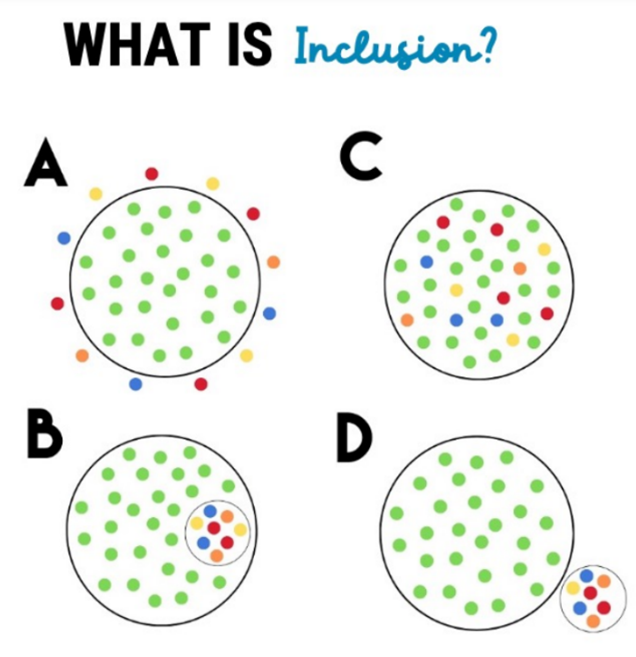
Figure 1 What is inclusion? (Moore, 2024a)
Look at Figure 1 (Moore, 2024a) – which do you pick as ‘inclusion’? Is your answer A? B? C? or D?
Take a moment to reflect on your views, beliefs and convictions. Which one did you choose? Which one reflects your current school structures and operations.
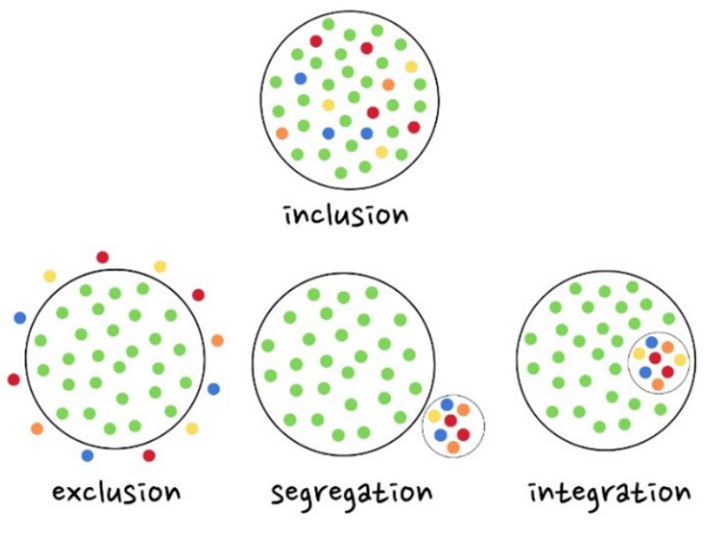
Figure 2 Inclusion, Exclusion, Segregation and Integration (Moore, 2024a)
Figure 2 (Moore, 2024a) provides you the answers to the types of thinking and belief structures when referring to difference. Did you pick “C” as inclusion? If so, this is a good place to begin.
It shows the goal of “all” being together and acknowledged in the space they are. This is where the terms integration and inclusion need to be particularly reflected on in your current context in order to assess the correct construct in your school and the philosophy that you hold. But what if there was a different view again? A way to view inclusion that will require shifts in language and thought to allow greater engagement.
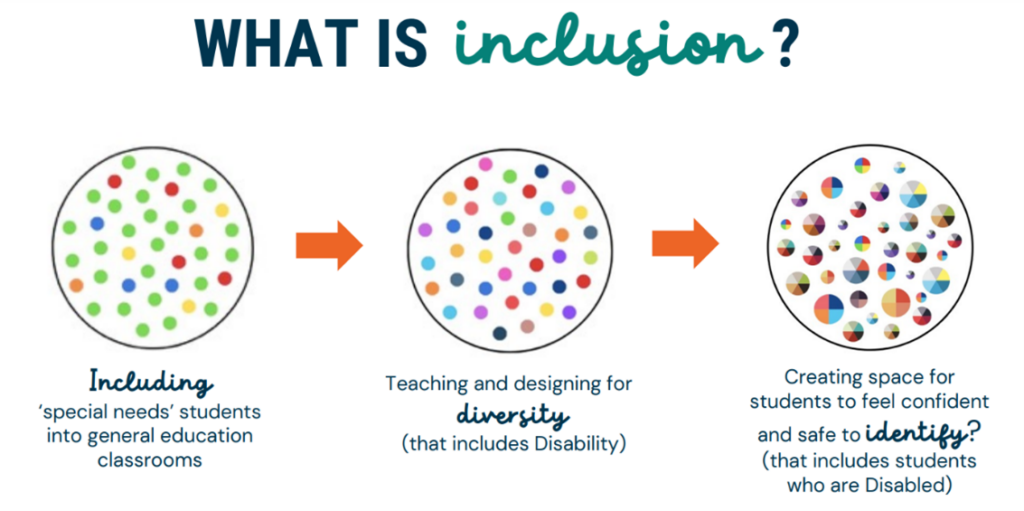
Dr Shelley Moore (2016) uncovers a variation to the meaning of inclusion. Defining inclusion as: “there is no other” (p. 4). Inclusion is no longer about just the students with disability, it’s about shifting paradigms to embrace, celebrate and consider all types of diversity in our learners and world (Figure 2a).
Figure 2a Inclusion is everyone as “other” (Moore, 2024a)
Everyone is seen as the diverse individual that they are; learning ability, language, cultural background and more. And this is used to support planning and programming within the school context not seen as a hindrance.
A “one size fits all”, is not an effective model to implement, as it removes the individuality and diverse needs of the students within our settings.
This idea of inclusion works across mainstream, support classes and schools for specific purposes. It supports all teachers to widen their thinking on learning needs and difference in all its facets.
If teachers took on this view of inclusion, they would be relying on a strengths-based approach to planning and learning rather than a deficit model (Moore, 2016). It’s about bringing students together to allow them to build on their strengths and the strengths of others in a safe and supported environment. It is about allowing opportunities where available, with strongly funded support, for students to engage in learning that builds capacity and development.
Collaborative Classroom
Nilholm (2021) in defining “inclusion” moves between theory and practice to support understanding for the classroom context. It states that inclusion involves all pupils, regardless of needs, participating both socially and academically in a supported space.
In 2024, in Australia, 1,062,638 school students (government and non-government) received an educational adjustment due to disability comparative to 2015 with 674,323; a 58% growth in enrolment (ACARA, 2025).
It is more apparent than ever that teachers need to work collaboratively (mainstream and specialist), to support the diverse learning needs of students within our classrooms. Reaffirmed more with the news that a record 221,000 NSW public school students were diagnosed with a disability in 2024 (Townsville Bulletin, 2025). Highlighting that one in four students in public schools, have a disability, making the need for collaboration and more effective supports and structures a government necessity.
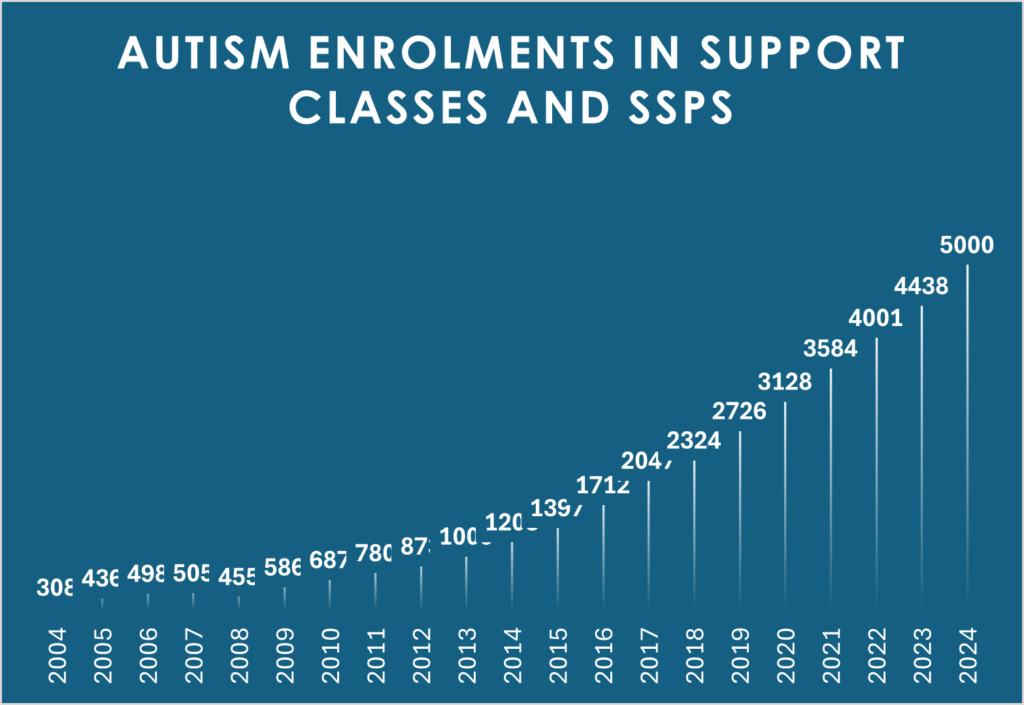
The Centre for Education Statistics and Evaluation (CESE) data (Figure 3) highlights the upward trend of 1,523% enrolment increase of students with autism in our support classes and schools for specific purposes (SSPs) across the last 20 years. This information demonstrates an important need for the profession to look at ways to support this group of students (and the teachers) across school settings to better meet the individual needs of all students.
Figure 3 Number of autism enrolments across Support Units and SSPs 2004-2024 Source: NSW CESE Statistical Bulletins (2025)
One such model that can be implemented is the Collaborative Classroom model. Collaborative Classrooms is a school-wide strategy developed to maximise inclusion and achievement by ensuring that the expertise of all staff is utilised to its full potential to support students of all abilities, across all classrooms and settings.
It gives every student access to the collective expertise of staff while ensuring individual support needs are explicitly addressed regardless of the class or program in which they are enrolled. It allows specialist teachers and SLSOs to work with parents, students and staff to allow each student a balanced experience of ‘special education’ in their “Home Class” (support unit) and benefiting from a sense of belonging in their “Peer Class” (mainstream).
Classes are formed more based on stage, than classification, to allow students (and teachers) to be linked to their peers. This organisation allows individuals and small groups from mainstream to work in the Support Unit, allowing them greater opportunities to work toward their learning goals. Conversely this structure allows students to work with their peers across the curriculum. This enhances classroom practice, experience, perspective and collegial training.
Figure 4 What is Inclusion, diversity and identity? (Moore, 2024a)
It’s a shifting of thinking, planning and collaborating that changes the language and perspectives across classes and the community.
It’s about creating an environment where every child is seen and planned for, regardless of their enrolment place.
In the school context at which I taught in 2023, an outcome of this model, six out of eight Stage Three students enrolled in the support unit had developed the skills and confidence needed to actively and successfully participate in learning with their mainstream classmates for more than 80% of the school day. How amazing is this? For the students and the school.
Reflect on collaborative practices in your workplace.
What is working well? What could you do better?
What could you change?
Programming Adjustments
“When a flower doesn’t bloom, you fix the environment in which it grows, not the flower.”
~Alexander den Heijer (Moore, 2024b)
Students with disabilities require content and material adjustments of varying degrees that support their individual need. But what is an adjustment?
Adjustments are the “actions taken to enable a student with disability to access and participate in education on the same basis as other students.” (AITSL, 2020, p.13).
This process is a success when teachers (mainstream and specialist) work together to support all students across the school. Building capacity of one another for the benefit of the individual.
As an example, in a support class in a mainstream school, a student is working at stage level for mathematics. Amongst his peers, there are students that are not. Teachers in this team decide that levelled maths groups across the stage is a suitable structure to build capacity of both students and teachers. Therefore, they map learning out together as a continuum to allow all students an opportunity to access the learning, to the best of their ability; with necessary adjustments along the way.
The NSW Department of Education (2025) provides online resources through the Universal Resources Hub, that allow teachers opportunities to participate in mini learning modules on different concepts in inclusive education and disability. They have collated learning strategies and resources to support teachers to meet the diverse needs of students within their classroom. While not exhaustive, it provides teachers a starting point with ideas to map out learning experiences that meet the individual needs.
If you are looking for reasonable and evidence-based suggestions to support students with disability in your classroom, get yourself a copy of “Blueprint for Inclusion” (Poe, 2025) which provides practical guidelines for teachers to effectively engage and build capacity of all students.
Ford (2013) concludes that the “priority would be ensuring the student is acquiring the academic skills necessary to be successful” (p. 15) within their scope and need.
The Goal IS Inclusion
Not one teacher, would be able to say that they do not want to achieve inclusion in their classroom as it allows the opportunity for each student to feel empowered in their learning and development. The Disability Standards for Education 2005 state that “teachers and school communities [are] to ensure accessibility of education for student with disability” (AITSL, 2020, p. 24).
We value the inclusive system the Department of Education offers, from early intervention, mainstream, support units and schools for specific purposes, creating avenues for all learners to successfully engage in their individual learning journeys.
“Schools should be inclusive spaces where all students are afforded opportunities to thrive.”
(AITSL, 2020, p. 24)
Take the time to reflect and audit the practices in your school.
Approaches to meeting student need (with disability) need to be based on empirical validation – not “ideology, persuasive slogan, or the volume of stridency of voices advocating a particular [treatment or] position” (MacMillan D, Gresham, F and Forness S., 1996, p. 3).
I have valued my professional development and experiences across various settings. It has taught me to adjust, support and adapt my thinking and practice to best meet the needs of the individuals in my classroom. It has also given me the opportunity to support my colleagues around me. Building teaching capacity in this space for greater impact, awareness and ability.
Inclusion is a journey not a destination (Moore, 2016). It’s the way we view learning as a multilayered process that allows students to work in more ways to be more successful.
“Inclusion is a mindset – not a specific location.”
Ford, J. (2013). Educating Students with Learning Disabilities in Inclusive Classrooms, Electronic Journal for Inclusive Education, 3 (1)
MacMillan D, Gresham, F and Forness S. (1996). NSW Teachers Federation Full Inclusion: An empirical Perspective. Behavioural Disorders, a publication by the Council for Exceptional Children
Moore, S. (2016). One without the other: Stories of Unity through Diversity and Inclusion. Winnipeg, Manitoba: Portage & Main Press
Nilholm, C. (2021). Research about inclusive education in 2020 – How can we improve our theories in order to change practice? European Journal of Special Needs Education, 36 (3), pp. 358-370
Poe, R., M. Ed. (2025). Blueprint for Inclusion: a practical guide to supporting students with IEPs in the general education classroom. LLC Beech Grove, IN: TeacherGoals Publishing
United Nations Educational, Scientific and Cultural Organisation and Ministry of Education and Science, Spain (1994). The Salamanca Statement and Framework for Action on Special Education. World Conference of Special Education: Access and Quality
About the Author
John Skene was elected as the NSW Teachers Federation Disability Officer in November 2024. As part of this role, he is responsible for supporting students, staff and schools in the area of disability. He is working closely with Organisers, Professional Support, Trade Union Training and others to support Federation members.
With over fifteen years of experience as a teacher in special education, John has worked in schools for specific purposes (SSPs) and support units (SUs). He is an Assistant Principal Special Education and has held roles as Federation Representative and Workplace Committee at school level. John was a Councillor and Special Education Contact of Sutherland and Inner-City Teachers Association (across his time in school) and a Federation Executive Branch Representative in 2023 and 2024.
Professor Jacqueline Ullman discusses how teachers can support students who identify as gender and sexuality diverse and to assist them to improve their sense of belonging…
Many schools recognise that, as our society becomes more open to and supportive of gender and sexuality diversity, numbers of gender and sexuality diverse students (e.g. those who might identify as lesbian, gay, bisexual, transgender, gender-diverse, or as another diverse gender or sexuality identity) have appeared to increase. The word ‘appeared’ is intentional, as experts in the field argue that the increase in young people identifying as gender and sexuality diverse (GSD) is attributable to the impact of rising social acceptance rather than an increase in actual numbers; in other words, GSD individuals have always existed in similar proportions, however – historically, and in some contexts still today – they have been compelled to hide their identities. In Australia in 2025, as parents/carers and peers are more accepting, more young people are able to be open about who they are.
It is part of the labour of teachers to ensure that all their students feel comfortable and supported to be their authentic selves and to be proud of their diverse identities. While this expectation of teachers is aligned with both federal[1] and state-based[2] guidance, at a more basic and relational level, this commitment to positive representation and inclusion of students’ diverse identities is typically aligned with teachers’ positive feelings towards the diverse range of students in their care. Put simply, most teachers like kids and want to support their self-acceptance and sense of belonging.
Talking about Gender and Sexuality Diversity
However, for a variety of reasons, including lack of relevant pre-service or in-service training, the curricular inclusion of gender and sexuality diversity can feel a bit more challenging than the inclusion of other diverse identities and backgrounds. Some teachers feel nervous about what they are and are not ‘allowed’ to say in the interests of inclusivity and – despite growing numbers of GSD students at all levels of education – teachers sometimes express concerns about whether or not gender and sexuality diversity-inclusive content is appropriate for the primary or secondary school classroom (van Leent, 2017). Even within the area of relationships and personal development education, which includes many suitable content areas where gender and sexuality diversity could easily be integrated, almost a third of Australian teachers do not include same-sex attraction or sexual orientation and a quarter do not include gender diversity (Ezer et al., 2018).
Recent survey research with Australian teachers shows that the large majority report positive feelings about gender and sexuality diverse people and a general sense of comfort engaging with related topics – answering questions, addressing name-calling, and providing a safe environment for GSD students (Burns et al., 2023). An important finding of this research is that, while participating teachers were almost uniformly supportive of inclusivity of gender and sexuality diversity at both the policy and curriculum levels, many reported that this was not enacted at their schools. Less than half reported having a gender and sexuality diversity-inclusive school enrolment policy and less than a third said that inclusive topics were featured in the curriculum in a positive way at their school (Burns et al., 2023).
NSW-Specific Supports for the Inclusion of Gender and Sexuality Diversity
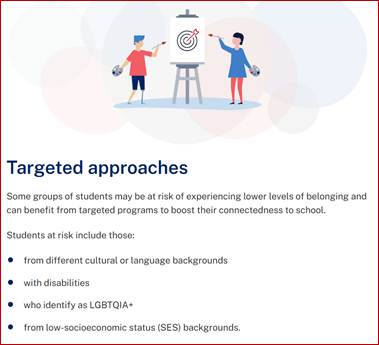
As wise educator Emily Style penned back in 1988, the curriculum should function as “both window and as mirror” to validate students’ experiences of self within the public world of the school as a strong foundation for their lives as adults in broader society. For GSD young people, the majority of whom are raised by “straight”/heterosexual, cisgender[3] parents/carers, school-based validation is even more critical. The New South Wales (NSW) curriculum encourages inclusion of diverse identity characteristics both in the classroom and at the whole-school level and gender and sexuality diversity-inclusive content options exist within many curriculum areas, including PDHPE, English, History, Society and Culture, Community and Family Studies and Legal Studies. Further, the Department acknowledges that students who identify as LGBTQIA+ (or GSD) are at risk of experiencing lower levels of belonging and benefit from “targeted programs to boost their connectedness at school” via education/curriculum, inclusive language and through educators working to curate an inclusive physical environment[4]. Additional support is provided via the “Transgender students in schools” legal issues bulletin 55 (LIB55)[5] which reminds teachers to be “inclusive of all students’ individual learning identity” and acknowledges that gender identity can be discussed across many curriculum areas.
Parents’ Attitudes to the Inclusion of Gender and Sexuality Diversity
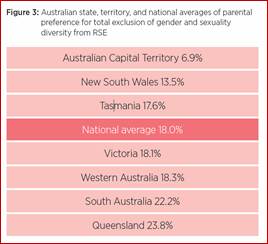
One of the most commonly reported reasons for teachers’ and school leaders’ lack of engagement with gender and sexuality diversity is their concern about parental opposition and subsequent complaint. Recent Australian survey research has addressed this point head-on, finding that 86.5% of public-school parents in NSW support the introduction of gender and sexuality diversity-inclusive topics during K-12 schooling, with most wanting these introduced by the end of Stages 3 or 4 (Ferfolja et al., 2021). Conversely, just 13.5% preferred total exclusion of gender and sexuality diversity from relationships and sexuality education. NSW parents were more supportive of the inclusion of these topics than the national average (see Ullman et al., 2021 for full, nationally representative survey results).
From: Gender and Sexuality Diversity in Schools: Parental Experiences and Schooling Responses, New South Wales Snapshot Report, available here.
Topics such as diverse romantic relationships and families; the negative impact of GSD bias-based discrimination; and understanding gender diversity were viewed by parents as necessary for creating a positive, safe and supportive school culture and preparing students for living well as adults in a diverse, socially cohesive society. Additionally, while media headlines might have us believe that gender diversity (or transgender identities) is a particularly divisive topic, 65% of public-school parents rated the “difference between biological sex and gender” as this relates to gender diversity and transgender individuals as of “moderate” or “high” importance, with just 19.5% viewing this as “not important” (Ullman et al., 2021).
Crucially, this research was nationally-representative, meaning that – rather than survey results being dismissible as the niche sentiments of those in particular locations or demographics – these findings are our closest reflection of the attitudes and preferences of the public-school parent population. While some communities might have an overrepresentation of vocal oppositional parents, most will have an abundance of supportive parents who may be far less likely to contact the school with positive feedback.
New Professional Learning Resource for Supporting GSD Students
Many teachers and school leaders want to support GSD students to feel visible and included within the school community and there are a plethora of easily-accessible online resources to support their efforts, including many offered by the NSW Teachers Federation. However, educators regularly ask for professional learning in this area, which is much more limited in availability and access.
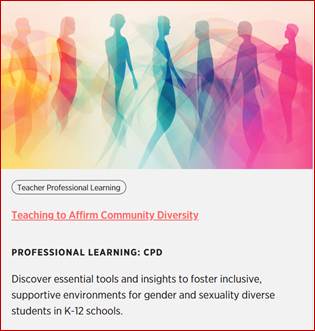
To meet this need, Associate Professor Jacqueline Ullman and Professor Tania Ferfolja, both academic researchers in Western Sydney University’s School of Education, designed the “Teaching to Affirm Community Diversity” online short course (or ‘micro-credential’). This 10-hour short course is designed with the busy educator in mind – flexibly-available and self-paced, with asynchronous engagement with the academics, and able to be used to satisfy professional learning requirements in NSW and nationally.
The course draws from current Australian research and uses federal guidance and state-based education policy to support teachers seeking to create gender and sexuality diversity-inclusive environments in K-12 schools. Through five modules, each including interactive activities, teacher-learners explore legal and policy frameworks, best practice ideas, and strategies for fostering student belonging through a supportive, safe, and affirming school climate for GSD students.
The “Teaching to Affirm Community Diversity” micro-credential is available through Western Sydney University and can be accessed here.
Drawing from empirical research with parents and GSD students, this short course bridges the gap between legal obligations, known best practices, and real-world application, and aims to increase educators’ awareness about how a positive school climate is related to GSD students’ wellbeing, academic success and sense of belonging.
By the end of the 10-hour short course, teachers and school leaders will be able to:
Identify and understand the unique challenges and experiences faced by GSD learners in K-12 settings and their families;
Apply relevant state and federal departmental policies to confidently implement inclusive pedagogical strategies and administrative practices that support GSD learners;
Address and counteract gender-based violence and bullying, fostering a school environment that supports both GSD learners and educators;
Critically reflect on and improve their own practices to create more inclusive and supportive classroom environments; and,
Critically reflect on their school’s local-level policies and work with colleagues to reshape and enact these in line with their learnings.
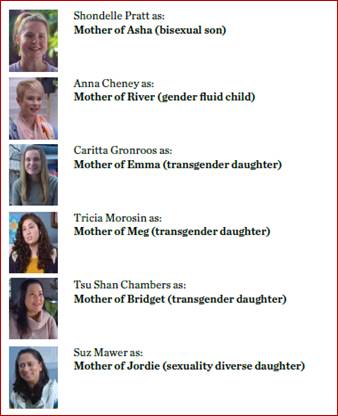
Central to the micro-credential is a short film, shown in three parts, where learners are introduced to the real-life (word-for-word, verbatim) experiences of six public school mums, parenting GSD children attending primary and secondary schools. These parents’ experiences of working with public school teachers and school leaders to support their children, shared through short films using their spoken interview data as ‘performed’ by professional actors, expose what schools and educators are doing well and where practices could be improved. Their stories are at once emotional and inspirational and offer a unique backdrop for the ‘why’ of local school policy and pedagogical reform in this area.
The six parents, as professionally acted, in the “What Parents Want: Talking about Gender and Sexuality Diversity” short film, featured in the micro-credential.
As with other areas of diversity and inclusivity, best-practice models for inclusivity of gender and sexuality diversity in schools advocate for whole-school approaches, bringing together both macro-level policy guidance documents and interpersonal, relational considerations for school community. Targeted professional learning in this area is an important, foundational element of such a shift. Importantly, it is evident that the large majority of parents want to see schools working to include GSD students – not just for the benefit of those young people, but to enhance cohesion and reduce bullying for the whole school community.
Want to Know More?
The “Teaching to Affirm Community Diversity” micro-credential at Western Sydney University is available here (https://westernx.edu.au/courses/tacd/?cl=1) and open for rolling enrolment throughout the year. Participants receive a digital badge of recognition upon completion.
Training can also be arranged in-person at the whole-school/team levels. For more information or to register your interest, please reach out to Associate Professor Jacqueline Ullman via j.ullman@westernsydney.edu.au
References
Burns, S., Saltis, H., Hendriks, J., Abdolmanafi, A., Davis-McCabe, C., Tilley, P.J., & Winter, S. (2023). Australian teacher attitudes, beliefs and comfort towards sexuality and gender diverse students. Sex Education, 23(5), 540-555. https://doi.org/10.1080/14681811.2022.2087177.
Ferfolja, T., Ullman, J., & Hobby, L. (2021). Gender and Sexuality Diversity in Schools: Parental Experiences and Schooling Responses. New South Wales – Snapshot Report. Western Sydney University. https://doi.org/10.26183/tmjr-zj59.
Ullman, J., Ferfolja, T., & Hobby, L. (2021). Parents’ perspectives on the inclusion of gender and sexuality diversity in K-12 schooling: Results from an Australian national study. Sex Education, 22(4), 424–446. https://doi.org/10.1080/14681811.2021.1949975.
van Leent, L. (2017). Supporting School Teachers: Primary Teachers’ Conceptions of Their Responses to Diverse Sexualities. Sex Education, 17(4), 440–453. https://doi.org/10.1080/14681811.2017.1303369.
About the author
Professor Jacqueline Ullman has a Bachelor of Science (English Education, Secondary) from New York University; a Master of Arts (Sociology and Education) from Teachers College, Columbia University; and a Master of Education (Research Methods) and PhD (Educational Psychology) from the University of Sydney. She began her career as a public high school English teacher in NYC before deciding to upskill with the goal of informing educational policy reform in the interests of making schools more equitable and inclusive. Professor Ullman has published more than 80 journal articles, book chapters, research reports and resources for educators’ professional learning since 2012, is in the top 1% of published academics worldwide in the field of sex education (ScholarGPS), and is a featured author on UNESCO’s Health and Education Resource Centre. Her research-based resources for classroom teachers and school leaders are featured by Australia’s federal Student Wellbeing Hub and within guidance documents for educators distributed by several other state/territory Departments of Education. Her extensive track record of consultation and professional development with schools across Sydney further attests to her understanding of the complexities of diverse school communities and the sensitivity required to successfully work with teacher, parent and student cohorts to conduct research in the areas of sexualities, gender and gender diversity, relationships and health.
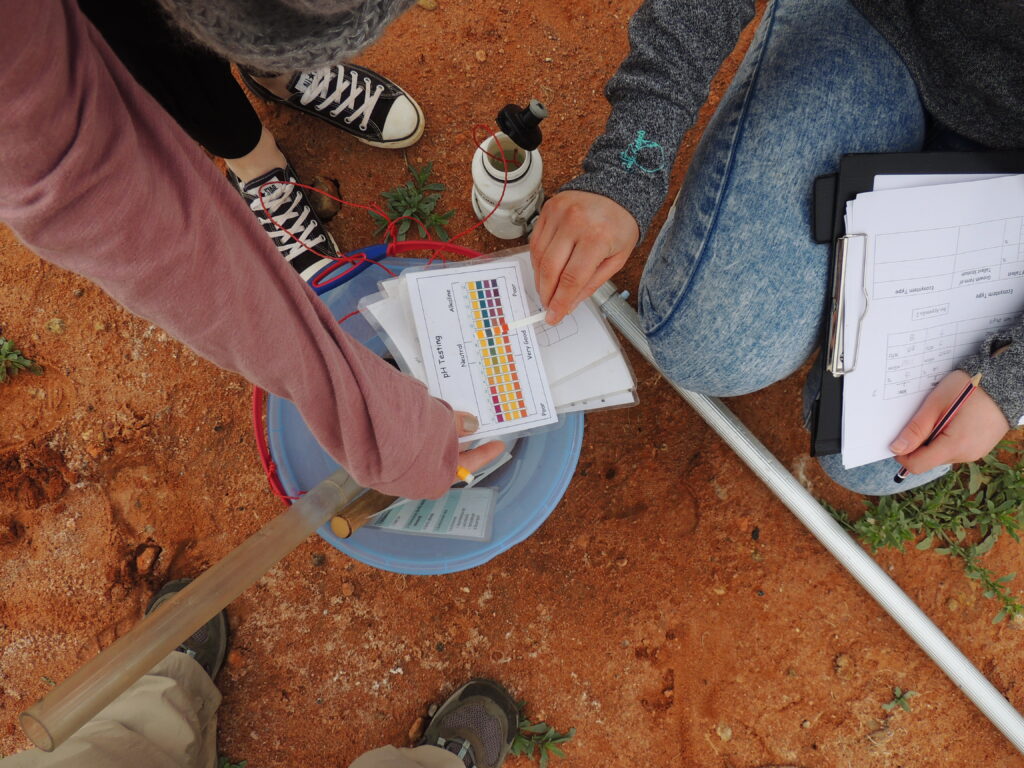
Have you ever wondered how can I provide authentic, curriculum aligned, fieldwork experiences for my students to explore and investigate both natural and human-made environments? Nic Hall explains how Environmental and Zoo Education Centres can help…
Students participating in senior Geography program with Wambangalang EEC
Imagine a school setting where students miss the opportunity to experience the engagement and curiosity that arises from learning in distinctive outdoor environments — a place where they are confined solely to traditional indoor classrooms, losing the chance to connect with the natural world, observe real-life examples, and develop a deeper understanding of their surroundings through hands-on experiences. Such an absence would diminish the richness of their educational journey, making learning more routine and less inspiring. As educators, we play a vital role in fostering a sense of wonder by integrating unique outdoor learning opportunities that enhance student engagement, passion, and motivation. The solution to this limited school experience lies in one of the NSW Department of Education’s best-kept secrets: Environmental Education Centres.
Currently, there are 25 Environmental and Zoo Education Centres (EZECs) spread throughout the state. These centres include 23 Environmental Education Centres (EECs) and two Zoo Education Centres — one located at Mosman (Taronga) and the other at Dubbo (Western Plains). Each site represents a wide range of environments, from urban to wilderness, coastal to inland, and rainforests to rangelands.
Environmental and Zoo Education Centres are at the forefront of environmental and sustainability education. They offer authentic, curriculum-aligned fieldwork experiences that allow students to explore, investigate, and gain a deeper understanding of both natural and human-made environments. Their programs help students grasp key concepts and systems while fostering values that inspire them to become environmentally responsible citizens.
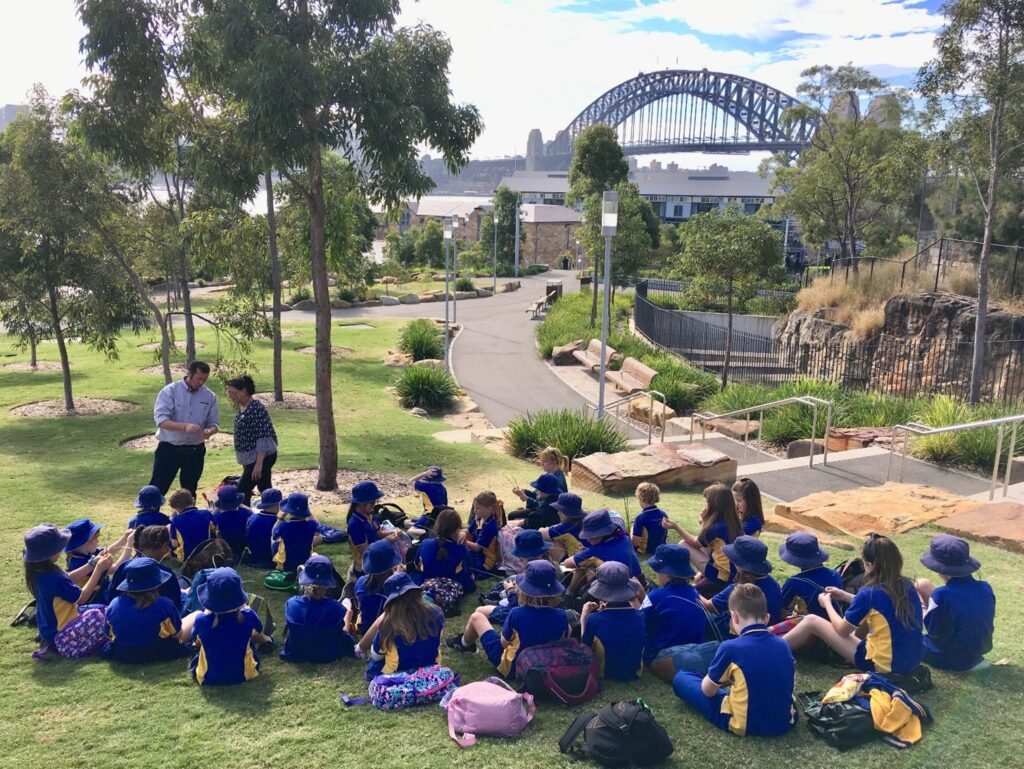
Students observing the urban environment with Observatory Hill EEC
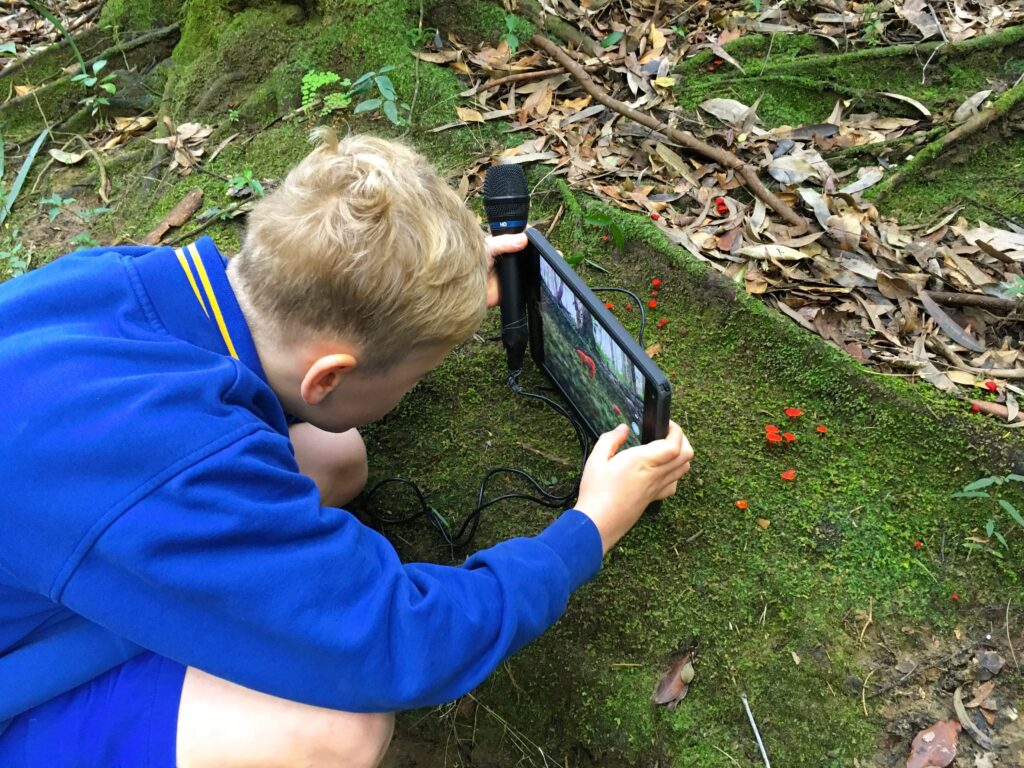
Nature investigation with Field of Mars EEC
These centres form one of the largest ‘Communities of Schools’ within the NSW public education system. They deliver on-site and in-school programs for students from Kindergarten to Year 12, reaching an average of 300,000 students annually across both urban and regional NSW. Additionally, they provide professional learning opportunities to thousands of teachers statewide. Beyond curriculum delivery, schools participate in these programs to benefit from the wellbeing advantages of nature-based learning, an aspect that has gained importance following the COVID-19 pandemic. NSW EZECs support educational and wellbeing needs, promote sustainability, acknowledge Aboriginal histories and cultures and Torres Strait Islander histories and cultures, and serve rural and remote communities throughout NSW.
With the introduction of new syllabuses emphasising authentic, real-world learning experiences — such as the mandatory Stage 6 Science syllabuses — and the continuous growth in the number of schools, the centres are now more essential than ever in supporting students and staff across NSW. The first EEC was established in 1971 at Muogamarra Nature Reserve and welcomed its first school in 1972. Initially known as field study centres, they were renamed Environmental Education Centres in 1999, reflecting the evolution of environmental education from focusing solely on nature and conservation to encompassing broader concepts such as ecological sustainability and responsible citizenship.
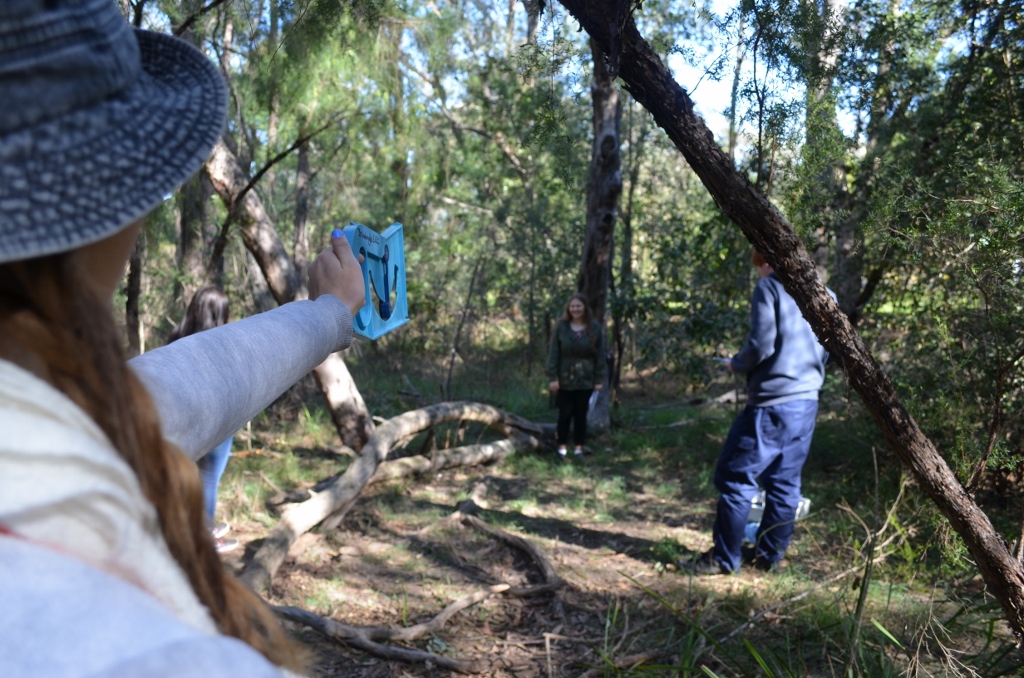
Students learning Geography field skills with Warrumbungle National Park EEC
Learning experiences offered by EZECs complement classroom curriculum by providing immersive, experiential opportunities that enhance students’ conceptual understanding. Each EZEC site is staffed with highly qualified and experienced educators who exemplify best practices in environmental education. These professionals are adept at differentiating and facilitating authentic fieldwork that deepens students’ comprehension of complex ecological and sustainability issues while fostering critical thinking, inquiry, and a sustained passion for environmental stewardship.
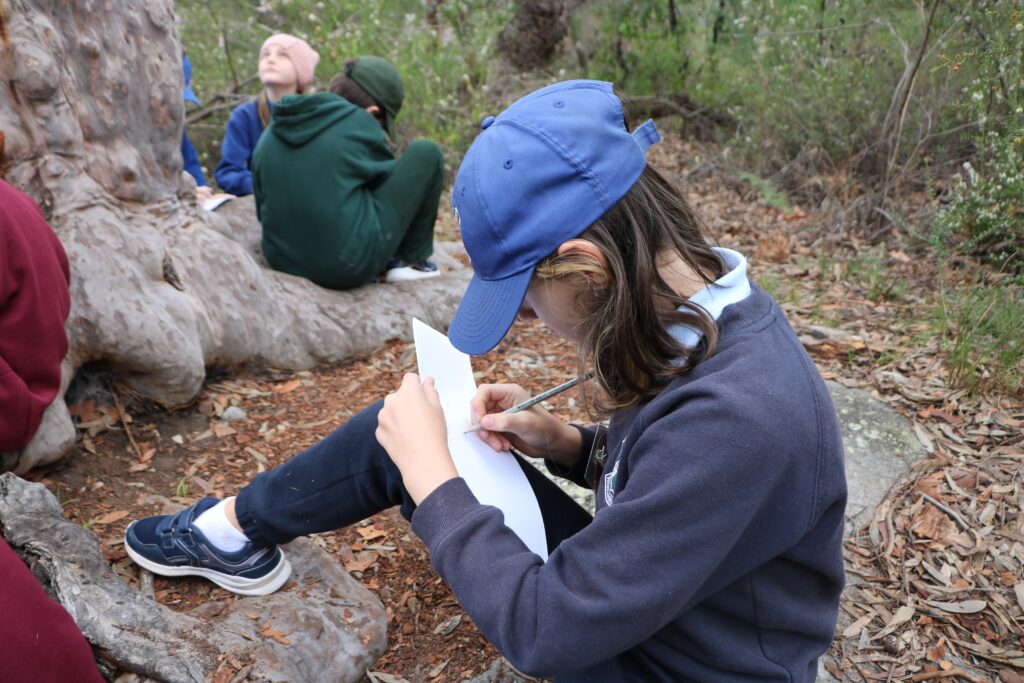
Inspired by Nature sketching with Royal National Park EEC
Programs at these centres are developed through strategic partnerships with key environmental agencies and local stakeholders, ensuring that the curriculum content is both scientifically rigorous and relevant. This collaborative approach enriches learning by connecting students with contemporary environmental challenges and community-based initiatives, cultivating a profound sense of responsibility and active citizenship that extends beyond formal education settings.
Environmental Education Centres provide comprehensive fieldwork experiences for students across all stages of schooling, supporting the achievement of outcomes across a variety of key learning areas. In addition to delivering student programs, the centres offer targeted professional development for educators and school communities, equipping teachers with the pedagogical skills and content knowledge necessary to embed sustainability and environmental principles effectively within their curricula.
Furthermore, Environmental Education Centres provide a range of support to teachers back in their schools and classrooms. These include class sets of teaching resources that can be loaned or borrowed, and practical tools designed to help educators integrate environmental education into everyday learning. The centres also offer expert guidance and support to schools in establishing environmental projects and transforming school grounds into dynamic outdoor learning environments that encourage ongoing student engagement and foster a lasting connection with the natural world.
Students travel to Kosciusko for an excursion with Riverina EEC
Despite the demonstrable benefits and extensive reach of EZECs, many educators and schools across the state remain unaware or have yet to engage with these vital resources. Enhancing awareness and facilitating broader access to Environmental Education Centres is essential to ensure equitable opportunities for all students to benefit from high-quality, place-based learning taught through the lens of environment and sustainability. Strengthening this engagement will be critical to advancing the Department’s commitment to cultivating environmentally literate and responsible citizens equipped to meet future challenges.
To facilitate teacher engagement with Environmental Education Centres, the Department encourages educators to explore the extensive range of programs and professional development opportunities offered by EZECs. Educators can utilise the interactive map available on the Department’s website to identify their nearest Environmental Education Centre and access comprehensive information regarding available programs and supporting resources. Schools are encouraged to arrange visits, enquire about in-school offerings, or participate in specialised workshops aimed at enhancing teacher confidence and expertise in delivering environmental and sustainability education. Active collaboration with EZECs enables teachers to enrich student learning outcomes and cultivate a culture of environmental stewardship within their classrooms and broader school communities. Environmental and Zoo Education Centres represent a vital component of the education system and may provide the essential support needed to significantly enhance the student learning experiences for your students.
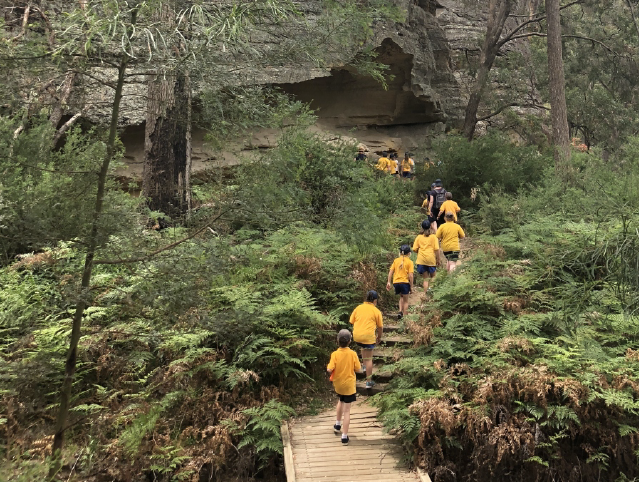
Students walking the Drip with Red Hill EEC
About the author
Nic Hall has dedicated over 20 years to public education across Sydney, beginning his teaching career at Green Valley Public School in Sydney’s south west. His professional journey was profoundly shaped when he discovered Environmental Education Centres, environments where his passion for outdoor education and student-centred, experiential learning could truly thrive.
Currently serving as the relieving principal of Camden Park Environmental Education Centre, Nic proudly works collaboratively with a diverse range of stakeholders—including educators, community organisations, and environmental agencies—to design and deliver innovative programs that enrich learning experiences for both students and teachers.
Nic aims to inspire students to connect meaningfully with the natural world and develop sustainable practices that will serve them throughout their lives. Nic considers his role not only a profession but a privilege, continuously striving to support and empower educators and students alike.
Anna Hogan argues that the principle of autonomy for principals has not been as worthwhile or as empowering as promised. She suggests the use of “intelligent professionalism”…
In recent years, school leaders across Australia have been navigating intensifying demands. Principals are now routinely expected to manage not only teaching and learning, but also staffing, infrastructure, finances and community engagement, all within systems shaped by reform agendas that emphasise decentralisation and local autonomy. At the centre of these reforms lies a key question: autonomy over what, and for what purpose?
This essay reflects on the changing nature of professional autonomy in school leadership, drawing on research conducted across Australia, New Zealand, England, and Canada. It argues that while the principle of autonomy is often presented as empowering, in practice it has sometimes functioned to redistribute responsibility and delegate risk onto schools without the support required to realise its promise. In this context, an engagement with the concept of intelligent professionalism offers a useful framework for thinking about how school leaders might reclaim autonomy in ways that are professionally meaningful and educationally purposeful.
Autonomy as a policy ideal
Education reforms in many OECD contexts, including Australia, have positioned autonomy as a desirable policy goal. Initiatives such as Local Schools, Local Decisions (LSLD) sought to give principals greater control over staffing, budgets and other operational decisions. The underlying assumption is that decentralising authority to the school level enables leaders to respond more effectively to local contexts and community needs (Macdonald et al., 2021).
Many school leaders welcomed these changes. In research conducted with principals across four different states in Australia, school leaders frequently described the benefits of being able to tailor decisions to their communities (Niesche et al., 2023). In a different study, in Queensland, principals similarly highlighted autonomy as professionally affirming, offering opportunities to innovate, lead strategically and differentiate their schools within an increasingly competitive school choice landscape (Le Feuvre et al., 2023). For these leaders, autonomy was not only a matter of operational control, but also a way to enact their vision and build a strong, marketable culture within their schools.
This view was reinforced during the COVID-19 pandemic. When school closures occurred and rapid shifts to remote learning were required, many principals used their discretionary powers to reallocate funds, purchase digital devices and implement local strategies to ensure continuity of learning (Cuskelly et al., 2024). In these moments, autonomy enabled timely and responsive decision-making. It also contributed to a sense of professional agency that allowed school leaders to draw on their local knowledge and relationships to support students and staff.
The limits of autonomy in practice
Despite these examples, the practical enactment of autonomy has also raised concerns. In several studies, school leaders indicated that while autonomy was welcome in theory, in practice it was often accompanied by significant challenges (see Thompson et al., 2021; Keddie et al., 2022). A common concern was the absence of corresponding support and resourcing. Autonomy, in these contexts, did not always equate to greater professional freedom. Instead, it often meant managing increasing responsibilities in the face of declining resources.
A key example of this is how the financial responsibilities associated with autonomy have significantly reshaped the role of the principal. Research into school funding and the increasing reliance on private income in public schools has shown that principals are now required to engage in resource acquisition activities, including applying for grants, selling advertising space and partnering with external organisations in sponsorship arrangements (Hogan et al., 2023; Rowe & Di Gregorio, 2024).
While some school communities benefit from these opportunities, the process places additional expectations on school leaders to manage stakeholder relationships and align their goals with market-based principles. This shift signals a broader change in how educational leadership is understood: success is increasingly associated with financial management and market responsiveness, rather than solely with instructional leadership or community engagement.
These changes have placed considerable strain on principals, many of whom report working extended hours to meet operational and administrative demands. In recent research colleagues and I have undertaken in partnership with the Queensland Teachers’ Union, principals described long workdays followed by several hours of tasks completed after hours (Thompson et al., 2025). Time spent on teaching and learning, through classroom observations and mentoring was frequently reduced. For many, this led to a sense of disconnection from the core purposes of their role.
Rethinking professional autonomy
Given these challenges, it is important to reflect on what kind of autonomy is most valuable in public education. Autonomy itself is not inherently beneficial or detrimental. What matters is the nature of the autonomy being granted, the supports that accompany it and the purposes it serves. This is where the concept of intelligent professionalism (Thompson, 2021) offers a productive way forward.
Developed in the context of global advocacy for the teaching profession, intelligent professionalism resists the narrowing of autonomy to individualised managerial control. Instead, it positions autonomy as strategic, collective and grounded in shared responsibility, with teachers and school leaders actively shaping policy and practice. It recognises educators as insiders in education reform, whose expertise and contextual knowledge should drive decision‑making. This involves collaborative, profession‑led approaches to designing and enacting policies, supported by strong relationships between systems, schools and their communities.
From this perspective, autonomy is most valuable when directed toward the aspects of leadership and practice that have the greatest impact on student learning and school development. These include:
Instructional leadership: the ability to lead curriculum, pedagogy and assessment in ways that reflect the needs and strengths of local communities.
Staff development and team building: the capacity to mentor and retain staff, and to foster a strong, purposeful professional culture.
Responsive planning: the discretion to make strategic decisions in response to emerging challenges or opportunities, supported by clear frameworks and adequate resources.
At the same time, intelligent professionalism recognises that not all responsibilities are best devolved. Certain functions, particularly those related to infrastructure, core staffing, student support services, and data systems, may be more effectively managed through central coordination. When these are centrally resourced and equitably distributed, they reduce unnecessary burdens on school leaders and create the conditions for genuine professional agency. This enables educators to focus their autonomy on the work that matters most; improving teaching, learning and equity in their schools.
A professionally led system
As Australian education systems consider the next phase of reform, there is a timely opportunity to reflect on how leadership is understood and supported. Rather than continuing to devolve responsibilities without sufficient support, policymakers could invest in models of leadership that are sustainable, collaborative and grounded in professional expertise.
A professionally led system does not imply a return to rigid centralisation. Rather, it involves designing structures that balance flexibility with fairness, and that recognise the critical role of school leaders as both educational experts and system stewards. This means creating space for principals to lead learning, ensuring that baseline entitlements and infrastructure are guaranteed system-wide, and developing accountability systems that are transparent, collaborative and respectful of educators’ time and expertise.
The principle of autonomy remains important in public education. But autonomy must be supported. It should enable school leaders to lead with purpose, not just manage scarcity. By reclaiming intelligent professionalism, we can reframe autonomy not as a burden, but as a tool for advancing educational quality and equity, led by the profession, in partnership with the system and in service of all students.
References
Cuskelly, L., Hogan, A., & Thompson, G. (2024). Commercial triage in public schooling: COVID-19, autonomy and ‘within system’inequality. Journal of Educational Administration and History, 56(4), 448-464.
Keddie, A., MacDonald, K., Blackmore, J., Wilkinson, J., Gobby, B., Niesche, R., … & Mahoney, C. (2022). The constitution of school autonomy in Australian public education: Areas of paradox for social justice. International Journal of Leadership in Education, 25(1), 106-123.
Hogan, A., Gerrard, J., & Di Gregorio, E. (2023). Philanthropy, marketing disadvantage and the enterprising public school. The Australian Educational Researcher, 50(3), 763-780.
Le Feuvre, L., Hogan, A., Thompson, G., & Mockler, N. (2023). Marketing Australian public schools: The double bind of the public school principal. Asia Pacific Journal of Education, 43(2), 599-612.
MacDonald, K., Keddie, A., Blackmore, J., Mahoney, C., Wilkinson, J., Gobby, B., … & Eacott, S. (2023). School autonomy reform and social justice: A policy overview of Australian public education (1970s to present). The Australian Educational Researcher, 50(2), 307-327.
Niesche, R., Eacott, S., Keddie, A., Gobby, B., MacDonald, K., Wilkinson, J., & Blackmore, J. (2023). Principals’ perceptions of school autonomy and educational leadership. Educational Management Administration & Leadership, 51(6), 1260-1277.
Rowe, E., & Di Gregorio, E. (2024). Grant chaser and revenue raiser: public school principals and the limitations of philanthropic funding. The Australian Educational Researcher, 1-20.
Thompson, G. (2021). Improving the status of teachers through intelligent professionalism. Education International.
Thompson, G., Hogan, A., Mockler, N., Stacey, M., & Creagh, S. (2025). Time Use, Time Poverty and Teachers’ Work: Preliminary Report on Phase 3.
Thompson, G., Lingard, B., & Ball, S. J. (2021). ‘Indentured autonomy’: Headteachers and academisation policy in Northern England. Journal of Educational Administration and History, 53(3-4), 215-232.
About the author
Dr Anna Hogan is an Associate Professor in the School of Education at Queensland University of Technology. Her research interests broadly focus on education marketisation, and the related issues of privatisation and commercialisation in public schooling. She currently works on a number of research projects, including: philanthropy in Australian public schooling, teacher and school leader time poverty, and how commercial curriculum resources – including GenAI – impact teachers’ work. She works with education departments and teacher unions in relation to these issues. Anna has two recent books: Teaching and Time Poverty (2024) and Commercialising Public Schooling: Practices of Profit-Making (2025).
Amanda McKay examines both the overwhelming workload as well as the declining wellbeing of principals. She explains the causes of this situation and the need for it to change…
The role of a school principal has been described by AITSL (2014) as “one of the most exciting and significant undertaken by any person in our society”.
Behind this inspiring sentiment, though, lies a reality that is increasingly unsustainable for those who are working as school leaders today. The annual Australian Principal Occupational Health, Safety, and Wellbeing Survey paints a stark picture, with escalating workloads, rising mental health concerns, and a growing number of principals contemplating leaving the profession (Dicke et al., 2025). This article explores the systemic pressures facing school leaders as well as the emotional aspects of principals’ work, and calls for urgent reform to support a more sustainable version of leadership in Australian schools.
The Principalship in Crisis
The annual wellbeing survey reveals a troubling trend: over half of respondents from New South Wales have experienced threats of violence, and 51% are seriously considering leaving their roles (Dicke et al., 2025). These statistics reflect data from this survey showing a decade-long deterioration in working conditions and the wellbeing of Australian school leaders. Despite repeated outpourings of concern from the media and policymakers each year when the survey results are released, little has changed. Principals are expected to deliver ‘relentless’ school improvement while navigating funding constraints, staff shortages, and rising wellbeing concerns among students and staff. The emotional and relational burden of leading communities through complex times has become overwhelming, with many principals reporting feeling stretched to breaking point, and fewer educators looking to step into leadership roles.
Autonomy and Accountability: A Double-Edged Sword
The promise of autonomy, particularly through policies like Local Schools, Local Decisions, is ostensibly intended to empower school leaders. In practice, however, it has often resulted in increased administrative burdens and fragmented responsibilities. Principals, in research I conducted in partnership with the Australian Secondary Principals’ Association, described finding themselves overseeing bus contracts, asbestos issues, and managing financial risk – tasks far removed from instructional leadership. Our findings highlighted the disconnect between policy rhetoric and reality. Principals in our study described autonomy as “an illusion,” constrained by systemic red tape and prescriptive accountability measures. The result for many principals has been a shift away from the core business of educational leadership and leading teaching and learning, towards the operational management of schools. According to Eacott et al. (2023), OECD data from 2018 (showed that almost 90% of Australian school leaders’ time is spent on non-instructional matters, and this rise in workload makes it difficult for leaders to prioritise teaching and learning matters. This erosion of time for teaching and learning undermines the fundamental purpose of educational leadership.
Values, Demoralisation, and Marketisation
Beyond workload, principals face a deeper challenge: the misalignment between their professional values and the demands of a marketised education system. Increased competition among public schools for enrolments and funding has damaged collaboration and community. Doris Santoro’s (2018) concept of “demoralisation” captures the experience of educators whose work no longer aligns with their core beliefs. Principals are not immune to this, as the pressure to meet narrow metrics of success (often defined by external data) has reshaped what it means to be a “good” school leader. This shift naturally affects relationships within and across schools. Strong networks and collegial support are essential for helping principals to navigate the emotional load of leadership, but marketisation and devolution can undermine these connections. Principals report feelings of isolation, exacerbated by the lack of systemic support felt by many leaders in highly devolved systems.
The Emotional Labour of Leadership
Leading a school is not just intellectually demanding, it carries a significant and often-hidden emotional element. A review of the literature on the emotional and relational intensity of the principalship conducted with my colleagues Fiona Longmuir and Katrina MacDonald highlighted the undervalued emotional labour of principals, which directly impacts their health and wellbeing (McKay et al., 2025). For example, in Victoria, principals are 55% more likely to report mental health injuries than other school staff (Victorian Department of Education, 2017). The emotional bandwidth required to lead effectively often spills into principals’ personal lives, affecting their relationships and family dynamics. In a research project focused on attracting and retaining principals within the profession, participants described strained relationships, missed time with children, and a pervasive sense that school dominates everything (McKay & Mills, 2023). Principals have described feeling the need to work around the clock to meet demands, leaving little room for rest or recovery. One participant described the challenge of “trying not to let the urgent hijack the important”, which they experience as a daily struggle in a system that normalises working in crisis mode.
Towards Sustainable Leadership
Despite these challenges, there are glimmers of hope around the country. In South Australia, a shift in educational priorities has signalled a move toward more supportive systems for students and educators alike. In New South Wales, the NSW Teachers Federation 2025 Annual Conference expressed a clear commitment to rebuilding and strengthening public education. Part of the strength of that public education system must include having a sustainable workforce, and relationships remain central to sustaining school leaders in their work.
I was recently part of a team undertaking an evaluation of a group supervision model in Victoria that fostered trust and created a space where principals felt supported to share vulnerabilities and concerns, and to celebrate each other’s successes. Participants described it as a “lifeline,” enabling them to build supportive networks that extended beyond formal meetings, which helped reduce isolation and sustained participants through difficult times.
Importantly, my previous research has shown that these types of networks can also help principals to establish boundaries around their own work. Rituals such as end-of-day debriefs with colleagues or shared commitments to leave school at a specific time and debrief on the way home with colleagues from other schools has created space for recovery and enabled leaders to place some distance between their work and their ‘outside of school’ lives. These practices appear to be simple on the surface, but they reflect a deeper shift in mindset and a commitment to actions that recognise wellbeing as being essential to sustaining leaders within the profession. They also require principals to draw a line under the day, which is far easier said than done, and more experienced principals seemed to be more comfortable with taking this approach towards the end of their workdays. This is an example where individualised solutions can be risky for leaders, and systemic reform is needed so that the sole responsibility isn’t on a school leader to determine how much is ‘enough’ when their workloads can seemingly be all-encompassing.
Reimagining the Future and a Call to Collective Action
As New South Wales moves toward new horizons in education, the question is not just what changes will be made, but how they will be enacted. Reform fatigue is real, and many teachers view policy shifts as something done “to” them rather than “with” them. Many early career principals, in particular, may have only known a system defined by heavy accountability and competition. Reimagining leadership will require a collective voice, solidarity, and a return to purpose. We need to keep returning to a central guiding question: what are we asking schools and leaders to do, and why?
The challenges facing school leaders are systemic, not individual. Although principals continue to persevere out of a deep commitment to their communities, sustainable leadership requires systemic reform, investment in relationships, and a reimagining of what it means to lead a school. Tinkering at the edges will not sufficiently address these issues. The future of the principalship depends on collective action that is grounded in solidarity, purpose, and a commitment to sustaining a strong public education system.
About the author
Amanda McKay is Associate Professor of Educational Leadership at Queensland University of Technology (QUT). She is interested in the ways education policy environments influence school leaders’ identities, and their intentions to remain within the profession. Her current research projects focus on analysing workload, wellbeing, and sustainability in leaders’ and teachers’ careers in Australian schools and reimagining ways of working into the future.
References
Australian Institute for Teaching and School Leadership. (2014). Australian Professional Standard for Principals and the Leadership Profiles. AITSL, Melbourne.
Dicke, T., Kidson, P., Marsh, H., (2025). The Australian Principal Occupational Health, Safety, and Wellbeing Survey (IPPE Report). Sydney: Institute for Positive Psychology and Education, Australian Catholic University.
Eacott, S., Niesche, R., Keddie, A., Blackmore, J., Wilkinson, J., Gobby, B., & MacDonald, K. (2022). Autonomy, Instructional Leadership and Improving Outcomes – The LSLD Reforms in NSW, Australia. Leadership and Policy in Schools, 22(3), 811–824. https://doi.org/10.1080/15700763.2022.2081212
McKay, A., MacDonald, K., & Longmuir, F. (2022). The emotional intensity of educational leadership: a scoping review. International Journal of Leadership in Education, 28(4), 673–695. https://doi.org/10.1080/13603124.2022.2042856
McKay, A., & Mills, M. (2022). Love, care, and solidarity: understanding the emotional and affective labour of school leadership. Cambridge Journal of Education, 53(3), 311–327. https://doi.org/10.1080/0305764X.2022.2103099
Santoro, D. (2018). Demoralized: Why Teachers Leave the Profession they Love and How they can Stay. Harvard Education Press. Victorian Department of Education. (2017). Principal Health and Wellbeing Strategy: Discussion Paper. Melbourne: State of Victoria. Retrieved from https://www.education.vic.gov.au/hrweb/Documents/PrincipalHWBStrategy_DiscussionPaper.docx
In this course you will develop a practical understanding of modern assessment theory and look at strategies for promoting and assessing higher order thinking skills in your students. We will focus on two assessment formats: multiple choice, and performance-based items, and consider the purpose and design of rubrics. We will look in depth at the advantages, disadvantages, tricks, and pitfalls of these different styles, emphasising the interrelationship between learning and assessment.
Professor Jim Tognolini and Dr Sofia Kesidou from the University of Sydney’s Centre for Educational Measurement and Assessment lead an interactive and content-driven professional learning day. Completing this course will consolidate your expertise in helping your students develop analytical, evaluative, and creative skills.
Please note this course was formerly called Modern Assessment Theory and Assessment Strategies for Higher Order Thinking: K-12.
Tuesday 11 August 2026 at NSW Teachers Federation, Surry Hills
Wednesday 26 August 2026, online via Zoom
Wednesday 11 November 2026 at Blacktown
All CPL courses run from 9am to 3pm.
Prof Jim Tognolini
Professor Jim Tognolini is Director of The Centre for Educational Measurement and Assessment (CEMA) which is situated within the University of Sydney School of Education and Social Work. The work of the Centre is focused on the broad areas of teaching, research, consulting and professional learning for teachers.
The Centre is currently providing consultancy support to a number of schools. These projects include developing a methodology for measuring creativity; measuring 21st Century Skills; developing school-wide practice in formative assessment. We have a number of experts in the field: most notably, Professor Jim Tognolini, who in addition to conducting research offers practical and school-focused support.
Dr Sofia Kesidou
Sofia Kesidou is an executive leader and academic researcher with close to 30-years’ experience in international educational assessment, curriculum and research.
Sofia has taught courses in assessment to undergraduate and graduate students, and has conducted numerous professional-development sessions related to standards-based curriculum and assessment as well as assessment and data literacy internationally.
Completing Modern Assessment Theory and Assessment Strategies for Higher Order Thinking: K-12 will contribute 5 hours of NSW Education Standards Authority (NESA) Accredited PD in the priority area of Delivery and Assessment of NSW Curriculum/EYLF addressing standard descriptors 5.1.2 from the Australian Professional Standards for Teachers towards maintaining Proficient Teacher Accreditation in NSW.
K-12 teachers
$220
Please note, payment for courses is taken after the course takes place.
“Great learning to empower teachers to be better professionals and create better outcomes for students, strengthen the profession.”
“A very practical course to use for the planning and implementation of classes with the intention of improving assessments/evaluating/testing for the students.”
“Every aspect of this course was informative and useful. I’ve had an opportunity to think about what has been presented and engage in collegial discussion.”
This 3-day professional learning course will help participants to understand the difference between ethical school leadership and simple school management. This interactive course will set you on a journey to reshape culture in your school by reclaiming the belief that school executives are not only managers, but also the leaders of education in their schools.
Over three days you will critically analyse the nature of ethical leadership and challenge existing approaches to leadership (using an ethically based model). In a series of interactive sessions you will learn the ethics of quality assessment, how to lead difficult conversations with staff and how to put ethical leadership into practice.
Led by teacher-practioners and experts, you will be guided through issues around inclusive education and re-thinking ability, in addition to how to put ethical leadership into practice.
Designed for school executives, principals, aspirational school leaders as well as teachers who wish to understand more about the concept of ethical leadership, and to use that knowledge to develop or enhance their leadership, this course is an essential for those working towards building a public school community.
School executives, principals, aspirational school leaders as well as teachers who wish to understand more about the concept of ethical leadership
Day 1 – Thursday, 22 October 2026
Day 2 – Friday, 23 October 2026
Day 3 – Friday, 27 November 2026
All 3 days will be conducted at NSW Teachers Federation , Surry HIlls
With the increase in complexities within the classroom, come along to learn how to effectively and purposefully use Functional Behavioural Assessment to assess, break down and meet the diverse needs of learners in your classroom from K to TAFE.
Discovering the purpose and function of behaviour, which is a form of communication, will allow teachers to better support the needs of individuals in the classroom.
Learn practical skills and build understanding on how to positively support student engagement in their learning.
K-TAFE teachers interested in functional behavioural assessment
16 March 2026 at NSW Teachers Federation, Surry Hills
13 May 2026 at NSW Teachers Federation, Surry Hills
25 November at NSW Teachers Federation, Surry Hills
All CPL courses run from 9am to 3pm.
$220
Please note, payment for courses is taken after the course takes place.
John Skene was elected as the NSW Teachers Federation Disability Officer in November 2024. As part of this role, he is responsible for supporting students, staff and schools in disability. He is working closely with the other areas in Federation (Organisers, Professional Support, Trade Union Training) to support Federation members.
With over fifteen years of experience as a teacher in special education, John has worked at Schools for Specific Purposes (SSPs) and Support Units (SUs). He has held roles such as Federation Representative and Assistant Principal Special Education. John was a Councillor and the Special Education Contact of Sutherland and Inner-City Teachers Association (across his time in school).
The conference will hear the current state of disability in the public education system and Federation’s ongoing commitment and work to support students and teachers within special education and those with a disability.
Participants will have an opportunity to network with other like-minded teachers and engage in workshops covering topics such as differentiation (K-6 and 7-12), classroom management with diverse learners, meeting sensory needs, working with SLSOs for success and neurodiversity in TAFE.
The Conference will also bring a together experts and experienced practitioners to answer questions about disability within the current context as well as the “where to next.”
3 December 2026 at NSW Teachers Federation, Surry Hills.
$275
Please note: payment for the conference is taken after the conference takes place.