Skip to content

Join Today

Member portal

NSW Teachers Federation
  • Home
  • Courses
    • All Courses
    • All Conferences
    • Primary
    • Secondary
  • Journal
    • Journal Issue
    • For your Classroom
    • For your Staffroom
    • For your Future
    • For your Research
  • Podcast
  • About
    • Who we are
    • What we do
    • Our Presenters
    • FAQ
    • Contact Us
NSW Teachers Federation
  • Home
  • Courses
    • All Courses
    • All Conferences
    • Primary
    • Secondary
  • Journal
    • Journal Issue
    • For your Classroom
    • For your Staffroom
    • For your Future
    • For your Research
  • Podcast
  • About
    • Who we are
    • What we do
    • Our Presenters
    • FAQ
    • Contact Us

Subject: Students with disability

Inclusion: Rethinking Ability — Mindset and Language

John Skene provides some views and perspectives on the need for teachers to be the change-makers in language and culture to create more inclusive schools so everyone feels welcome…

“Inclusion is a mindset – not a specific location.”

(Poe, 2025, p.12)

Language is power. And there is power in language. This places a substantial weight on education settings to teach, develop and encourage individuals (student, colleague and community) to become literate in the language that builds inclusion rather than brings it down.

With over 7,000 languages spoken across the world today (GoFluent, 2020) it’s important to reflect on how we ourselves use language, engage with language and foster development of ourselves and others.  

Take a moment to reflect on your own word choices. How do you refer to disability?

The language debate in the disability space

Language, both spoken and written, influences views, perceptions and interactions on so many levels. Within the disability space there are two variants of language structures used to refer to, or indicate, a need: the medical model and the social model.

The medical model of thinking defines disability as a deficit or sickness in need of fixing (Harkins Monaco, E., Stansbury Brushnahan, L., Fuller, M, and Odima Jr., M., 2024): building a language and discourse that can create negativity and position people to view those with disability as “less than”. Within this model, words are generally outdated or have interpretations of helplessness and limitation, painting a deficit view of the individual (Shams, 2025).

The social model of thinking promotes individuals with disability as part of the natural variations of being, and that it is personal bias, or reaction, that can impact interaction.

Society needs to reflect on language use. Shams (2025) summarises it nicely by saying “there is no expectation to get it right all the time” but if those that are not disabled are trying, with compassion and respect, we can begin the journey of empowerment for those that are generally deemed lesser. It is not about perfection.

People with Disability Australia (2021) discuss that, within Australia, both person-first language (people with disability) and identity-first language (disabled people) are used. This notion opens the discussion around advocacy and simply asking: “what do you prefer?”

It is okay to ask someone when you don’t know.

As we know, language is power, and many groups have strong preferences, one way or the other, when being spoken about. Many groups have started a process to reclaim terms, that historically were used to belittle or demean, in order to demonstrate strength, power and to destigmatise the historical use, such as: “crip”, “spaz” and “mad” (People with Disability Australia, 2021 p.6).

Word choice is important when speaking about a people, to which you yourself are not connected. Ensuring that word selection is uplifting rather than reductive (such as ‘the disabled’) supports the continued efforts of seeing individuals as human.

It is important to acknowledge a group’s choice of language, or terms, when interacting with them. As an example, Deaf communities see themselves as a cultural group (rather than disabled) as they have a different first language (People with Disability Australia, 2021).

When in doubt always use person-first language to ensure you are humanising the individual you are speaking to, or about, not reducing them.

Implications in schools

According to Harkins Monaco, E., et.al., (2024, p.25) schools have an opportunity to be places that “remove barriers, increase access and innovate opportunities for inclusion”. An outcome for which we should all be striving.

With a record 221,000 students diagnosed with disabilities in NSW public schools (Townsville Bulletin, 2025), equalling about one in four students – teachers have a responsibility to be mindful of the culture that they create. Schools have a role to play in empowering, supporting and uplifting a shift in mindset and language to promote inclusivity and positivity. This is not a one-person job or an overnight fix. 

Like a slow dripping tap, to begin the shift and journey, change needs to start by having open discussions around language choice and use thus empowering honesty. If the leadership are on board, even better, to allow a top-down trickle in building inclusive, powerful and positive language and culture.

Something simple, but impactful, that can support positive views of individuals with disabilities in a support class is shifting the language from Special Education class to inclusive learning class or the class name. Moving away from the “special ed kids” to “students in xx class”.

Shifting mindset, changing culture

Building, instead, a community of learning, where the students with disability are not seen as the outliers in the school, in a different space away from everyone, but are included in the learning that is taking place across a school.

In getting the community on board, highlighting language use in communications such as newsletters, website etc. gives them the purpose behind the changes. Supporting conversations outside the school gates, to demonstrate consistency in language choice.

It is vital to shift the mindset to ‘everyone’s concern’ not just the special education teachers or other specialists. Supporting students with disabilities in schools is a collective responsibility. Too many times, a teacher from the support unit is having a much-needed break and is interrupted by a colleague stating: “your student xx needs you” or “xx is not following instructions, you need to go deal with it”.

While there are some circumstances where the expert will need to step in to support, most other times are simple situations where a consistent response, or support, can be implemented by any staff member.

NSW public schools are to be inclusive spaces that support the learning, social and emotional engagement of ALL students with reasonable adjustments and teaching strategies regardless of “disability, ethnicity, socio-economic status, nationality, language, gender, sexual orientation or faith” (NSW Education, 2025).

 Reflect on your current school context and the collective perception of who holds responsibility for different groups of students. At your school, if there is an issue with a disabled student, do all staff support and manage the resolution, or is it referred to the special education teacher?

As a profession, the impetus is to shift from “not my student, not my problem” to a collective view that all students within a school community deserve the respect, care and support from all staff and peers. This takes effort and purposeful change-makers, to ensure that a philosophy aligned in inclusion, is embedded within a school.

Let’s work together to make this a system reality.

The inclusive school

When a school seeks to empower, uplift and is truly inclusive – all students, with or without a disability, can be seen for who they are. They can be supported to achieve their fullest potential without biased barriers or roadblocks.

It can result in a student with a disability being elected to student leadership in Year 6, off his own accord and popularity, through the targeted language choice, mindset of the community and purposeful support that has been embedded into a changed school culture.

“…languages don’t limit our ability to perceive the world or to think about the world, rather, they focus our attention and thought on specific aspects of the world.”

(GoFluent, 2020)

References

GoFluent (2020). More Than Words: How Language Affects The Way We Think. https://www.gofluent.com/us-en/insights/corporate-language-training/how-language-affects-the-way-we-think/, July 17

Harkins Monaco, E., Stansbury Brushnahan, L., Fuller, M, and Odima Jr., M. (2024). Disability, Intersectionality, and Belonging in Special Education: Socioculturally Sustaining Practices (Special Education Law, Policy, and Practice). Rowman & Littlefield Publishers

NSW Education (2025). Inclusive education for students with disability. https://education.nsw.gov.au/schooling/school-community/inclusive-education-for-students-with-disability/commitment_to_Inclusive_Education, July 28

Poe, R., M. Ed. (2025). Blueprint for Inclusion: a practical guide to supporting students with IEPs in the general education classroom. LLC Beech Grove, IN: TeacherGoals Publishing

People with Disability Australia. (2021). PWDA Language Guide: A guide to language about disability. https://pwd.org.au/wp-content/uploads/2021/12/PWDA-Language-Guide-v2-2021.pdf

Shams, S. (2025). Using positive language around my disability shows you care. https://www.abc.net.au/news/2025-04-28/using-positive-language-around-my-disability-shows-you-care/105159262, July 17

Townsville Bulletin (2025). Record 221,000 NSW public school students diagnosed with disabilities. https://ww.townsvillebulletin.com.au/news/nsw/record-221000-nsw-public-school-students-diagnosed-with-disabilities/news-story/8ac81c5671ec37526c2a7ccb0e38539c?btr=2b3952f16fefd2a8aa25024cb3c0e137, April 3

About the Author

John Skene was elected as the NSW Teachers Federation Disability Officer in November 2024. As part of this role, he is responsible for supporting students, staff and schools in special education. He is working closely with Organisers, Professional Support, Trade Union Training and others to support Federation members.

With over fifteen years of experience as a teacher in special education, John has worked in schools for specific purposes (SSPs) and support units (SUs). He is an Assistant Principal Special Education and has held roles as Federation Representative and Workplace Committee at school level. John was a Councillor and Special Education Contact of Sutherland and Inner-City Teachers Association (across his time in school) and a Federation Executive Branch Representative in 2023 and 2024.
Rethinking Ability – John SkeneDownload

Writing is more than pencil & paper

John Skene provides some views and perspectives on the importance of differentiation in the classroom to support learners of all abilities…

Picture this:

Monday morning. Year 3, and your stage planned a writing task for all students to engage in. You’ve been building up to this activity. Whole class discussions. Mind maps. Brainstorming. You provide the class with the instructions: they must use a pencil and paper. You check for understanding. And send the students to their desk. Some students get started immediately. A few fuss with the distance between their desk and chair. Some pick up on their conversation of their weekends, which you redirect. One student you notice is just staring out the window and hasn’t even picked up the pencil. You direct them to start. They ignore you so you ask again. They refuse and place their face down on the table and cover their ears.

Sound familiar?

Friday, middle session. A kindergarten support class in mainstream. Writing is a tricky thing for all your students. The unit of work states that the students need to ‘write about their understanding of the text’ – so you think – “well they need to write with a pencil” – so you work one-to-one to assist the students to write responses to the questions.

They find it hard to hold the pencil. Their letter formation is non-existent. They engage in pre-writing/scribble behaviour. A few then become agitated because they are being made to ‘write’ and throw their pencil across the room. This then unsettles others and you must abandon the activity to support students to regulate.

What could be done?

As teachers we need to review our processes in programming and planning to support the diverse learners that we find in our classrooms today. These varying learning styles and abilities only continues to grow and diversify. Teachers are having to think differently about how they present information and how they receive student product to indicate levels of knowledge and understanding.

So how can we do this? Does it always have to be a pencil and paper? Are we expecting the same process and product for every child? Do we make each student sit the same assessment?

Differentiation

“In its truest sense, teaching is not finished until learning occurs – for each learner. Teaching without learning is an oxymoron.”(Tomlinson, 2006)

What is Differentiation? And what does it mean?

Differentiation is defined as the response that teachers make to support learners needs (NSW Department of Education, 2025b). It is not about watering down or ‘dumbing’ the curriculum – it’s a methodical process to support learners of all abilities from disabilities to high potential and gifted students, to engage with content, process, product and learning environment.

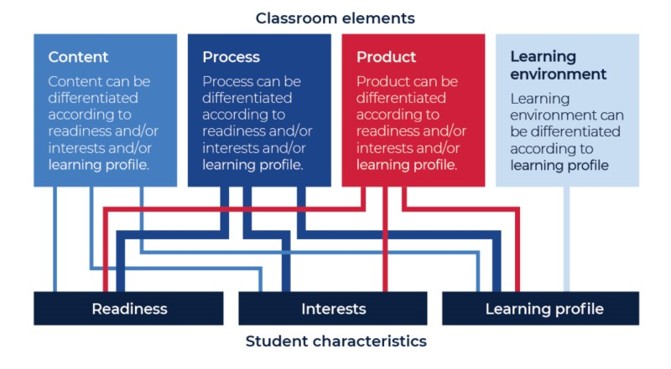
As seen in Figure 1- teachers have a responsibility to adapt to and create experiences that are meaningful and connected to student need and ability. “Practising quality differentiation is much more about knowing what matters to teach, realising that learning happens in us rather than to us” (NSW Department of Education, 2025a). It is a process by which, as teachers, we understand that, although content outcomes may seem linear, they are far from it.


Figure 1: Four types of classroom elements (NSW Department of Education, 2025b)

Rebakah Poe (2025) in her Blueprint for Inclusion outlines strategies for teachers to support all students in the classroom.  She clearly states that:

“A ‘one-size-fits-all’ approach to learning will not cut it” (p.83, 2025)

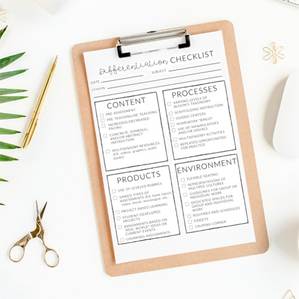
So, it is important for teachers to reflect on their current practices in all stages of planning to ensure they are adequately providing suitable and appropriate learning experiences that allow students to learn. Poe has compiled a useful tool available on her website (Figure 2, 2026) that supports teachers with a quick checklist outlining key factors of differentiation in the classroom. A meaningful and resourceful way to support your planning and programming, to ensure differentiation is embedded in your thinking.

Figure 2: Differentiation checklist (Poe, 2026)

Another concept she highlights in her book, that is useful for teachers to reflect on, is the difference between differentiation, accommodation and modification.  As we know differentiation refers to changing instruction to support student learning, accommodations give students the tools to participate [like Augmentative Alternative Communication (AAC) options], and modifications are where we adjust or alter the content to support students’ engagement.

Universal Design For Learning

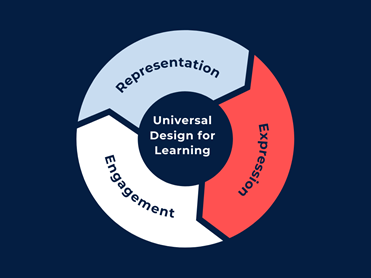
These three concepts lend themselves into the space of Universal Design for Learning. It is the framework that minimises barriers and ensures that students of all abilities can access learning (NSW Department of Education, 2026b). It is underpinned by three principles (Figure 3), that support proactive measures in planning that benefits students across all settings.

Figure 3: Universal Design for Learning (NSW Department of Education, 2026b)

The three principles of Universal Design for Learning (Poe, 2025)are:

  • representation: multi-modal provision (print, audio, visual) of material, concrete manipulatives and modelling concepts;
  • expression: allows for chunking of tasks and allows students to demonstrate understanding in multiple ways;
  • engagement: relates concepts to prior knowledge, incorporates student interest and choice and multiple avenues to accessing content.

They allow all learners to reach their full potential across all learning environments and provides greater accessibility for all students. While it may be a little bit more arduous and work to begin, the greater implications of learner engagement, with fewer future modifications, makes it worthwhile.

To more effectively support the ever-growing diversity in our classrooms, teachers need to look at including task analysis (chunking) in their planning and programming process. According to Schmidt (2025), task analysis is a method of making learning activities more accessible, by strategically separating components into smaller more manageable steps. This allows students to build an understanding of sequencing and can prevent incidents of distraction. When breaking down tasks, it allows students to have greater success and independence, alongside a sense of achievement, they may previously not have felt.

“By clearly outlining each step, educators [and families] can reduce barriers and build independence, one step at a time.”

(Schmidt, 2025)

NSW Department of Education (2026a) provides teachers with some engaging resources in the Universal Resources Hub. This online hub supports teachers with pre-made resource packs across multiple curriculum areas, that support preparation time and can be used as a starting point to support differentiation planning for students. Have you used any of the resources on offer?

Classroom Examples

Every classroom is different. The following examples highlight different students and useful classroom strategies that allow them to engage in learning experiences as well as differentiated tools to indicate understanding, that are alternatives to a pencil and paper:

1.“A student with autism and PDA, moderate intellectual disability and limited language”

Visuals (both real life and abstract) to support language use and recognition of common emotions or instructions. Visuals also assisted the student to answer simple ‘yes/no’ questions aligned to their personalised learning plan.

Social stories were created to support this student to understand events; what is taking place and what to expect. It supported them to build understanding and capacity of expectations and was a suitable reference if anxiety began to take over.

Language choice simple, clear and choice orientated to support the student to engage in learning experiences with greater success and independence.

2.“A student with Down Syndrome, moderate intellectual disability and limited language”

Visual sequencing of main events in a story. After reading a class story or an individual one, the student engages in a cut and paste activity to demonstrate understanding of the story line.

Real objects to support communication of needs and wants. Using real objects of items in the classroom allows students that have limited language, assist them to make connections between words in print with the real-life item.

3.“A student with autism, anxiety and limited mapping skills when writing”

Drawing to convey a message. If a student finds it difficult to write or, if writing creates cognitive load that impacts ability to engage, then allow them to draw their ideas and thinking.

Voice to text is a great tool for students to provide insight and understanding of concepts during an activity. The student can use a device to relay their ideas verbally, rather than having to battle with a pencil and paper or the fear of spelling something incorrectly.

Comic Strip activity to demonstrate understanding. This allows the student to sequence with pre-made or their own pictures to engage in the writing component of a task.

4.“A student with cerebral palsy, epilepsy and a wheelchair user”

Adapted keyboards to support engagement in writing tasks, to demonstrate understanding of the lesson. Move away from pencil/paper and allow the student to type through AAC. Ensure that predictive text is activated to give the student the space to engage in reciprocal conversation with a peer or adult.

Eye Tracking Device provides the opportunity for a student that may not have fine motor control or language to provide insight into content understanding.

Voice output device to allow the student to “voice” understanding, by selecting pictures chosen during the planning stages of the activity. It allows independence for the student.

Each strategy is not exclusive to the specific students referenced.

They are just addressed in this manner, to demonstrate the diverse learners that may be in your classroom. Each strategy can be trialled and implemented for a whole range of students

More than a pencil

Teaching is such a powerfully important and creative profession. Where else are you provided the work, the end goal, the desired outcomes – but can create the path to discovery? Working in Special Education specifically, has taught me to constantly “think outside the box” to support the diverse learning of all students in my classroom and school.

Teachers can be as creative as they feel. What have you created lately?

References

NSW Department of Education (2025a). Strategies for Differentiation. https://education.nsw.gov.au/teaching-and-learning/professional-learning/teacher-quality-and-accreditation/strong-start-great-teachers/refining-practice/differentiating-learning/strategies-for-differentiation (accessed March 2026)

NSW Department of Education (2025b). Differentiating learning. https://education.nsw.gov.au/teaching-and-learning/professional-learning/teacher-quality-and-accreditation/strong-start-great-teachers/refining-practice/differentiating-learning (accessed March 2026)

NSW Department of Education (2026a). Universal Resources Hub. https://resources.education.nsw.gov.au/home?urhlibrary=collections&source=literacyandnumeracypackages (accessed March 2026)

NSW Department of Education (2026b). Universal Design for Learning. https://education.nsw.gov.au/teaching-and-learning/curriculum/planning-programming-and-assessing-k-12/about-universal-design-for-learning (accessed March 2026)

Poe, R., M. Ed. (2025). Blueprint for Inclusion: a practical guide to supporting students with IEPs in the general education classroom. LLC Beech Grove, IN: TeacherGoals Publishing

Poe, R., M. Ed. (2026). Rebekah Poe Teaching. https://rebekahpoeteaching.com/ (accessed March 2026)

Schmidt, J. (2025). Breaking Down Tasks: Understanding Task Analysis. https://lifeskillsadvocate.com/blog/understanding-task-analysis/ (accessed March 2026)

Tomlinson, C. (2006). An Educator’s Guide to Differentiating instruction. USA: Cengage Learning.

About the Author

John Skene was elected as the NSW Teachers Federation Disability Officer in November 2024. As part of this role, he is responsible for supporting students, staff and schools in the area of disability. He works closely with Organisers, Professional Support, Trade Union Training and others to support Federation members.

With over fifteen years of experience as a teacher in special education, John has worked in schools for specific purposes (SSPs) and support units (SUs). He is an Assistant Principal Special Education and has held roles as Federation Representative and Workplace Committee at school level. John was a Councillor and Special Education Contact of Sutherland and Inner-City Teachers Association (across his time in school) and a Federation Executive Branch Representative in 2023 and 2024.
Writing is more than pencil & paper – John SkeneDownload

Is Inclusion Truly Inclusive?

John Skene provides some views and perspectives on the ever changing ‘concept’ of inclusion in the school context…

“…every child has a fundamental right to education, and must be given the opportunity to achieve and maintain an acceptable level of learning,”

(vii, The Salamanca Statement, UNESCO, 1994)

The education system has a responsibility to create conditions that enable teachers to lift-up and support the development of all students regardless of ability or disability.

We will unpack the differing definitions of inclusion and the impacts on your school setting as well as highlight some strategies and systems that can start the discussion in your workplace around ideas of best practice to support the learning and development of ALL students in your class.

The Inclusive divide

“If your ‘inclusion’ doesn’t allow us to be our authentic selves in the places we’re being included, then it’s not ‘inclusion’ at all. It’s assimilation.”

~Chris Bonnello (2025)

Inclusion is a term fraught with conflicting ideals and meanings from every level of education, government and within the community. From those that believe “full inclusion” (Ford, 2013, p.10) is the only way students can learn alongside peers, to those that believe in systemic structures and inclusive classrooms that embrace a holistic model of learning.

The NSW Department of Education (2021) defines inclusive education as when “all students, including students with disability, are welcomed by their school and supported to reach their full potential.”

Whichever one you believe, the research indicates both positives and negatives, without definitive conclusions either way.

To add to the debate, we must look at the difference between integration and inclusion. What most don’t realise is there is a stark difference. Integration is the action of bringing different groups or peoples together in the same space versus inclusion which values the differences of people and using these to support all learners.

Think about your current classroom.

Are all the students the same? What kinds of difference are present? Do you value these differences or see them as a burden? Do you value individuality and celebrate different ways of learning? What strategies or supports do you implement to ensure all learners are engaged? Does everyone in your class have a voice?

How you reflect upon, and answer the above questions, will determine your true view and definition of inclusion.

The following discussions and ideas will allow you to broaden, reaffirm or change your understanding of “inclusion” to build capacity in your workplace and support those around you.

One Size Does NOT Fit All

Due to the complexity of school communities, support allocation and funding, a universal approach to inclusive education is a complex phenomenon (Nilholm, 2021). We need to work collaboratively to embed inclusive practices into our system that allow individuals the opportunity to engage at all levels of learning.

The debate of inclusion and its generic ‘Band-Aid’ approach does not support or embed practices that allow individuals to thrive.

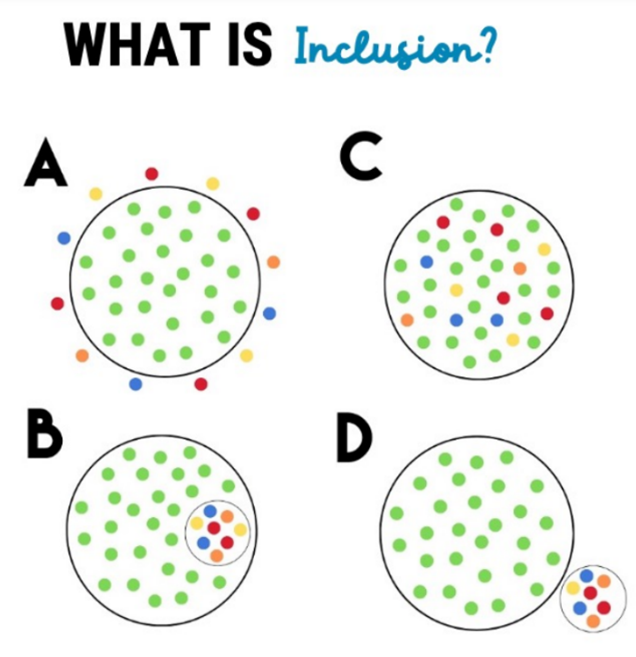
Figure 1 What is inclusion? (Moore, 2024a)

Look at Figure 1 (Moore, 2024a) – which do you pick as ‘inclusion’? Is your answer A? B? C? or D?

Take a moment to reflect on your views, beliefs and convictions. Which one did you choose? Which one reflects your current school structures and operations.

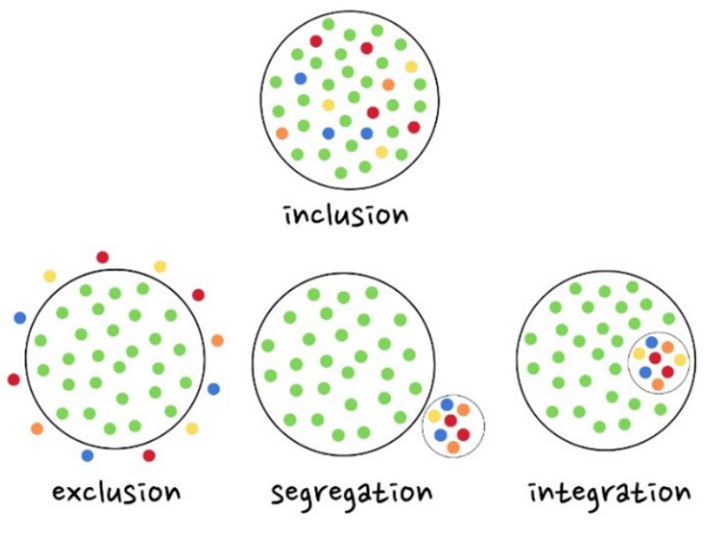
Figure 2 Inclusion, Exclusion, Segregation and Integration (Moore, 2024a)

Figure 2 (Moore, 2024a) provides you the answers to the types of thinking and belief structures when referring to difference. Did you pick “C” as inclusion? If so, this is a good place to begin.

It shows the goal of “all” being together and acknowledged in the space they are. This is where the terms integration and inclusion need to be particularly reflected on in your current context in order to assess the correct construct in your school and the philosophy that you hold. But what if there was a different view again? A way to view inclusion that will require shifts in language and thought to allow greater engagement.

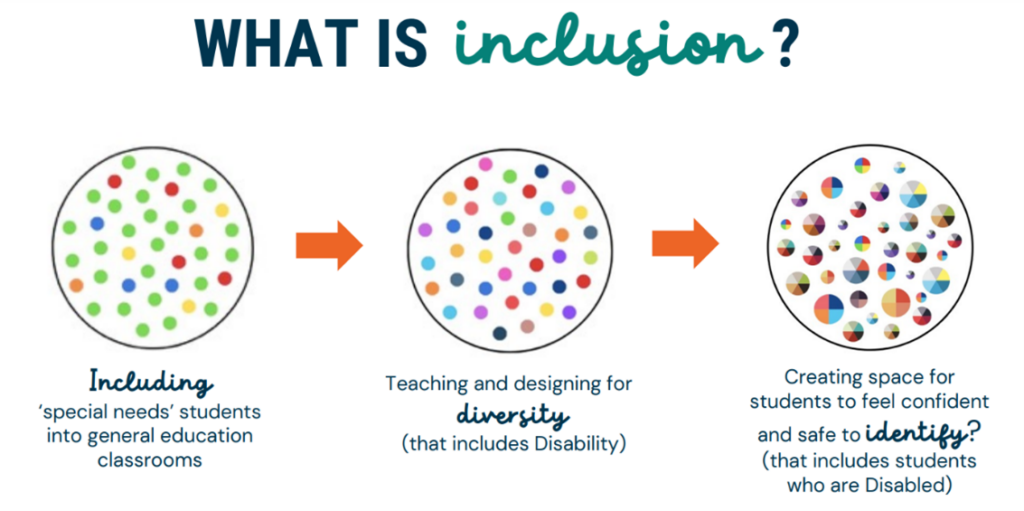
Dr Shelley Moore (2016) uncovers a variation to the meaning of inclusion. Defining inclusion as: “there is no other” (p. 4). Inclusion is no longer about just the students with disability, it’s about shifting paradigms to embrace, celebrate and consider all types of diversity in our learners and world (Figure 2a).

Figure 2a Inclusion is everyone as “other” (Moore, 2024a)

Everyone is seen as the diverse individual that they are; learning ability, language, cultural background and more. And this is used to support planning and programming within the school context not seen as a hindrance.

A “one size fits all”, is not an effective model to implement, as it removes the individuality and diverse needs of the students within our settings.

This idea of inclusion works across mainstream, support classes and schools for specific purposes. It supports all teachers to widen their thinking on learning needs and difference in all its facets.

If teachers took on this view of inclusion, they would be relying on a strengths-based approach to planning and learning rather than a deficit model (Moore, 2016). It’s about bringing students together to allow them to build on their strengths and the strengths of others in a safe and supported environment. It is about allowing opportunities where available, with strongly funded support, for students to engage in learning that builds capacity and development.

Collaborative Classroom

Nilholm (2021) in defining “inclusion” moves between theory and practice to support understanding for the classroom context. It states that inclusion involves all pupils, regardless of needs, participating both socially and academically in a supported space.

In 2024, in Australia, 1,062,638 school students (government and non-government) received an educational adjustment due to disability comparative to 2015 with 674,323; a 58% growth in enrolment (ACARA, 2025).

It is more apparent than ever that teachers need to work collaboratively (mainstream and specialist), to support the diverse learning needs of students within our classrooms. Reaffirmed more with the news that a record 221,000 NSW public school students were diagnosed with a disability in 2024 (Townsville Bulletin, 2025). Highlighting that one in four students in public schools, have a disability, making the need for collaboration and more effective supports and structures a government necessity.

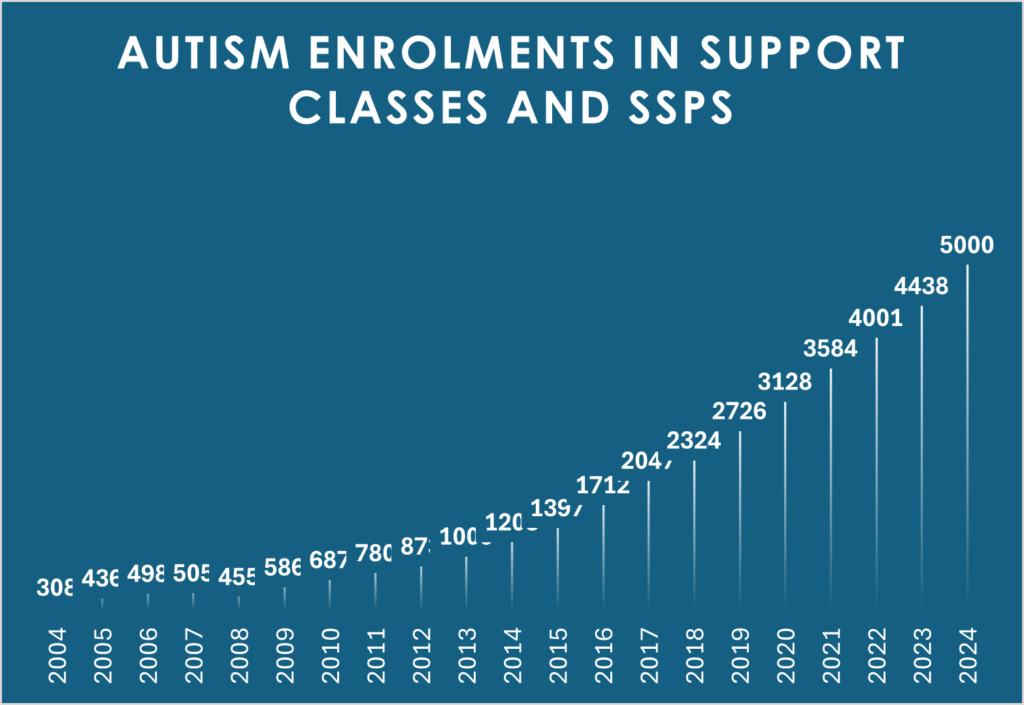
The Centre for Education Statistics and Evaluation (CESE) data (Figure 3) highlights the upward trend of 1,523% enrolment increase of students with autism in our support classes and schools for specific purposes (SSPs) across the last 20 years. This information demonstrates an important need for the profession to look at ways to support this group of students (and the teachers) across school settings to better meet the individual needs of all students.

Figure 3 Number of autism enrolments across Support Units and SSPs 2004-2024  
Source: NSW CESE Statistical Bulletins (2025)

One such model that can be implemented is the Collaborative Classroom model. Collaborative Classrooms is a school-wide strategy developed to maximise inclusion and achievement by ensuring that the expertise of all staff is utilised to its full potential to support students of all abilities, across all classrooms and settings.

It gives every student access to the collective expertise of staff while ensuring individual support needs are explicitly addressed regardless of the class or program in which they are enrolled. It allows specialist teachers and SLSOs to work with parents, students and staff to allow each student a balanced experience of ‘special education’ in their “Home Class” (support unit) and benefiting from a sense of belonging in their “Peer Class” (mainstream).

Classes are formed more based on stage, than classification, to allow students (and teachers) to be linked to their peers. This organisation allows individuals and small groups from mainstream to work in the Support Unit, allowing them greater opportunities to work toward their learning goals. Conversely this structure allows students to work with their peers across the curriculum. This enhances classroom practice, experience, perspective and collegial training.

Figure 4 What is Inclusion, diversity and identity? (Moore, 2024a)

It’s a shifting of thinking, planning and collaborating that changes the language and perspectives across classes and the community.

It’s about creating an environment where every child is seen and planned for, regardless of their enrolment place.

In the school context at which I taught in 2023, an outcome of this model, six out of eight Stage Three students enrolled in the support unit had developed the skills and confidence needed to actively and successfully participate in learning with their mainstream classmates for more than 80% of the school day.  How amazing is this? For the students and the school.

Reflect on collaborative practices in your workplace.

What is working well? What could you do better?

What could you change?

Programming Adjustments

“When a flower doesn’t bloom, you fix the environment in which it grows, not the flower.”

~Alexander den Heijer (Moore, 2024b)

Students with disabilities require content and material adjustments of varying degrees that support their individual need. But what is an adjustment?

Adjustments are the “actions taken to enable a student with disability to access and participate in education on the same basis as other students.” (AITSL, 2020, p.13).

This process is a success when teachers (mainstream and specialist) work together to support all students across the school. Building capacity of one another for the benefit of the individual.

As an example, in a support class in a mainstream school, a student is working at stage level for mathematics. Amongst his peers, there are students that are not. Teachers in this team decide that levelled maths groups across the stage is a suitable structure to build capacity of both students and teachers. Therefore, they map learning out together as a continuum to allow all students an opportunity to access the learning, to the best of their ability; with necessary adjustments along the way.  

The NSW Department of Education (2025) provides online resources through the Universal Resources Hub, that allow teachers opportunities to participate in mini learning modules on different concepts in inclusive education and disability. They have collated learning strategies and resources to support teachers to meet the diverse needs of students within their classroom. While not exhaustive, it provides teachers a starting point with ideas to map out learning experiences that meet the individual needs.

If you are looking for reasonable and evidence-based suggestions to support students with disability in your classroom, get yourself a copy of “Blueprint for Inclusion” (Poe, 2025) which provides practical guidelines for teachers to effectively engage and build capacity of all students.

Ford (2013) concludes that the “priority would be ensuring the student is acquiring the academic skills necessary to be successful” (p. 15) within their scope and need. 

The Goal IS Inclusion

Not one teacher, would be able to say that they do not want to achieve inclusion in their classroom as it allows the opportunity for each student to feel empowered in their learning and development. The Disability Standards for Education 2005 state that “teachers and school communities [are] to ensure accessibility of education for student with disability” (AITSL, 2020, p. 24).

We value the inclusive system the Department of Education offers, from early intervention, mainstream, support units and schools for specific purposes, creating avenues for all learners to successfully engage in their individual learning journeys.

“Schools should be inclusive spaces where all students are afforded opportunities to thrive.”

(AITSL, 2020, p. 24)

Take the time to reflect and audit the practices in your school.

Approaches to meeting student need (with disability) need to be based on empirical validation – not “ideology, persuasive slogan, or the volume of stridency of voices advocating a particular [treatment or] position” (MacMillan D, Gresham, F and Forness S., 1996, p. 3).

I have valued my professional development and experiences across various settings. It has taught me to adjust, support and adapt my thinking and practice to best meet the needs of the individuals in my classroom. It has also given me the opportunity to support my colleagues around me. Building teaching capacity in this space for greater impact, awareness and ability.

Inclusion is a journey not a destination (Moore, 2016). It’s the way we view learning as a multilayered process that allows students to work in more ways to be more successful.

“Inclusion is a mindset – not a specific location.”

(Poe, 2025)

References

Australian Curriculum, Assessment and Reporting Authority (ACARA). (2025). School students with disability. https://www.acara.edu.au/reporting/national-report-on-schooling-in-australia/school-students-with-disability

Australia Institute for Teaching and School Leadership (AITSL). (2020). Inclusive education: Teaching students with disability. https://www.aitsl.edu.au/research/spotlights/inclusive-education-teaching-students-with-disability

Bonnello, C. (2025). Autisticnotweird.com. Instagram: @autisticnotweird

Centre for Education Statistics and Evaluation, NSW (CESE). (2025). Annual statistical bulletin, Department of Education. https://education.nsw.gov.au/about-us/education-data-and-research/cese/publications/statistics/annual-statistical-bulletin

Ford, J. (2013). Educating Students with Learning Disabilities in Inclusive Classrooms, Electronic Journal for Inclusive Education, 3 (1)

MacMillan D, Gresham, F and Forness S. (1996).  NSW Teachers Federation Full Inclusion: An empirical Perspective. Behavioural Disorders, a publication by the Council for Exceptional Children

Moore, S. (2016). One without the other: Stories of Unity through Diversity and Inclusion. Winnipeg, Manitoba: Portage & Main Press

Moore, S. (2024a). What is inclusion today and how has it changed over time? Illume Learning, Learning Sessions Handouts. https://da79a828-889c-4314-bd39-2fb742f2ad41.usrfiles.com/ugd/da79a8_e27aa0c4bcdb48bf8f8d68bfcd8d568c.pdf

Moore, S. (2024b). How can designing for one support all? Illume Learning, Learning Sessions Handouts. https://da79a828-889c-4314-bd39-2fb742f2ad41.usrfiles.com/ugd/da79a8_208d0d17818d4257a5ebe1a812ea141c.pdf

Nilholm, C. (2021). Research about inclusive education in 2020 – How can we improve our theories in order to change practice? European Journal of Special Needs Education, 36 (3), pp. 358-370

NSW Department of Education (2021). What is Inclusive education? https://education.nsw.gov.au/campaigns/inclusive-practice-hub/all-resources/primary-resources/other-pdf-resources/what-is-inclusive-education-

NSW Department of Education (DoE). (2025). Universal Resources Hub. https://resources.education.nsw.gov.au/home

Poe, R., M. Ed. (2025). Blueprint for Inclusion: a practical guide to supporting students with IEPs in the general education classroom. LLC Beech Grove, IN: TeacherGoals Publishing

Townsville Bulletin (2025). Record 221,000 NSW public school students diagnosed with disabilities. https://www.townsvillebulletin.com.au/news/nsw/record-221000-nsw-public-school-students-diagnosed-with-disabilities/news-story/8ac81c5671ec37526c2a7ccb0e38539c?btr=2b3952f16fefd2a8aa25024cb3c0e137, April 3

United Nations Educational, Scientific and Cultural Organisation and Ministry of Education and Science, Spain (1994). The Salamanca Statement and Framework for Action on Special Education. World Conference of Special Education: Access and Quality

About the Author

John Skene was elected as the NSW Teachers Federation Disability Officer in November 2024. As part of this role, he is responsible for supporting students, staff and schools in the area of disability. He is working closely with Organisers, Professional Support, Trade Union Training and others to support Federation members.

With over fifteen years of experience as a teacher in special education, John has worked in schools for specific purposes (SSPs) and support units (SUs). He is an Assistant Principal Special Education and has held roles as Federation Representative and Workplace Committee at school level. John was a Councillor and Special Education Contact of Sutherland and Inner-City Teachers Association (across his time in school) and a Federation Executive Branch Representative in 2023 and 2024.

John SkeneDownload

Functional Behavioural Assessment in the Classroom

Functional Behavioural Assessment in the Classroom

With the increase in complexities within the classroom, come along to learn how to effectively and purposefully use Functional Behavioural Assessment to assess, break down and meet the diverse needs of learners in your classroom from K to TAFE.

Discovering the purpose and function of behaviour, which is a form of communication, will allow teachers to better support the needs of individuals in the classroom.

Learn practical skills and build understanding on how to positively support student engagement in their learning.

K-TAFE teachers interested in functional behavioural assessment

  • 25 November at NSW Teachers Federation, Surry Hills

All CPL courses run from 9am to 3pm.

$220

Please note, payment for courses is taken after the course takes place.

John Skene was elected as the NSW Teachers Federation Disability Officer in November 2024. As part of this role, he is responsible for supporting students, staff and schools in disability. He is working closely with the other areas in Federation (Organisers, Professional Support, Trade Union Training) to support Federation members.

With over fifteen years of experience as a teacher in special education, John has worked at Schools for Specific Purposes (SSPs) and Support Units (SUs). He has held roles such as Federation Representative and Assistant Principal Special Education. John was a Councillor and the Special Education Contact of Sutherland and Inner-City Teachers Association (across his time in school).

Rethinking Ability: Special Education Conference

Rethinking Ability: Special Education Conference

The conference will hear the current state of disability in the public education system and Federation’s ongoing commitment and work to support students and teachers within special education and those with a disability.

Participants will have an opportunity to network with other like-minded teachers and engage in workshops covering topics such as differentiation (K-6 and 7-12), classroom management with diverse learners, meeting sensory needs, working with SLSOs for success and neurodiversity in TAFE.

The Conference will also bring a together experts and experienced practitioners to answer questions about disability within the current context as well as the “where to next.”

3 December 2026 at NSW Teachers Federation, Surry Hills.

$275

Please note: payment for the conference is taken after the conference takes place.

Inclusive Strategies: Teaching students with disabilities

Inclusive Strategies: Teaching students with disabilities

Overview

This course is designed for teachers who are interested in building practical skills around differentiation and inclusive planning for a mainstream context K-TAFE. Participants will look at the timeline of disability within the school context and see how over time changes have taken place (or not). Teachers will expand their strategies and skills in meeting the needs of students with disabilities in various settings to support positive and successful learning and engagement.  

K-TAFE teachers who are interested in unpacking their understanding of inclusion and increase their strategies and skills in supporting a wide range of students with disability in their classroom. 

  • 16 June 2026 at Broken Hill
  • 28 July 2026 at Tamworth
  • 5 November 2026 at Newcastle

All CPL courses run from 9am to 3pm.

$220

Please note, payment for courses is taken after the course takes place.

John Skene was elected as the NSW Teachers Federation Disability Officer in November 2024. As part of this role, he is responsible for supporting students, staff and schools in disability. He is working closely with the other areas in Federation (Organisers, Professional Support, Trade Union Training) to support Federation members.

With over fifteen years of experience as a teacher in special education, John has worked at Schools for Specific Purposes (SSPs) and Support Units (SUs). He has held roles such as Federation Representative and Assistant Principal Special Education. John was a Councillor and the Special Education Contact of Sutherland and Inner-City Teachers Association (across his time in school).

Recent Posts

    Recent Comments

    No comments to show.

    Archives

    No archives to show.

    Categories

    • No categories

    QUICK LINKS

    QUICK LINKS

    Join The Union

    Courses

    Journal

    Podcast

    Contact Us

    Share this page

    About

    Who we are

    What we do

    Presenters

    FAQ

    Professional Learning

    Courses

    Journal

    Podcast

    Policy and Guidelines

    Privacy Policy

    Social Media Guidelines

    Our Ethics

    Useful Links

    About

    Head Office Details

    Member Portal

    Media Releases

    Become a member today

    NSW Teachers Federation

    Connect with us

    © 2025 New South Wales Teachers Federation. All Rights Reserved. Authorised by Maxine Sharkey, General Secretary, NSW Teachers Federation, 23-33 Mary St. Surry Hills NSW 2010.