Have you ever wondered how can I provide authentic, curriculum aligned, fieldwork experiences for my students to explore and investigate both natural and human-made environments? Nic Hall explains how Environmental and Zoo Education Centres can help…
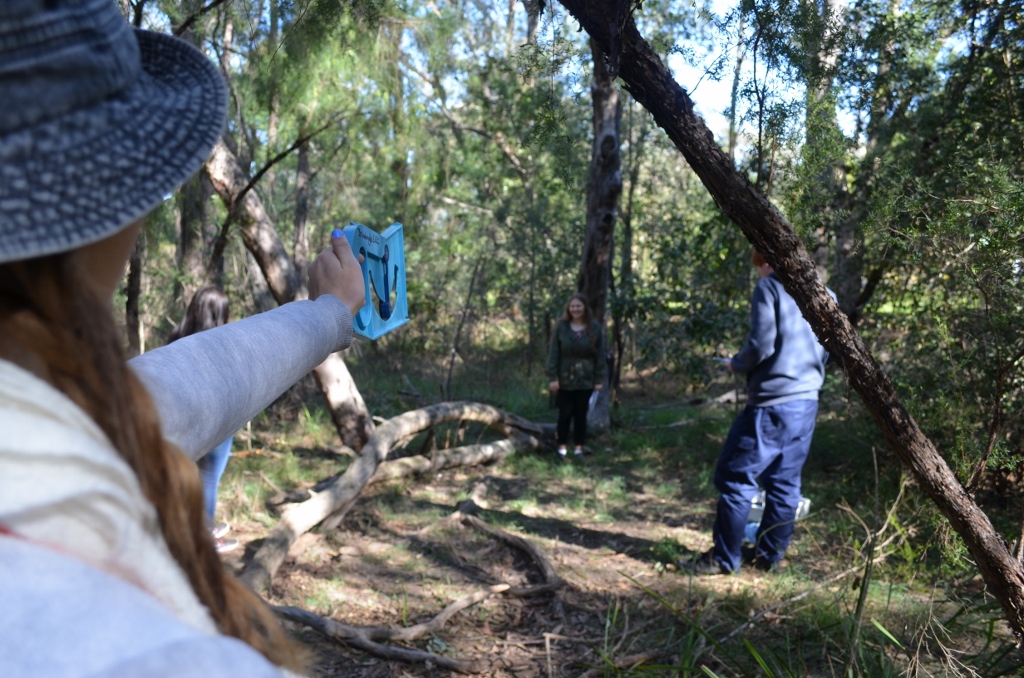
Students participating in senior Geography program with Wambangalang EEC
Imagine a school setting where students miss the opportunity to experience the engagement and curiosity that arises from learning in distinctive outdoor environments — a place where they are confined solely to traditional indoor classrooms, losing the chance to connect with the natural world, observe real-life examples, and develop a deeper understanding of their surroundings through hands-on experiences. Such an absence would diminish the richness of their educational journey, making learning more routine and less inspiring. As educators, we play a vital role in fostering a sense of wonder by integrating unique outdoor learning opportunities that enhance student engagement, passion, and motivation. The solution to this limited school experience lies in one of the NSW Department of Education’s best-kept secrets: Environmental Education Centres.
Currently, there are 25 Environmental and Zoo Education Centres (EZECs) spread throughout the state. These centres include 23 Environmental Education Centres (EECs) and two Zoo Education Centres — one located at Mosman (Taronga) and the other at Dubbo (Western Plains). Each site represents a wide range of environments, from urban to wilderness, coastal to inland, and rainforests to rangelands.
Environmental and Zoo Education Centres are at the forefront of environmental and sustainability education. They offer authentic, curriculum-aligned fieldwork experiences that allow students to explore, investigate, and gain a deeper understanding of both natural and human-made environments. Their programs help students grasp key concepts and systems while fostering values that inspire them to become environmentally responsible citizens.
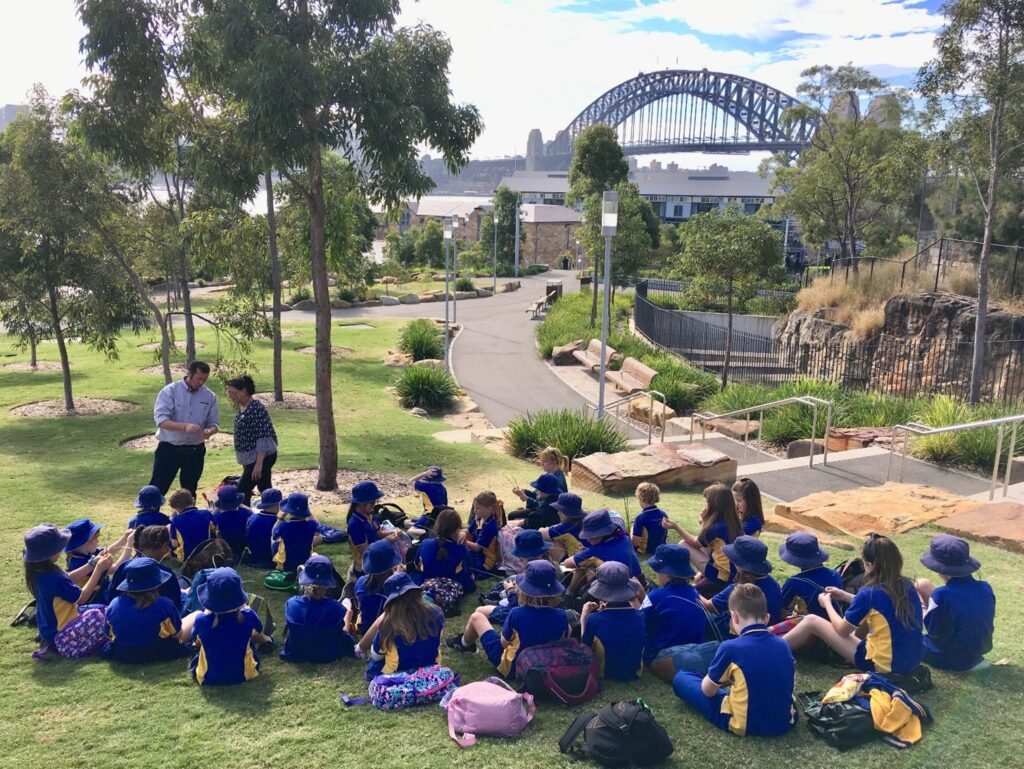
Students observing the urban environment with Observatory Hill EEC
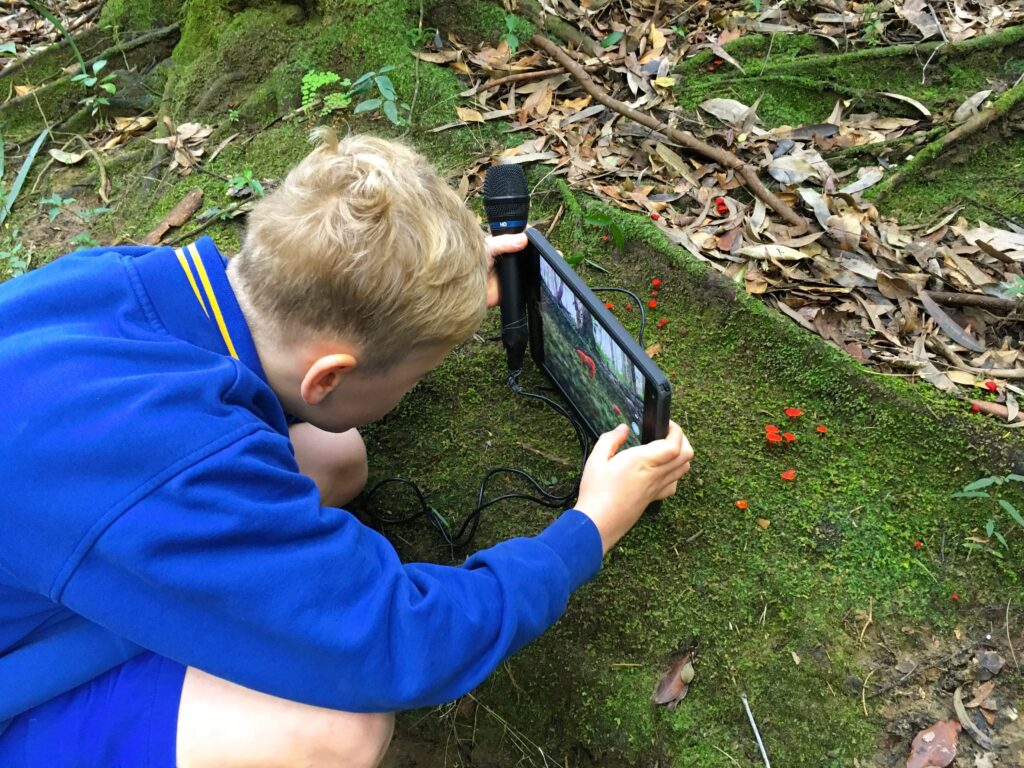
Nature investigation with Field of Mars EEC
These centres form one of the largest ‘Communities of Schools’ within the NSW public education system. They deliver on-site and in-school programs for students from Kindergarten to Year 12, reaching an average of 300,000 students annually across both urban and regional NSW. Additionally, they provide professional learning opportunities to thousands of teachers statewide. Beyond curriculum delivery, schools participate in these programs to benefit from the wellbeing advantages of nature-based learning, an aspect that has gained importance following the COVID-19 pandemic. NSW EZECs support educational and wellbeing needs, promote sustainability, acknowledge Aboriginal histories and cultures and Torres Strait Islander histories and cultures, and serve rural and remote communities throughout NSW.
With the introduction of new syllabuses emphasising authentic, real-world learning experiences — such as the mandatory Stage 6 Science syllabuses — and the continuous growth in the number of schools, the centres are now more essential than ever in supporting students and staff across NSW. The first EEC was established in 1971 at Muogamarra Nature Reserve and welcomed its first school in 1972. Initially known as field study centres, they were renamed Environmental Education Centres in 1999, reflecting the evolution of environmental education from focusing solely on nature and conservation to encompassing broader concepts such as ecological sustainability and responsible citizenship.
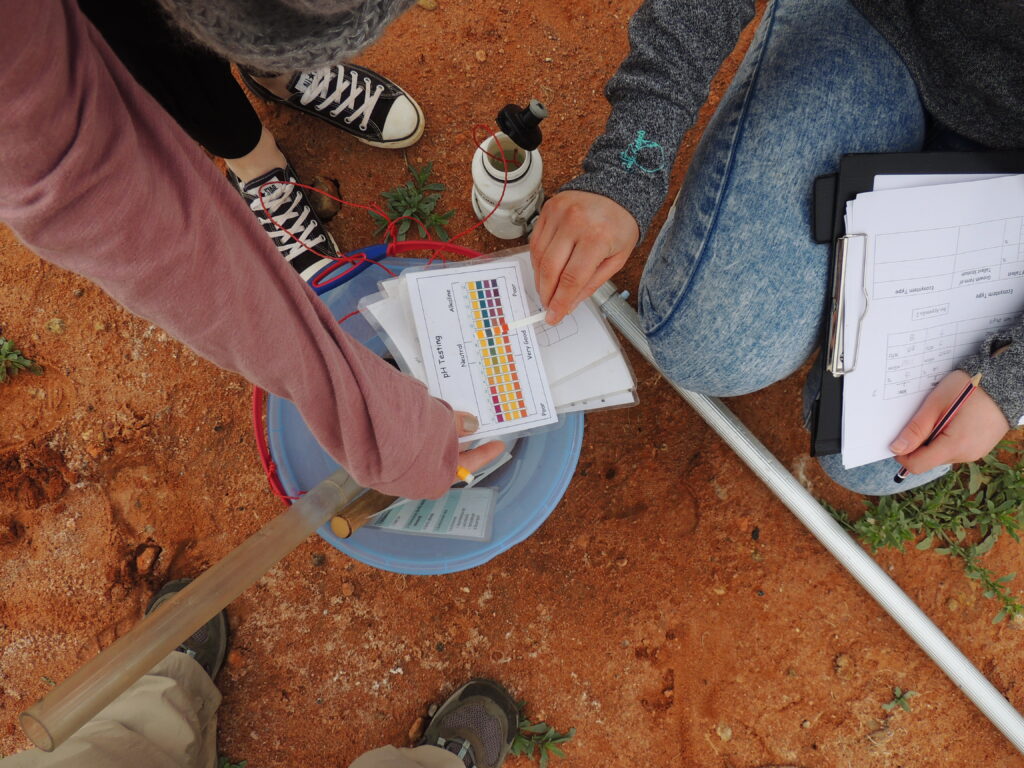
Students learning Geography field skills with Warrumbungle National Park EEC
Learning experiences offered by EZECs complement classroom curriculum by providing immersive, experiential opportunities that enhance students’ conceptual understanding. Each EZEC site is staffed with highly qualified and experienced educators who exemplify best practices in environmental education. These professionals are adept at differentiating and facilitating authentic fieldwork that deepens students’ comprehension of complex ecological and sustainability issues while fostering critical thinking, inquiry, and a sustained passion for environmental stewardship.
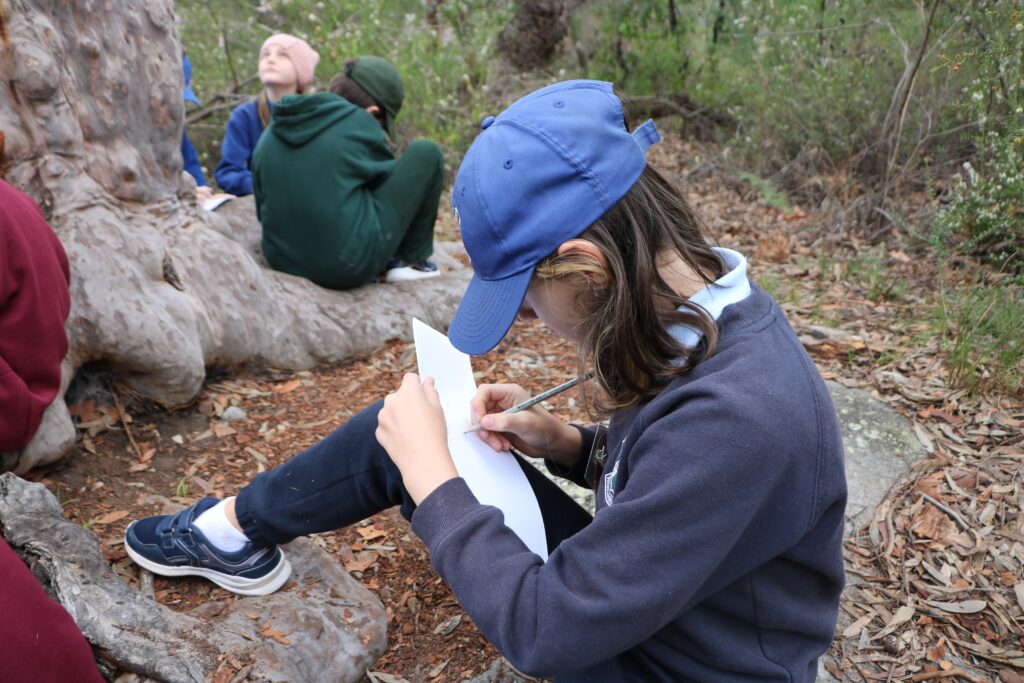
Inspired by Nature sketching with Royal National Park EEC
Programs at these centres are developed through strategic partnerships with key environmental agencies and local stakeholders, ensuring that the curriculum content is both scientifically rigorous and relevant. This collaborative approach enriches learning by connecting students with contemporary environmental challenges and community-based initiatives, cultivating a profound sense of responsibility and active citizenship that extends beyond formal education settings.
Environmental Education Centres provide comprehensive fieldwork experiences for students across all stages of schooling, supporting the achievement of outcomes across a variety of key learning areas. In addition to delivering student programs, the centres offer targeted professional development for educators and school communities, equipping teachers with the pedagogical skills and content knowledge necessary to embed sustainability and environmental principles effectively within their curricula.
Furthermore, Environmental Education Centres provide a range of support to teachers back in their schools and classrooms. These include class sets of teaching resources that can be loaned or borrowed, and practical tools designed to help educators integrate environmental education into everyday learning. The centres also offer expert guidance and support to schools in establishing environmental projects and transforming school grounds into dynamic outdoor learning environments that encourage ongoing student engagement and foster a lasting connection with the natural world.
Students travel to Kosciusko for an excursion with Riverina EEC
Despite the demonstrable benefits and extensive reach of EZECs, many educators and schools across the state remain unaware or have yet to engage with these vital resources. Enhancing awareness and facilitating broader access to Environmental Education Centres is essential to ensure equitable opportunities for all students to benefit from high-quality, place-based learning taught through the lens of environment and sustainability. Strengthening this engagement will be critical to advancing the Department’s commitment to cultivating environmentally literate and responsible citizens equipped to meet future challenges.
To facilitate teacher engagement with Environmental Education Centres, the Department encourages educators to explore the extensive range of programs and professional development opportunities offered by EZECs. Educators can utilise the interactive map available on the Department’s website to identify their nearest Environmental Education Centre and access comprehensive information regarding available programs and supporting resources. Schools are encouraged to arrange visits, enquire about in-school offerings, or participate in specialised workshops aimed at enhancing teacher confidence and expertise in delivering environmental and sustainability education. Active collaboration with EZECs enables teachers to enrich student learning outcomes and cultivate a culture of environmental stewardship within their classrooms and broader school communities. Environmental and Zoo Education Centres represent a vital component of the education system and may provide the essential support needed to significantly enhance the student learning experiences for your students.
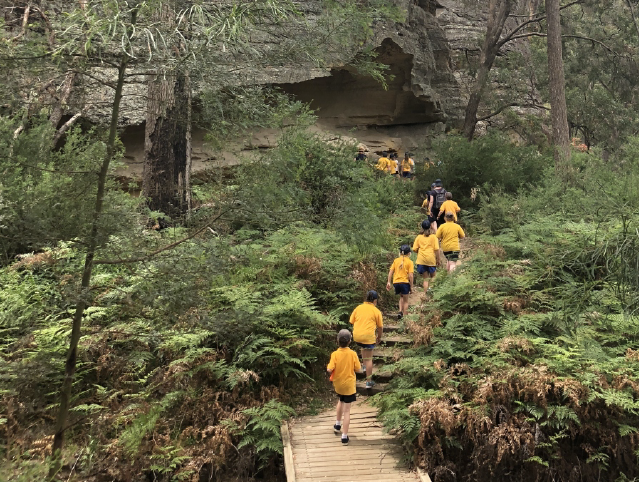
Students walking the Drip with Red Hill EEC
About the author
Nic Hall has dedicated over 20 years to public education across Sydney, beginning his teaching career at Green Valley Public School in Sydney’s south west. His professional journey was profoundly shaped when he discovered Environmental Education Centres, environments where his passion for outdoor education and student-centred, experiential learning could truly thrive.
Currently serving as the relieving principal of Camden Park Environmental Education Centre, Nic proudly works collaboratively with a diverse range of stakeholders—including educators, community organisations, and environmental agencies—to design and deliver innovative programs that enrich learning experiences for both students and teachers.
Nic aims to inspire students to connect meaningfully with the natural world and develop sustainable practices that will serve them throughout their lives. Nic considers his role not only a profession but a privilege, continuously striving to support and empower educators and students alike.
In this course you will develop a practical understanding of modern assessment theory and look at strategies for promoting and assessing higher order thinking skills in your students. We will focus on two assessment formats: multiple choice, and performance-based items, and consider the purpose and design of rubrics. We will look in depth at the advantages, disadvantages, tricks, and pitfalls of these different styles, emphasising the interrelationship between learning and assessment.
Professor Jim Tognolini and Dr Sofia Kesidou from the University of Sydney’s Centre for Educational Measurement and Assessment lead an interactive and content-driven professional learning day. Completing this course will consolidate your expertise in helping your students develop analytical, evaluative, and creative skills.
Please note this course was formerly called Modern Assessment Theory and Assessment Strategies for Higher Order Thinking: K-12.
Tuesday 11 August 2026 at NSW Teachers Federation, Surry Hills
Wednesday 26 August 2026, online via Zoom
Wednesday 11 November 2026 at Blacktown
All CPL courses run from 9am to 3pm.
Prof Jim Tognolini
Professor Jim Tognolini is Director of The Centre for Educational Measurement and Assessment (CEMA) which is situated within the University of Sydney School of Education and Social Work. The work of the Centre is focused on the broad areas of teaching, research, consulting and professional learning for teachers.
The Centre is currently providing consultancy support to a number of schools. These projects include developing a methodology for measuring creativity; measuring 21st Century Skills; developing school-wide practice in formative assessment. We have a number of experts in the field: most notably, Professor Jim Tognolini, who in addition to conducting research offers practical and school-focused support.
Dr Sofia Kesidou
Sofia Kesidou is an executive leader and academic researcher with close to 30-years’ experience in international educational assessment, curriculum and research.
Sofia has taught courses in assessment to undergraduate and graduate students, and has conducted numerous professional-development sessions related to standards-based curriculum and assessment as well as assessment and data literacy internationally.
Completing Modern Assessment Theory and Assessment Strategies for Higher Order Thinking: K-12 will contribute 5 hours of NSW Education Standards Authority (NESA) Accredited PD in the priority area of Delivery and Assessment of NSW Curriculum/EYLF addressing standard descriptors 5.1.2 from the Australian Professional Standards for Teachers towards maintaining Proficient Teacher Accreditation in NSW.
K-12 teachers
$220
Please note, payment for courses is taken after the course takes place.
“Great learning to empower teachers to be better professionals and create better outcomes for students, strengthen the profession.”
“A very practical course to use for the planning and implementation of classes with the intention of improving assessments/evaluating/testing for the students.”
“Every aspect of this course was informative and useful. I’ve had an opportunity to think about what has been presented and engage in collegial discussion.”
With the increase in complexities within the classroom, come along to learn how to effectively and purposefully use Functional Behavioural Assessment to assess, break down and meet the diverse needs of learners in your classroom from K to TAFE.
Discovering the purpose and function of behaviour, which is a form of communication, will allow teachers to better support the needs of individuals in the classroom.
Learn practical skills and build understanding on how to positively support student engagement in their learning.
K-TAFE teachers interested in functional behavioural assessment
16 March 2026 at NSW Teachers Federation, Surry Hills
13 May 2026 at NSW Teachers Federation, Surry Hills
25 November at NSW Teachers Federation, Surry Hills
All CPL courses run from 9am to 3pm.
$220
Please note, payment for courses is taken after the course takes place.
John Skene was elected as the NSW Teachers Federation Disability Officer in November 2024. As part of this role, he is responsible for supporting students, staff and schools in disability. He is working closely with the other areas in Federation (Organisers, Professional Support, Trade Union Training) to support Federation members.
With over fifteen years of experience as a teacher in special education, John has worked at Schools for Specific Purposes (SSPs) and Support Units (SUs). He has held roles such as Federation Representative and Assistant Principal Special Education. John was a Councillor and the Special Education Contact of Sutherland and Inner-City Teachers Association (across his time in school).
The conference will hear the current state of disability in the public education system and Federation’s ongoing commitment and work to support students and teachers within special education and those with a disability.
Participants will have an opportunity to network with other like-minded teachers and engage in workshops covering topics such as differentiation (K-6 and 7-12), classroom management with diverse learners, meeting sensory needs, working with SLSOs for success and neurodiversity in TAFE.
The Conference will also bring a together experts and experienced practitioners to answer questions about disability within the current context as well as the “where to next.”
3 December 2026 at NSW Teachers Federation, Surry Hills.
$275
Please note: payment for the conference is taken after the conference takes place.
This course is designed for teachers who are interested in building practical skills around differentiation and inclusive planning for a mainstream context K-TAFE. Participants will look at the timeline of disability within the school context and see how over time changes have taken place (or not). Teachers will expand their strategies and skills in meeting the needs of students with disabilities in various settings to support positive and successful learning and engagement.
K-TAFE teachers who are interested in unpacking their understanding of inclusion and increase their strategies and skills in supporting a wide range of students with disability in their classroom.
25 February 2026 at NSW Teachers Federation, Surry Hills
5 March 2026 at Suite 1.04, 1 Lowden Square, Wollongong, NSW 2500
26 March 2026 at Wagga Wagga RSL
6 May 2026 at Tamworth
16 June 2026 at Broken Hill
6 August at Canberra
5 November 2026 at Newcastle
All CPL courses run from 9am to 3pm.
$220
Please note, payment for courses is taken after the course takes place.
John Skene was elected as the NSW Teachers Federation Disability Officer in November 2024. As part of this role, he is responsible for supporting students, staff and schools in disability. He is working closely with the other areas in Federation (Organisers, Professional Support, Trade Union Training) to support Federation members.
With over fifteen years of experience as a teacher in special education, John has worked at Schools for Specific Purposes (SSPs) and Support Units (SUs). He has held roles such as Federation Representative and Assistant Principal Special Education. John was a Councillor and the Special Education Contact of Sutherland and Inner-City Teachers Association (across his time in school).
Developing Confidence and Capability in Music Education Aligned to the NSW Creative Arts K–6 Syllabus
This professional learning day is designed to directly support teacher readiness and curriculum implementation under the NSW Creative Arts K–6 Syllabus, equipping participants with practical resources, pedagogical strategies, and an informed perspective on the value of music in primary education.
This workshop is presented by the Australian Youth Orchestra’s Music in Me teacher mentoring program, and is designed to support primary teachers in strengthening their understanding and practice of music education. Through both practical and research-informed sessions, participants will explore effective strategies for teaching music across the primary years, with clear links to the new NSW Creative Arts K–6 Syllabus. The day will offer structured learning sequences, curriculum-aligned content, and frameworks for embedding music in both classroom practice and whole-school planning.
Session 1 | 9:00–10:30 AM
Creative Engagement with Music and Movement: Orff-Schulwerk in Practice Facilitated by Dr Sue Lane
This session introduces participants to an Orff-Schulwerk approach to music education, developing musical skills and understanding through speech and singing, body percussion and movement, leading to active music-making and composition with sound sources. Activities are directly aligned to key practices in the new NSW syllabus, supporting music learning that is active, embodied, and connected across learning areas. Key focus areas:
Applying the interrelated practices of Performing, Composing, and Listening
Supporting music learning through integrated, developmentally appropriate activities
Exploring how music functions as a form of personal and cultural expression
Session 2 | 10:45–12:15 PM
Sequencing for Success: Structuring Music Learning Across K–6 Facilitated by Music in Me Mentors
This session builds on foundational practice by examining how musical understanding can be developed across a continuum from Kindergarten to Year 6. Teachers will unpack curriculum-aligned music learning sequences that move from simple to more complex. Key focus areas:
Structuring content to support progressive skill development
Building teacher confidence in planning and delivery of music learning
Aligning teaching with the learning outcomes of the new NSW Creative Arts K–6 Syllabus
Session 3 | 1:00–2:30 PM
Embedding Music Across the School: Strategic Approaches for School Leaders and Advocates Presented by Dr Anita Collins
In this practical session, you’ll explore how music education can become a whole-school priority, not just a specialist subject. Drawing on current research in neuroscience and education, Dr Collins outlines the benefits of music learning for cognitive development, student wellbeing, and broader educational outcomes. Participants will consider how to communicate the value of music to colleagues, school leaders, and the wider community. Key focus areas:
Developing practical tools for school-wide implementation and strategic planning
Understanding music’s role in supporting learning, wellbeing, and engagement
Using evidence to support whole-school advocacy and curriculum leadership
Thursday 17 September 2026 at NSW Teachers Federation, 23- 33 Mary Street, Surry Hills
All CPL courses run from 9am to 3pm.
$220
Please note, payment for courses is taken after the course takes place.
Bernie Heard is the National Manager of Music in Me at the Australian Youth Orchestra. Bernie is an experienced senior arts executive, her previous roles include Executive Director of Gondwana Choirs, CEO of Sydney Youth Orchestras, Director of Operations at Think & Do Tank Foundation and senior Education and Artist Development roles with the Sydney Symphony Orchestra, working with the late Richard Gill AO.
Bernie completed a Churchill Fellowship in 2007, the Australia Council Emerging Leaders Program in 2012, and is currently completing an MBA at University of Sydney, Business School.
Dr. Anita Collins is an award-winning educator, researcher and writer in the field of brain development and music learning. She is internationally recognized for her unique work in translating the scientific research of neuroscientists and psychologists to the everyday parent, teacher and student.
Since 2016, Anita has interviewed over 100 neuroscientists and psychologists globally, advocating for the benefits of music learning in child development.
Anita gained prominence by writing the script for the TEDEd video, “How playing an instrument benefits your brain,” and her TEDx Talk, “What if every child had music education from birth?” She is well-known in Australia as the on-screen expert for the ABC documentary “Don’t Stop the Music.”
Awarded the Barbara Matthews Churchill Fellowship in 2016, Anita studied with top researchers in the US and Canada, followed by a sabbatical in 2017 to continue her studies in the US, Canada, and Germany. In 2019, she received the inaugural Australian Women in Music award for Music Education.
Dr. Sue Lane is a Lead Mentor with Music in Me teacher mentoring program, and a respected music education specialist. She is committed to supporting teachers to bring engaging music education experiences into their classrooms. Sue is particularly focused on the ongoing development of accessible resources for teachers in a variety of educational settings.
Sue worked for many years as a music specialist and classroom teacher in schools on the Central Coast of NSW, before lecturing in Music and Dance Education in the Early Childhood and Primary Teaching programs at the University of Newcastle, and more recently at the University of Technology, Sydney. She completed her PhD in 2019 and continues her research work related to arts education provision in Australian primary schools. Sue is an active committee member and presenter with Orff NSW, supporting educators in the exploration of creative music experiences. She also works as a music educator and presenter with Musica Viva Australia In Schools.
This course will support teachers implementing Aboriginal Education within the new syllabuses and will build knowledge of policy frameworks and inform the building of relationships.
This course will begin with an exploration of key policies guiding Aboriginal Education, including the Department’s Aboriginal Education policy and key documents, and the NSW Teachers Federation’s Aboriginal and Torres Strait Islander Education policy and their implications for practice. This course will be conducted by Aboriginal teachers who are highly experienced in their fields.
In primary and secondary workshops, NESA officers will provide an analysis of Aboriginal Education content within the syllabuses, ensuring a clear understanding of curriculum expectations. Presenters, holding varying leadership roles within the Department of Education, will share practical strategies for establishing and maintaining culturally inclusive, safe, and responsive learning environments.
Wednesday 5 August 2026 at NSW Teachers Federation, 23-33 Mary Street, Surry Hills, NSW 2010
All CPL courses run from 9am to 3pm.
$220
Please note, payment for courses is taken after the course takes place.
Teachers K-12 and leaders in schools implementing Aboriginal Education.
RUSSELL HONNERY Aboriginal Education Officer, NSW Teachers Federation Russell is a proud Wearie Gomeroi Man. Russell’s current role as role is the NSW Teachers Federation Aboriginal Education Officer allowed him the opportunity to be the AEU Yes for Voice Campaign Lead Officer in 2023. Before holding this current role, he was a Professional Support Officer (2019-2021). Prior to holding these elected positions, Russell worked for the NSW Teachers Federation on a Relief basis in many roles. From Project Officer in 2010 and relieving in positions from 2011 to 2017: as Aboriginal Education Officer, Research Industrial Officer, Professional Support Officer and both Country and City Organiser positions. He was also the Aboriginal Executive Member for council 2017-2019 and Aboriginal Members Councilor from 2008 to 2019. His teaching career has been in rural/northern NSW, which has given him a variety of experiences from classroom teacher, teaching Reading Recovery, Relieving Assistant Principal, team teaching with beginning teachers, mentoring staff and being part of the Department as Indigenous Teacher leadership program 2014/2015. He was also the Aboriginal Education and Engagement Officer SEO1 for the Tamworth Operational Directorate 2017-2019. Russell’s experiences within the NSW Teachers Federation have given him the opportunity to represent and present at local, state, national and international events on behalf of Aboriginal members.
JENNI WENZEL Chief Education Officer, Aboriginal Education,NSW Education Standards Authority Jenni is a proud Bundjalung, Gumbayngirr, Ngoorabul, Walbunja Yuin woman with kinship connections to the North and South Coasts of NSW. Primarily working in Aboriginal Education at local, regional, and state levels, she has worked tirelessly to ensure Aboriginal students, parents and communities are represented at all levels. Her teaching expertise ranges across Aboriginal Studies, Aboriginal Languages and HSIE subjects, with lecturing across several universities in Aboriginal Education. Jenni is the Chief Education Officer, Aboriginal Education at NSW Education Standards Authority (NESA).
DIMITI TRUDGETT Coordinator Schooling and Transition 7-12 PEO, Aboriginal Education & Communities Directorate Dimiti Trudgett is a proud Wayilwan woman who is the Coordinator Schooling and Transition in the Aboriginal Education and Communities directorate. She works in the Schools and Transitions unit where she leads various programs and initiatives across NSW in improving the educational outcomes for Aboriginal and Torres Strait Islander students. Prior to her position, Dimiti was a Deputy Principal in a Central School. She is the Aboriginal and Torres Strait Islander representative for the AEU NSW Teachers Federation Executive and one of the elected Councillors from the Aboriginal Members roll. Dimiti is a passionate advocate for Aboriginal education as well as educating all students and educators about Aboriginal histories and cultures
Kathy Rushton and Joanne Rossbridge outline the theory and research about young children’s language and literacy development through play; and provide teachers with engaging and inclusive activities and resources to foster creativity and student engagement in the early years of schooling. . .
Learning in the early years
In the first years of schooling young children are encouraged to develop understandings about the use of language in a range of contexts – both oral and written. Before school, understandings and experiences have been developed through oral language interactions some of which may have been around the written word.
However, some children might experience the language to talk about language, metalanguage, for the first time when they go to school. Some children will be able to confidently discuss many aspects of how language works and how it is used in a variety of contexts, even if they are not yet independently literate.
Developing language for a range of purposes and the use of metalanguage to reflect on the choices speakers and writers make are most easily developed through play. Play provides opportunities for both individual choice and collaboration and, with a teacher’s support, in providing contexts and modelling language (Karaolis, 2023), individual students are enabled to develop and build on their own language resources. Scaffolding learning experiences to be both challenging and supportive (Hammond, 2021) is dependent on a pedagogy which supports language development as a catalyst for emergent literacy.
Developing language and the language to talk about language: metalanguage
In the school years students will engage with oral and written texts which are broadly categorised as imaginative, persuasive or informative. Within these broad categories there are a range of twenty or more genres (Derewianka, 2022; Humphrey, Droga & Feez 2012, p.199) which students will encounter and learn to both read and write. To comprehend or produce a text, written or spoken, the choice of grammatical features is always defined by the audience and purpose of the text and the genre. Metalanguage is developed when teachers read, deconstruct and jointly construct texts with their students. In this way knowledge of language and grammar is developed in a familiar context through oral interactions about texts (Rossbridge & Rushton, 2010).
The first language or dialect is not taught to a young child rather it is developed through meaningful oral interaction. The use of the speech functions such as statements (greet, observe, play); commands (command, demand, play); questions (greet, demand, play), exclamations (demand, command, play) begin to be developed even before a young child can speak fluently. Within a range of contexts, the choices a speaker or writer makes reflect both the audience and the purpose of the text. Grammar“is a way of describing how a language works to make meaning.” (Derewianka, 2022, p.1)
The use of the concept of the mode continuum exemplifies the range of grammatical choices speakers and writers make to produce effective oral and written texts.
The picture books and traditional rhymes and songs that young children encounter, often use more spoken like text and are, therefore, supportive in developing decoding skills and sound and letter knowledge and phonemic awareness for emergent readers. However, as they are sung or recited in a context in which the focus may be on movement the words are often ancillary to the main focus of the activity. We learn to use language to satisfy our needs as we play, perform and “do” the moves. If every song or rhyme also includes the presentation and exploration of the written text, there will be many opportunities to develop literacy.
Not only questions but also Think alouds (statements) can explore the meaning of the rhyme. Using the Here; Hidden; Head framework, comprehension and vocabulary can both be supported e.g. Here: I think I know what a candlestick is. Hidden: I wonder what ‘nimble’ means. Head: I wonder who Jack is and why he was jumping. Modelled and guided reading can be supported by jointly constructing texts developed in meaningful play-based contexts (Davis & Dunn, 2023 & Karaolis, 2023). Drama strategies like Readers Theatre; Freeze frame and drawing; Puppet Theatre and Interviewing can be integrated with the use of quality children’s literature to provide contexts for playing with ideas and language.
Reading for meaning (Comprehension, vocabulary development and decoding)
Most students enter early years classrooms with an amazing resource which forms the foundation of language and literacy acquisition as they move through their schooling. This resource is oral language, and it is the foundation of all learning. When used in meaningful contexts to communicate with others, oral language serves to draw upon, not only existing language, but scaffolds both reading and writing. (Hammond, 2021 & Gibbons 2015)
Talk and play as a context for reading development
An effective and engaging way to draw upon the language skills that students bring to classrooms is by connecting speaking, listening, reading and writing in real world scenarios. By designing learning through play, students are given numerous opportunities to practise language and interact with others by drawing on their own background and experiences as well as the languages and dialects they use in the home and community. As a teacher models being a reader, and students engage with texts, they are not only active meaning makers but developing vocabulary and hearing the sounds and rhythm of language as they decode in the context of engaging quality literature (Adoniou, Cambourne & Ewing, 2018).
Careful selection of texts, such as picture books, can be the catalyst for designing meaningful learning situations which can be placed along the mode continuum. A context, theme, topic or concept can be selected as a starting point for text choice. The following texts were chosen for their representation of dogs and their interactions with humans. Obviously, looking at texts and interactions around getting and caring for a dog may not be the best choice for all students given their interests and background, but any context can easily lead to a range of possible texts and scenarios for play.
Let’s Get a Pup! (Bob Graham, 2001, Walker Books)
When Billy was a Dog (Kirsty Murray and Karen Blair, 2019, Walker Books)
Too Many Cheeky Dogs (Johanna Bell and Dion Beasley, 2016, Allen & Unwin)
My Dog Bigsy (Alison Lester, 2015, Penguin)
Sad the Dog (Sandy Fussell and Tull Suwannakit, 2017, Walker Books)
A Human for Kingsley (Gabriel Evans, 2021, Hardie Grant)
Annie’s Chair (Deborah Niland, 2006, Penguin)
‘Let’s get a Pup’ by Bob Graham (2001, Walker Books) is the story of a family who visit a rescue centre to get a pup but end up with not only a pup but also old, grey Rosy. It celebrates the interactions of humans bringing dogs into their family.
Using this book, in conjunction with opportunities for play, and incorporating before, during and after reading strategies through shared reading (Gibbons, 2015), is an example of how to provide opportunities for comprehension, vocabulary development, and an explicit focus on sound and letter knowledge.
Before reading
Floorstorm (display covers of all books above and ask students to share what they see)Play sounds of dogs and humans interactingList noises dogs make in different languagesPredict from front cover by focusing on human and dog relationships – record student ideas and vocabulary (add to after reading)Take turns to walk in role taking a dog for a walk (with lead and dog puppet)
During reading
Read the book uninterruptedRead the book again with think alouds using Here, Hidden and Head statementsReread the book uninterrupted allowing students to respond
After reading
Students draw their own interactions with a dog and share with classRank a list of words/pictures/nouns in order of importance of what a new dog might need e.g. food, water, bed, blanket, brush etc.Group words from the book with the same sound such as ‘u’, e.g. pup and mum in comparison to cute and rescueRole play human/dog interaction scenarios with puppetsIndependent play with: a toy dog a vet kit dog washing/grooming kit etc.
Before reading strategies are critical prior to the first reading of a book as they provide opportunities to activate prior knowledge so students can bring their own life and language experiences to the book. They can also serve to provide knowledge and vocabulary needed for comprehension. Young children also feel a sense of satisfaction when they can confirm their predictions.
The first reading of a book needs to be uninterrupted, so students are able to take in the story as a whole and get the overall gist. When the teacher rereads with carefully designed think alouds, students are then exposed to what a reader does during the reading process whilst also being alerted to key meanings and language within the text. Subsequent readings invite the students to add their own thoughts and responses to the text. It is critical that the book should be read multiple times by the teacher throughout any teaching sequence.
When designing learning for after reading, strategies need to support response to the text particularly through the use of oral language and play. These strategies may need to be initially modelled and supported by the teacher but ideally the talk is coming mainly from the students as they use their own resources to directly engage with meanings in the text or beyond the text. With students controlling the talk, particularly during play scenarios, they are using their own language resources and building upon them with the meanings, language and vocabulary encountered in the book.
After reading is also an opportune time to explore targeted vocabulary and letter and sound knowledge in the context of the book as students are considering language choices, patterns andconventions based on meaning. They are in the position to discuss features with reference to meaning which is the time for the teacher to introduce metalanguage to explicitly talk about language. This might include the use of terms such as letter, word, sound, and nouns for naming things.
Extending access to a range of texts ensures students are exposed to a range of genres. Reading can be further supported through shared reading of a range of other texts related to the picture book. Based on student interests these may include:
looking at websites on dogs for adoption
viewing videos on how to care for dogs and dog training
reading information texts on dog breeds
locating pet products on pet shop websites
comparing online reviews / star ratings of possible food and pet toys
watching cartoons with dogs as characters.
Developing written text: Play as a context for writing
Many of the strategies suggested in the table above for after reading are play based and do not involve writing. For students with developing literacy, oral language is drawn upon when looking at responding to text and can be again drawn upon with the move into writing. Students can be supported to write through teacher modelling and joint construction and again the focus text and play opportunities can stimulate the creation of a range of real-world scenarios which provide a purpose for writing.
Purposes for writing could include:
a shopping list before going to the pet shop
description of a favourite dog
an animal meal plan or pet menu
instructions on how to care for a pet
recount of events with a pet
narrative about a problematic adventure with a pet.
Writing for a purpose and joint construction
To prepare for writing students can be involved in independent play such as visiting the vet, introducing a pet to other pets or friends and family, or shopping at the pet shop. This can be developed through use of props, costumes, toys and puppets.
The vet kit shown below provides opportunities for students to take on the role of a vet, client or pet. Students will need to make different oral language choices given their roles. The props such as stethoscope and thermometer also stimulate talk appropriate for the context. The mobile phone, clipboard and medication provide numerous opportunities for role playing both literacy and numeracy practices. From this play students are then able to transfer their experience and oral language to jointly constructing a text such as recounting an experience to the vet, writing a list of supplies and equipment needed by a vet or writing instructions on how to care for a pet. In doing so, language choices move from the spoken to more written-like choices along the mode continuum and possibly from a home language or dialect to include English.
When joint construction occurs with students there is a balance between the talk of the teacher and the students. The teacher acts as a guide to make thinking explicit whilst the students contribute ideas and discuss choices (Rossbridge and Rushton, 2014 & 2015). In the example below, students and the teacher were sharing the pen resulting in greater participation in the joint construction by students.
Thank you to Marie Bashir Public School.
During joint construction the teacher can support explicit discussion about the purpose and audience for the writing as well as the use specific metalanguage. For example, when writing instructions, action verbs will tend to be at the beginning of commands. When writing a recount, the focus will also be on the actions undertaken but in past tense. When writing a list, the language will be noun groups such as ‘medicine, dry food, dog treats’. If the students don’t have this language, they are able to share the experiences of other students through play which not only supports ideas for writing but also the development of metalanguage.
Conclusion
The school years are focussed on the development of literacy as well as developing knowledge about literature and language. When teachers recognise the differences between spoken and written language, they are most effectively able to build on individual students’ knowledge, understanding and use of language – both oral and written. As young students begin to explore the audiences and purposes of a range of genres, the diverse voices available in quality children’s literature can both expand and confirm children’s experiences of the world and help them to make connections to their own lives. Quality texts exemplify the effective use of language and provide great models for writing as well as opportunities to explore language and grammar in context and to develop metalanguage. Perhaps though the most important aspect of the early learning experience is that it is engaging, inclusive and enjoyable for all our young students. Play provides a context which can foster creativity and student agency as they engage with the challenges and rewards of becoming literate.
Adoniou, M. Cambourne, B & Ewing, E (2018). ‘What are ‘decodable readers’ and do they work?’. The Conversation.
Derewianka B. (2022) A New Grammar Companion for Primary Teachers. Newtown: Primary English Teaching Association Australia.
Gibbons, P. (2015) Scaffolding Language Scaffolding Language: Teaching English language learners in the mainstream classroom. Portsmouth: Heinemann.
Hammond, J. (2021) ‘Scaffolding in EAL/D education’ in Harper, H and Feez, S, An EAL/D handbook, Newtown, Primary English Teaching Association Australia, pp 16-18.
Humphrey S., Droga, L. & Feez, S. (2012) Grammar and Meaning: New Edition. Newtown: Primary English Teaching Association Australia.
Rossbridge, J. & Rushton, K. (2010) Conversations about text 1: Teaching grammar using literary texts. Newtown: Primary English Teaching Association Australia.
Joanne Rossbridge is an independent language and literacy consultant working in both primary and secondary schools and with teachers across Australia. She has worked as a classroom teacher and literacy consultant with the DET (NSW). Her expertise and much of her experience is in working with students from diverse linguistic and cultural backgrounds. Joanne is particularly interested in student and teacher talk and how talk about language can assist the development of language and literacy.
Kathy Rushton is interested in the development of language and literacy especially in disadvantaged communities. She has worked as a classroom teacher and literacy consultant and provides professional learning for teachers in the areas of language and literacy development. Her current research projects include a study of multilingual pre-service teachers and the impact that teacher professional learning has on the development of a creative pedagogical stance which supports translanguaging and student identity and wellbeing.
In this exciting new CPL course participants will delve into women in history, investigating programming approaches for History 7-10, History Elective years 9 and 10 as well as Extension History Year 12.
Utilising history case studies of both the well-known and forgotten women of history, participants will explore thematic, comparative and biographical event-based programming approaches, taking in key historical debates and the big questions in history.
Primary, Secondary and TAFE teachers are encouraged to apply to attend this course.
Presenter Judy King will take participants through planning units of work in History 7-10, History Elective years 9 and 10 and Extension History Year 12, including perspectives on women’s history in a variety of topics.
As well, participants will be given an overview of the Australian Research Council (ARC) international digital history project Conviction Politics.
If you are interested in this course, you may also be interested in a connected social event. Meet History’s (In)Visible Women over a drink and snack, is designed to complement the course and offers a relaxed social setting for those interested in women’s history and activism.
Friday 31 July2026
NSW Teachers Federation, Surry Hills
All CPL courses run from 9am to 3pm.
Judy King
Judy King is a former high school principal and a Life Member of the NSW Teachers Federation, the Australian Education Union and Secondary Principals’ Council. She retired from Riverside Girls High School in 2010 after 19 years as a secondary principal.
Since retirement Judy has worked part time at Chifley College Mt Druitt campus, Northmead High and Georges River College in an executive support role with a strong focus on teaching and learning, assessment and reporting, especially in the areas of reading for meaning and writing for purpose.
She currently teaches History and Politics at WEA , the oldest adult education foundation in the CBD of Sydney.
Judy represented secondary principals on the Board of Studies (now NESA) from 1998-2004 and was History Inspector at the Board in 1991. Judy was deputy president of the SPC from 1998-2006.
In 2018 she researched and wrote a history of the NSW Teachers Federation 1918-2018 as part of its centenary celebrations. The articles were published throughout each edition of Education in 2018 and were featured as part of a three week exhibition in the Federation building.
In 2007 Judy was awarded the Meritorious Service in Public Education medal by the Department of Education.
Judy has an abiding interest in all aspects of Ancient, Mediaeval and Modern History as well as archaeology, politics and film. In 2014 and 2019 she attended the Cambridge University History Summer School for international students and hopes to return in 2025.
In 2024, Judy was awarded an OAM for “services to secondary education.”
Jen Sonter
Jen Sonter began teaching in 2016 around the Central Coast, eventually landing at Terrigal High School in 2018. She has since been working full time at Pittwater High School on the Northern Beaches of Sydney, finally achieving permanent employment there in 2022.
She has predominantly worked in mainstream classroom settings throughout this time, but has also worked in wellbeing roles such as Year Advisor.
She is a passionate history teacher and takes up any opportunity to travel and experience historical sites from far and wide. She brings this passion into the classroom in the hopes of passing it on to her students.
Emma Seabrook
Emma Seabrook began teaching in 1992 at Crestwood High School in Sydney’s Northwest. Her first permanent position, in 1995, was at Cambridge Park High School in the Western suburbs.
She has worked in public education her whole career and is currently teaching History and Society and Culture at Winmalee High School, in the Blue Mountains. As well as teaching History through all stages, Emma’ focus is on student well-being and has her career has included various stints as Year Advisor.
$220 for one day
Please note, payment for courses is taken after the course takes place.
“Excellent resources provided by all speakers.”
“Judy’s session was very thought provoking and a great way to start. Very inspirational woman.”
“All presenters were engaging and informative. I appreciate their generosity in sharing.”
“Very valuable course. (I have) new ideas to take back to school.”
“Thank you Federation and the CPL team for providing another extremely useful PD. All PD by the CPL has presenters who are genuine experts in their fields and provide useful resources and knowledge.”
The Supporting Students with ADHD in K-6 course is designed to support teachers to:
develop an understanding of the wide range of characteristics of students with Attention Deficit Hyperactivity Disorder (ADHD);
explore a range of strategies which address the needs of students with ADHD in the areas of language and cognitive development, communication skills and social behaviour;
develop specific strategies to help students with ADHD access the curriculum, and
develop an understanding for the need for explicit instruction in the essential components of literacy in every classroom every day.
Wednesday 28 October 2026, Surry Hills
Wednesday 18 November 2026, online via Zoom
All CPL courses run from 9am to 3pm.
Dr Rose Dixon
Dr Roselyn Dixon has been a special education teacher in both mainstream and special education settings in primary and secondary schools. Rose has been in academia and involved with Inclusive Education for more than 25 years. She has published research in the fields of social skills and behavioural interventions for people with a range of disabilities including students with Oppositional Defiance Disorders and Autism.
She has been actively involved in examining the relationship between digital technologies and pedagogy in special education and inclusive classrooms for students with Autism as well as the implications of the NDIS on people with disabilities in rural and remote communities. Rose is an Honorary Associate Professor at the School of Education, University of Wollongong, where she was previously the Academic Director of Inclusive and Special Education. She continues to support doctoral students in Inclusive and Special education with a focus on Autism.
Primary teachers
Special Education teachers
School Counsellors
Learning and Support Teachers
$220 (Federation members only)
Please note, payment for courses is taken after the course takes place.